
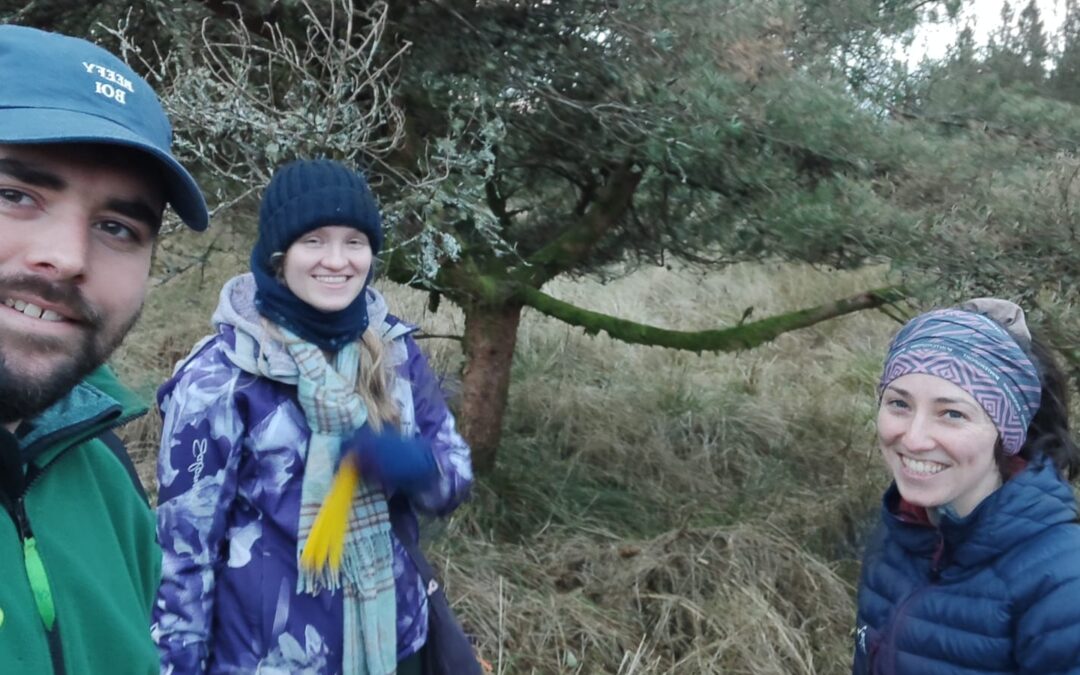
Scots pine resilience project team fieldwork (C) Richard Whittet (Forest Research)
Scots pine is a cornerstone of Britain’s native woodlands and an essential species for forestry. Its adaptability makes it vital for creating resilient forests that can withstand pests, diseases, and the impacts of climate change. By maintaining and improving the genetic diversity of Scots pine, we help secure its future role in supporting biodiversity, providing timber, and sustaining healthy ecosystems across the UK.
Kirsten O’Sullivan, Forest Genetics Operations Manager at Forest Research and member of our Infusing resilience into the Scots pine genetic resource project team, takes us behind the scenes of the team’s recent trip to the Borders. Their mission? Collecting pine cones for vital genetic research.
On a frosty November day, armed with cone collecting equipment, lots of warm layers and a big flask of tea, Jessica, our Project Intern, Richard, one of the Project Leads and Head of Tree Breeding at Forest Research, and I travelled to a Forestry England seed orchard on the Scotland/England border.

Whilst there, we were joined by a very confident and inquisitive robin who followed us around from tree to tree, probably hoping for some worms! (C) Kirsten O’Sullivan, Forest Research
The fieldwork was part of the project to reopen the national Scots pine breeding programme. After being inactive for many years, the breeding programme is being updated to help diversify British forests and to include objectives such as resilience to biotic and abiotic stress.
A series of field trials are soon going to be established, so that the performance of trees with different genetics can be assessed. Some of the pine cones which we collected from the orchard were particularly important, because they are the culmination of many hours of painstaking work hand pollinating trees, which was undertaken by the wider team last year.
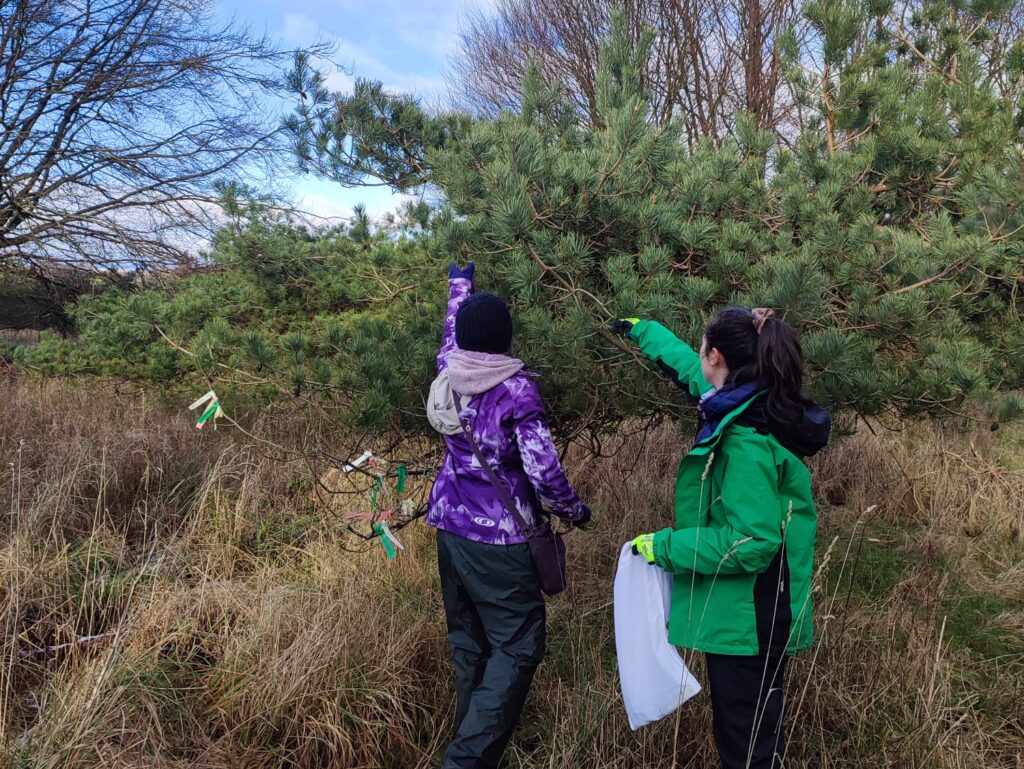
Jessica and Kirsten collecting pine cones (C) Richard Whittet, Forest Research
After warming up on the drive back to Forest Research’s Northern Research Station, we hung the pine cones in a purpose built pagoda to store them before bringing them inside to dry. Jessica and I will be extracting the seeds in the new year, and then safely storing them until they are ready to be sown in preparation to be planted in field trials.
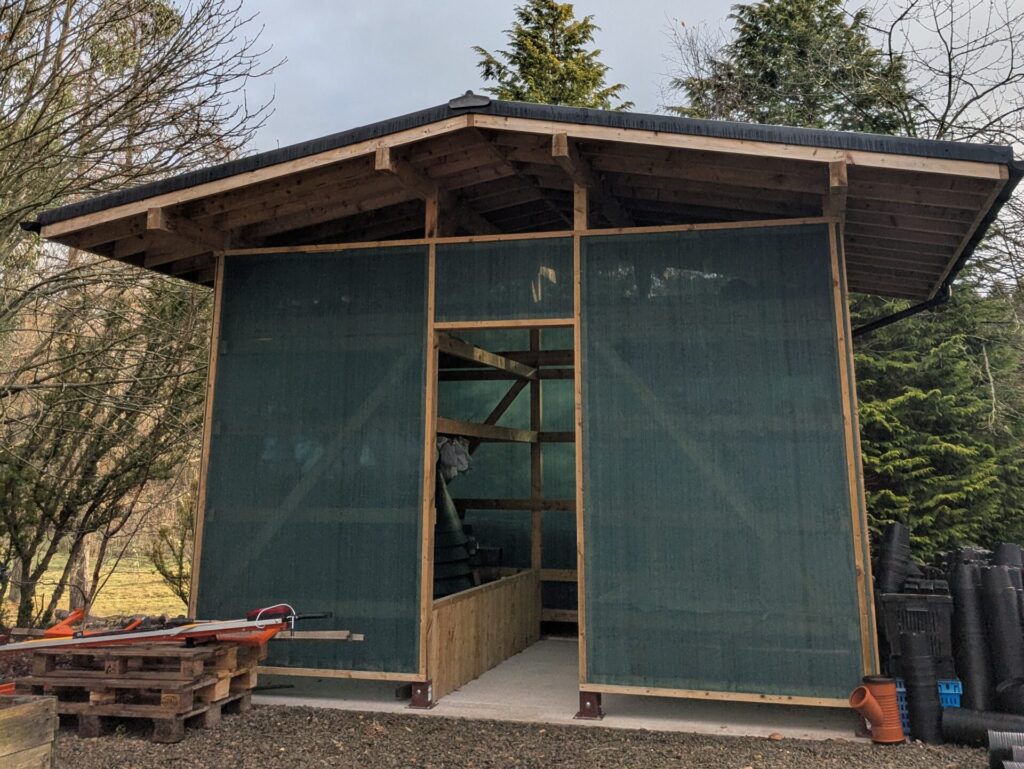
The pagoda where the pine cones we had collected were hung to dry © Kirsten O’Sullivan, Forest Research.
Keep an eye on the CFP website and our ‘Infusing resilience into the Scots pine genetic resource’ project webpage in the new year to find out more about our seed extractions!