The EXPLORATION project aims to better understand the responses to drought conditions within mixed species stands in newly established forests and provide new guidance for policy and practice. Innovative experimental trials using the Internet of Things sensors and remote sensing will collect a range of data to generate the evidence base needed to test these mixtures in practice and identify future research gaps.
The full day workshop hosted by Dr George Xenakis, Senior Climate Change Scientist at Forest Research, involved a mix of research presentations, discussion groups and a demonstration of the breadth of high-tech instrumentation involved in the project to monitor tree water status and stand-level evapotranspiration.
George, Dr Giulio Curioni, Climate Change Scientist, and Anna Cumming, Research Assistant, from the Forest Research Climate Change Research Group presented findings in recent drought research and our understanding to date on drought resilience for individual species, and social scientist Dr Bethan Stagg summarised findings from a recent GB-wide online survey on mixed species stands for drought adaptation.
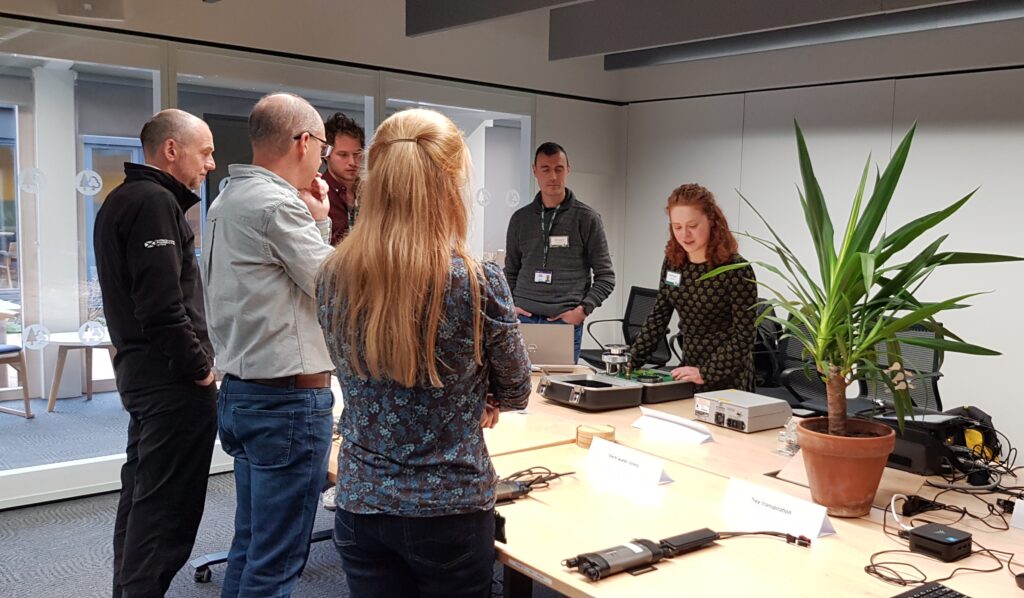
Anna Cumming demonstrating how to use a pressure chamber, an instrument that measures water stress in tree stems and leaves. Credit: EXPLORATION project team.
These insights helped shape group discussions on which species mixtures to prioritise and additional candidate mixtures to consider for future research.
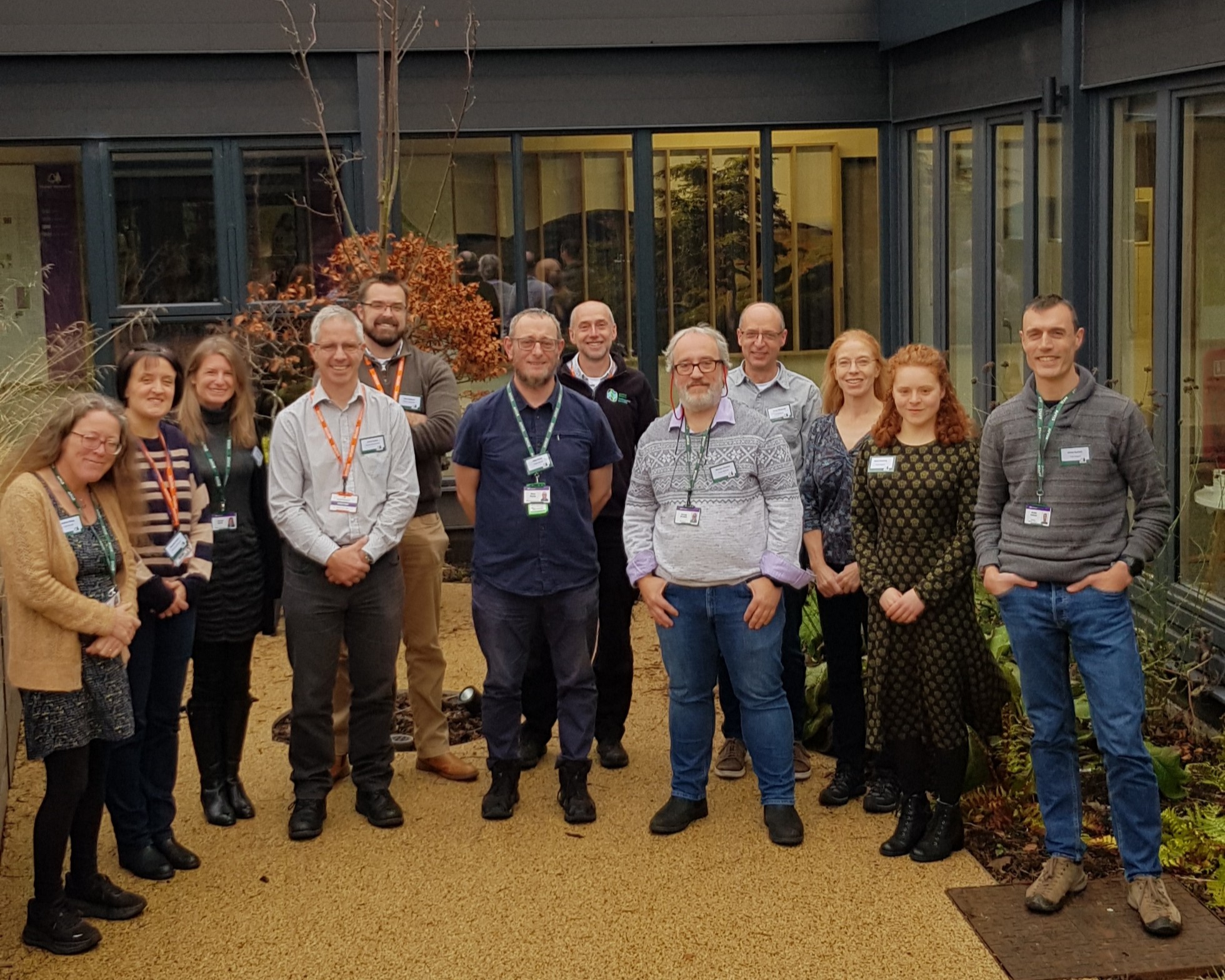
Representatives from Scottish Forestry, Forestry and Land Scotland, the Forestry Commission, Forestry England, Cyfoeth Naturiol Cymru / Natural Resources Wales, The University of Edinburgh School of GeoSciences and James Jones & Sons Ltd, attended the workshop both in person and online. They generously shared their knowledge and experience in mixed species planting to both help the team shape the experimental design in years 2 and 3 of the project and inform the focus of a new catalogue of priority mixtures for future drought resilience research.
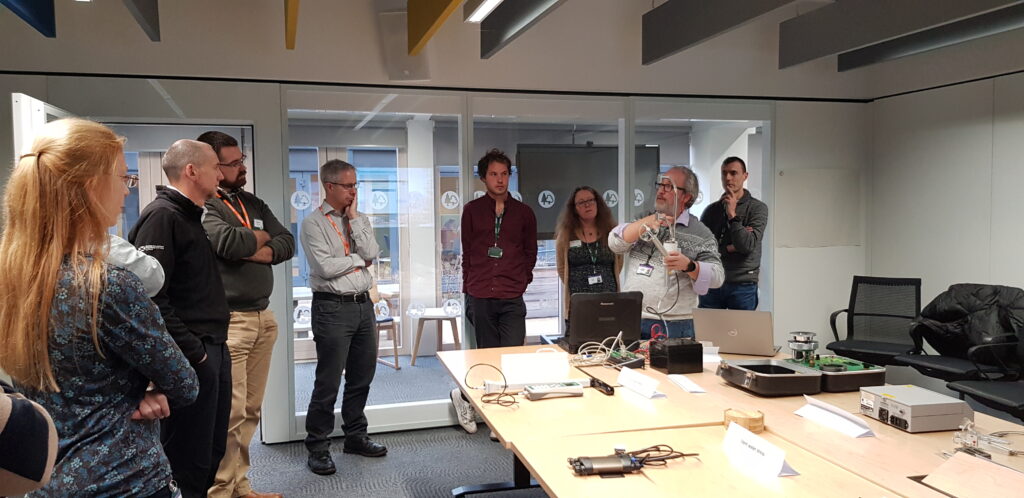
Dr George Xenakis demonstrating an ultrasonic anemometer that measures wind speed and direction. Credit: EXPLORATION project team.
The sharing of real-world examples and discussions on drought resilience in context with different management drivers for sites helps ensure climate change research is applied and outputs meet the needs of the sector. A huge thank you to everyone who participated.
You can find out more about the project here: EXPLORATION: Mixed species planting for drought adaptation – Centre for Forest Protection.