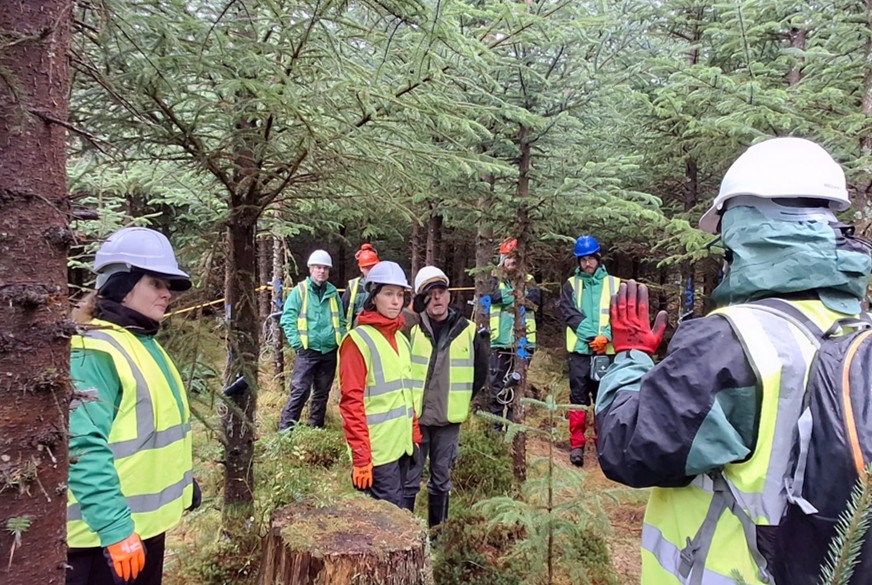
The Wind within the Trees project team held their first engagement event on 29 October at Queen Elizabeth Forest Park, near Aberfoyle in Scotland. They were joined by forestry advisors and land managers from across the UK to explore views on Continuous Cover Forestry (CCF), wind risk, and the ways in which the project could develop to address diverse sector needs.
Project background
Continuous Cover Forestry (CCF) is a woodland management approach that involves selectively thinning trees to create a diverse forest structure, whilst maintaining canopy cover.
This project addresses the current limited understanding of the potential of CCF to reduce the impact of windstorms and subsequent forest loss. UK climate change projections include an increased frequency and intensity of storms and rainfall, which in turn amplifies the risk of windthrow with significant economic, social and ecological impacts.
Research involves understanding how CCF can adapt to reduce wind risk, investigating the impact of wind on timber quality in CCF and developing the ForestGALES decision support tool to include structurally diverse CCF forests. The project also explores multiple perspectives on cultural attachment to forest species and types, perceptions of wind risk and the feasibility of CCF as a management strategy.
Highlights from the event
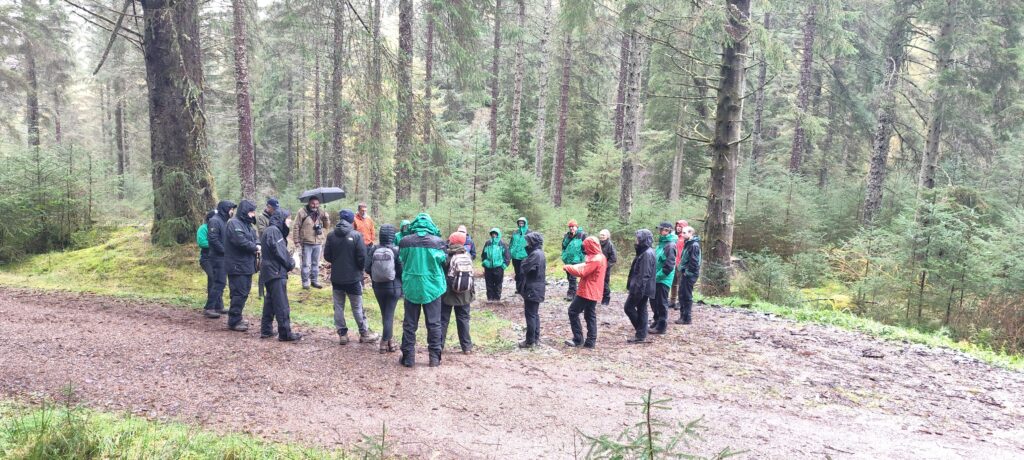
Seeing CCF in practice at a mixed Sitka and Norway spruce stand in Queen Elizabeth Forest Park. Credit: The Wind within the Trees project team.
Stakeholders spent the first half of the day in the field at a mixed Sitka and Norway spruce stand that was planted in 1939 and has been thinned five times. The stand shows advanced regeneration of mainly Sitka spruce with current thinning designed to release competition and promote uniform regeneration throughout the thinned area, which provided the ideal case study for discussion.
A range of topics relating to the site’s transformation to CCF were covered including general practices, wind risk, benefits and challenges, emerging compound risks, and options and routes for incentivising CCF.
In the afternoon at The Lodge Forest Visitor Centre, stakeholders split into smaller groups to discuss key questions from work package leads surrounding windstorm impacts from risk, silvicultural, timber quality, and socio-cultural perspectives. This high energy, interactive carousel-style session was led by social scientists and involved rotating groups every 15 minutes, with plenty of discussion and debate.
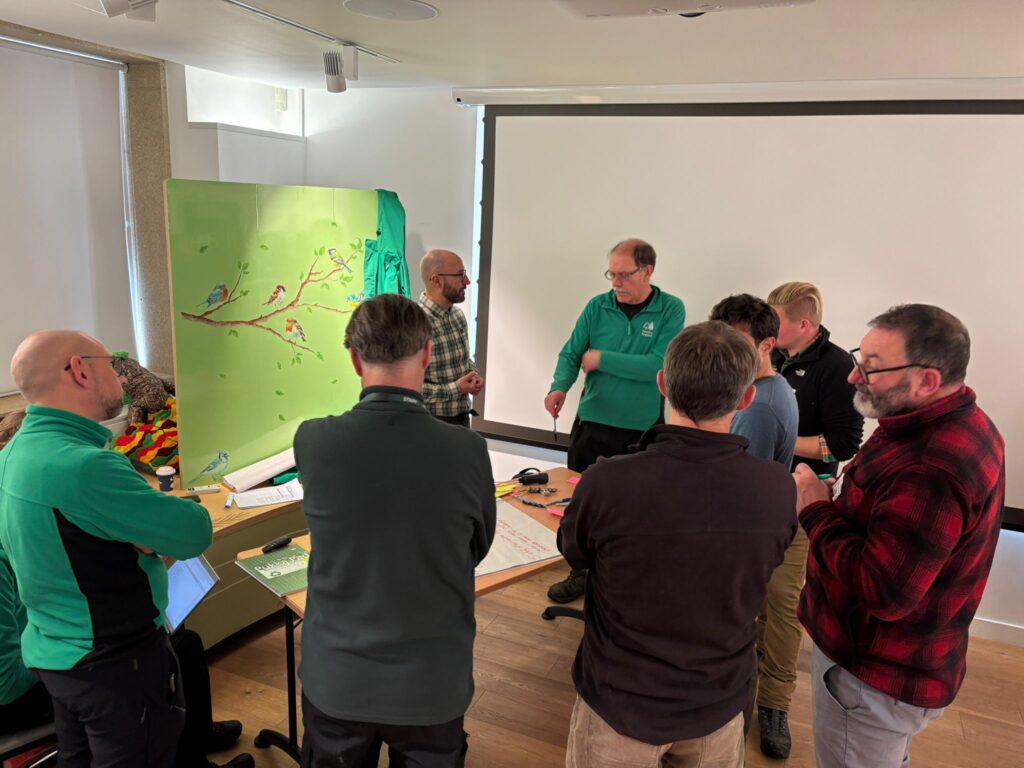
Engaging conversations between stakeholders and researchers. Credit: The Wind within the Trees project team.
Feedback
Participants represented a diverse range of both public and private organisations including Forestry England, Scottish Forestry, Forestry & Land Scotland, Cyfoeth Naturiol Cymru / Natural Resources Wales, the UK Continuous Cover Forestry Group and Future Woodlands Scotland, which provided multiple perspectives on the opportunities and challenges regarding CCF as a windthrow measure to increase forest resilience.
Project Lead Dr Tom Locatelli was encouraged by the range of debate and interest in CCF:
“Wind risk poses a significant ongoing threat to UK forests and it was important and exciting to hear people’s experiences of CCF, the reality of changing established forestry methods and some of the key management considerations”.
Participant feedback was very positive, with comments including:
“Thanks for much for inviting me to a truly excellent meeting. It has sparked a lot of ideas and conversations!”.
Another participant added:
“Thank you and the team for organising such a wonderful day. My colleague and I found it one of the most interesting events of the year“.
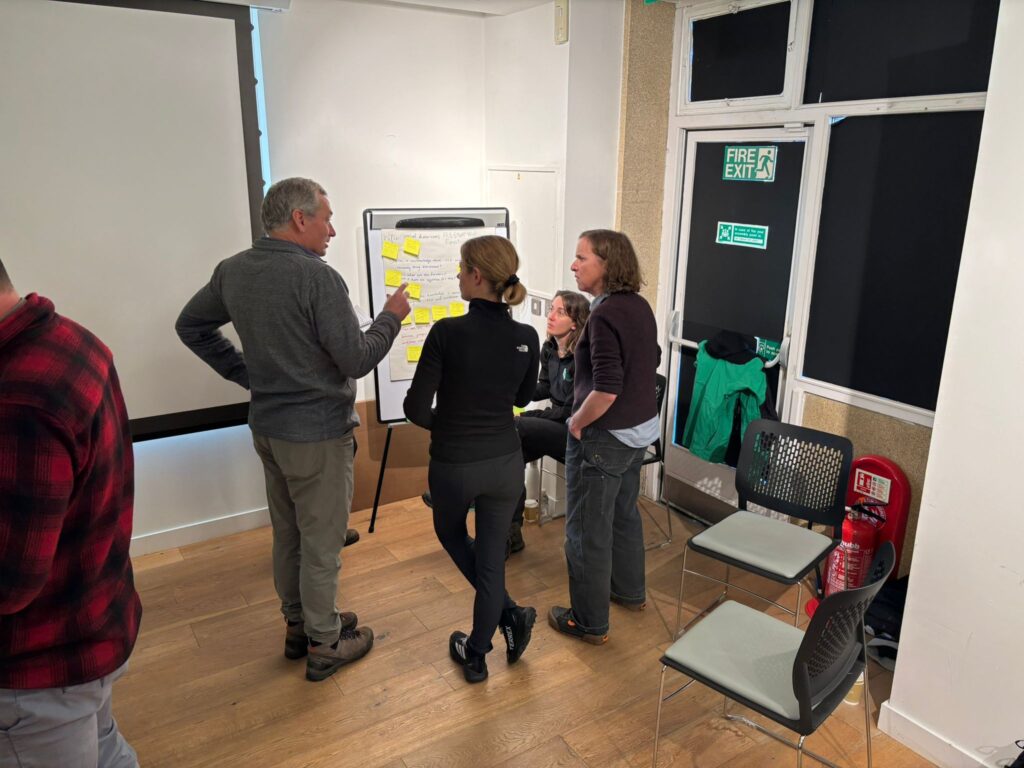
Exchanging views about windthrow during fast paced, interactive group discussions. Credit The Wind within the Trees project team
Next steps
Feedback from participants will be instrumental in helping to shape both current project outputs and future project development – from the identification of key barriers to CCF adoption to perceptions about CCF timber quality, supply chain challenges and market incentives.
Thank you to everyone who joined the team at Queen Elizabeth Forest Park. We will be publicising a follow up event soon, so watch this space!