
Berglind Karlsdóttir, Social Scientist at Forest Research and Lead on our Farmer action for tree resilience project, explains why farmers are key to ensuring the protection of trees in fields, hedgerows, woodland and other pockets across England’s extensive farmland.
Up to 70% of England’s land area is farmland, and a large proportion of the country’s trees are located on this land. Therefore, it is important that us foresters are able to effectively engage with farming communities and understand what tree health management looks like on farms. Some farmers also might not consider tree management to be part of their ‘job description’ or may struggle to find information that is useful and relevant to themselves and their farms.
This is where our project comes in!
Our ‘Farmer action for tree resilience‘ project aims to develop helpful resources and build knowledge exchange opportunities for farmers to learn more about what they can do for their trees (and what their trees can do for them!). But in order to do this, we needed to understand what tree resilience means to farmers and their businesses, how they are already looking after their trees, what challenges they face in doing so, and what kind of support could help them take action.
What did we do?
In late 2025, we held three workshops, led by our partners at the Organic Research Centre and Farming and Wildlife Advisory Group SW (FWAG SW). Our partners invited an excellent group of farmers who shared their knowledge and insights with us in beautiful settings surrounded by young and old farmland trees.
We then developed a Theory of Change, led by the Countryside and Community Research Institute, which is a researcher’s version of a complicated impact-focused mind-map. This allowed us to better understand farmers’ key concerns and priorities and develop potential solutions to better supporting farmers to manage their trees for resilience.
A group of 12 farmers, who we call our ‘core farmers’, have kindly agreed to continue on this journey with us, and have participated in a further two workshops to sense-check our work and help us to understand the pathways between interventions and impact. They will also provide feedback on the proposed solutions as we start developing these. Our partners at the University of Exeter will lead on monitoring and evaluating the outcomes and impacts of all this.
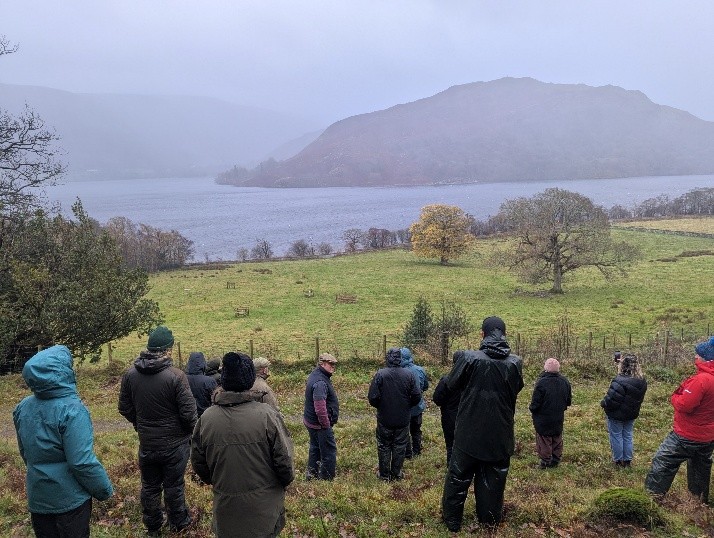
Participants looking at young and old farm trees in various contexts at one of the workshop venues © Crown Copyright. Forest Research – Berglind Karlsdóttir.
What did we find?
We have listened to all the participating farmers, and we now know that farmers seek support on five key areas:
- Biological, physical and management challenges: These are the key threats to farmers’ trees including pests and diseases, damage to newly planted trees from squirrels and deer, and environmental threats such as flooding, droughts and wildfires.
- Knowledge, skills and decision-making gaps: Farmers found it difficult to navigate complex and often contradictory information from a range of organisations. They need clear and consistent information from trusted organisations and advisers.
- Economic and financial uncertainty: Farmers often find it difficult to navigate complicated and inflexible funding options for tree planting and management, and to understand financial costs and benefits of their farm trees.
- System-level and structural barriers (off-farm): A number of external factors affect farmers’ ability to take action, such as and policy and regulatory constraints, particularly around taxation, and supply chain limitations around biosecure nursery stock and markets for tree products.
- Integration and whole system complexity: Farmers do not consider ecological and economic factors in isolation but rather consider these as part of their farm system and business. This reinforces the need for integrated whole-farm solutions.
We also heard that farmers learn in different ways and that support needs to be:
- Provided by trusted voices – agricultural organisations, farm advisors and friends;
- Provided in a range of formats – such as farm-walks, WhatsApp chats, videos, podcasts, talks and more. We particularly learnt that farmers want to learn from other farmers who can provide real examples of on-farm tree resilience actions which work.
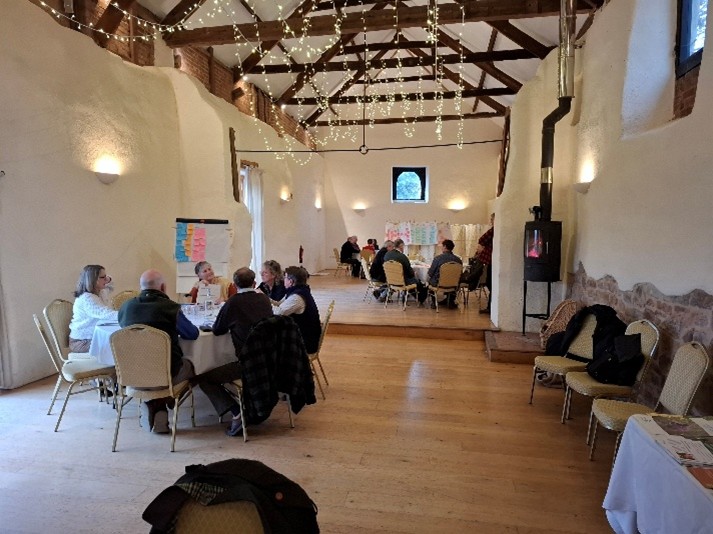
Participants at one of the workshops mapping out their key concerns and priorities © Thomas Mansfield, FWAG SW.
What’s next?
This is a core part of our project which will include a number of what we call ‘Farmer Champions’. We have recently finished recruiting a group of six Farmer Champions who are all very engaged and highly knowledgeable on this topic. We feel confident that they can provide helpful and relatable examples of how they integrate trees within their farm businesses across livestock, arable and mixed farm settings. Keep an eye on the CFP website to find out more about our Farmer Champions and ongoing research!
Thank you to all of the farmers who have been involved in our research so far, your contributions have been incredibly valuable to the project!
Read more about our Farmer action for tree resilience project.
Stay connected!
Keep an eye on our website, follow us on social media (LinkedIn & Bluesky) and subscribe to our newsletter to be kept up to date on the latest CFP research, news and events!
Find out more about National Plant Health Week 2026.