
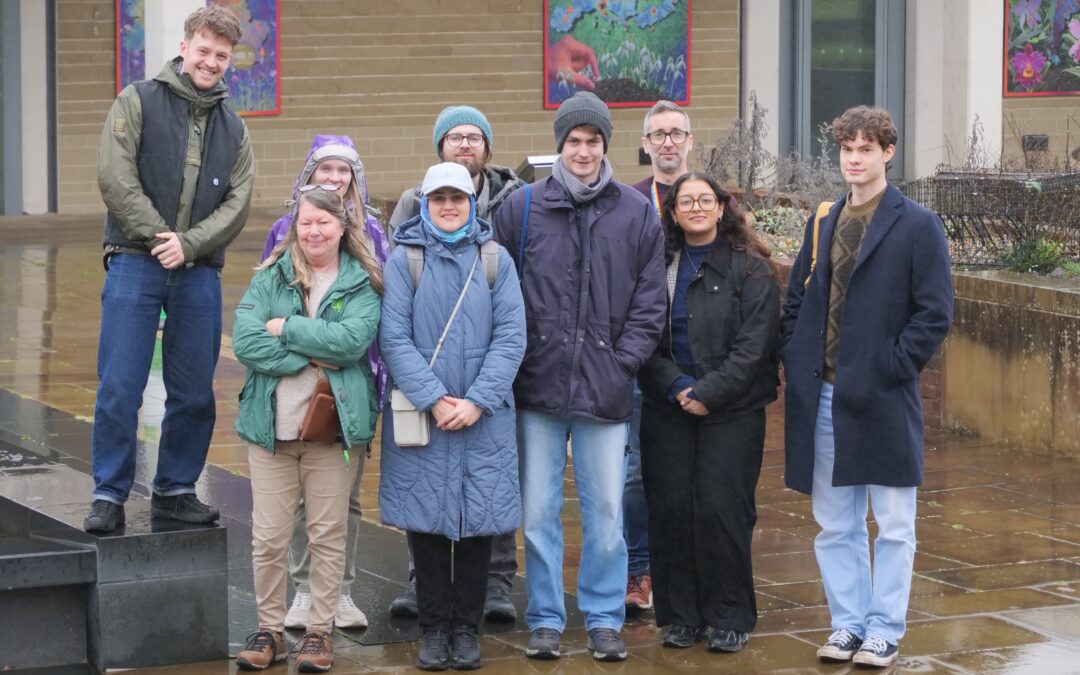
On 10 Feb, our Interns had the valuable opportunity to visit Wakehurst Botanical Garden and go behind the scenes at the Millennium Seed Bank…
The Millennium Seed Bank (MSB) managed by Royal Botanic Gardens Kew, is the most diverse wild plant resource on earth, home to over 2.5 billion seeds from wild plants, representing over 40,000 different species from around the world!
This is the second year that our Centre for Forest Protection Interns have been invited to look behind the scenes at the MSB, with a tour of the labs, vault, and gardens. It also marked the first time that our interns who are based at Forest Research, and those at Kew Gardens were able to meet in person.
The day began with a short lecture given by Dr Efisio Mattana, Research Leader in Seed and Seedling Ecology at Royal Botanic Gardens, Kew. Efisio provided the interns with an overview of the Seed traits for tree production project, which combines research and technical development to investigate germination traits in UK native trees; to understand how these traits vary; and optimise commercial seed quality using high-throughput screening techniques. The project is being funded by the Forestry Commission via the Tree Production Innovation Fund.
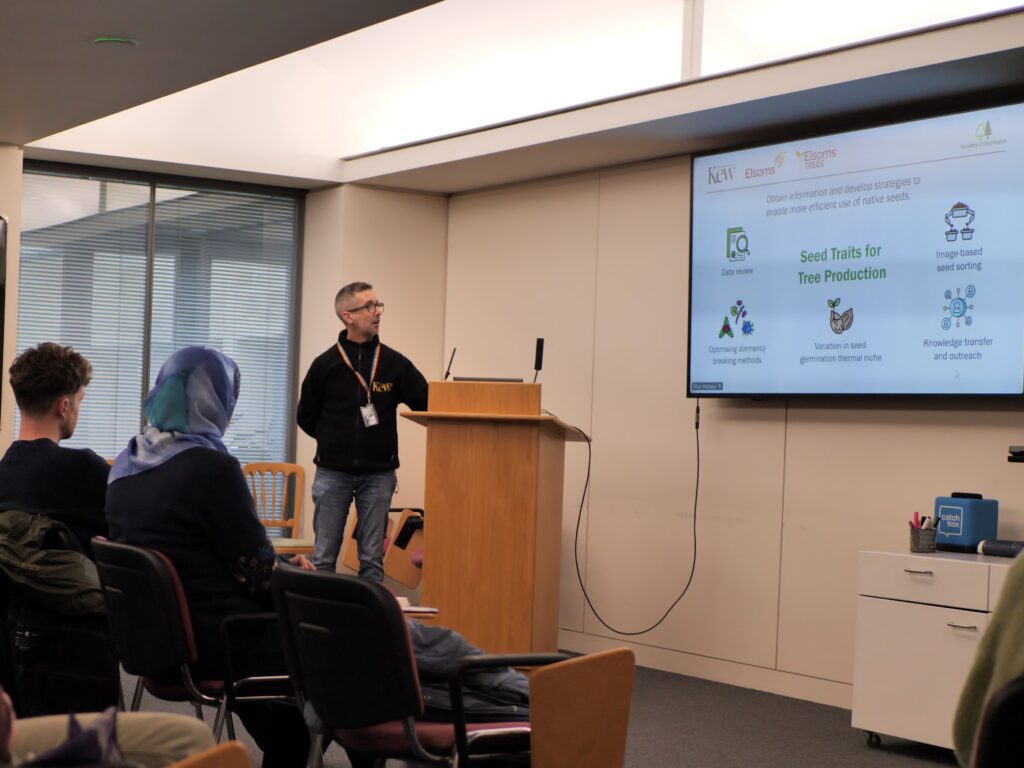
Dr Efisio Mattana giving a lecture to the CFP interns on the Seed Traits for Tree Production project.
We then heard from Elena Fouce Hernandez, Research Assistant with Royal Botanic Gardens, Kew. Elena’s current work involves researching UK native seeds for restoration of ecological diversity and climate change resilience and investigating the variation of germination traits in UK native trees such as Scots pine, rowan, or elder, for ‘climate-smart’ seed sourcing and climate-resilient tree production.
Elena also gave a really interesting overview of her time as an intern at Kew, where she worked on the CryoSync project studying the redox effects on recalcitrant oak seeds for cryobanking, and later on the Improving tree seed germination using plasma technologies project. This was a great opportunity for our interns to see the value of undertaking an internship and where it may lead.
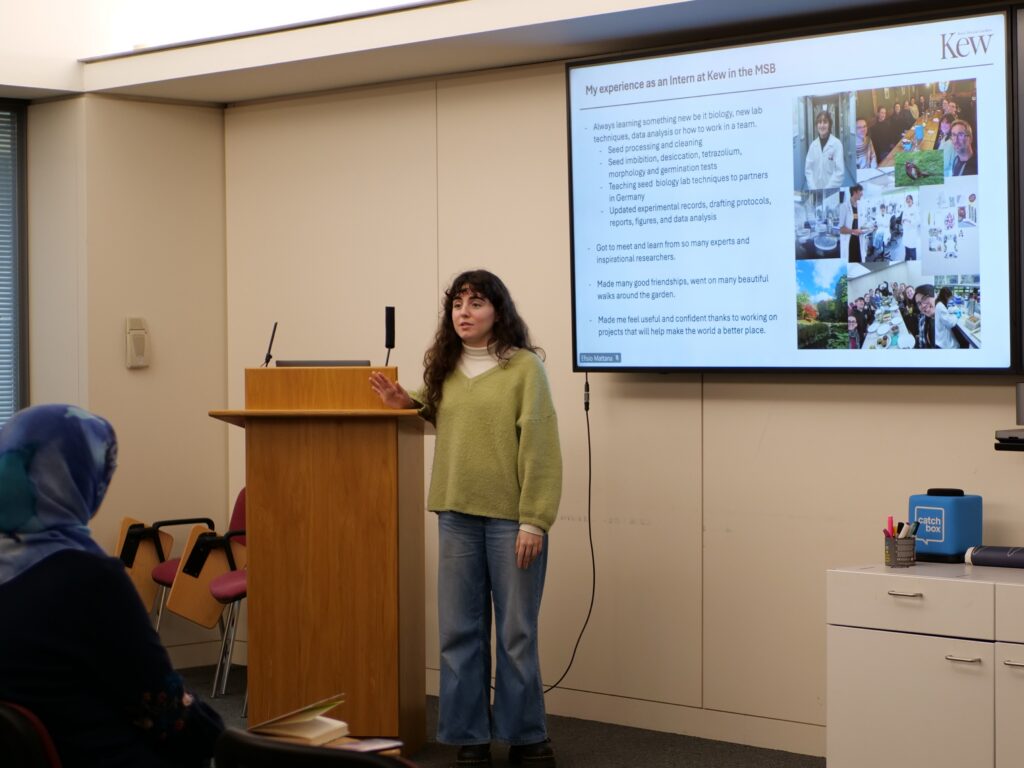
Elena Fouce Hernandez talking to the interns about her work at Kew and her internship.
Following these talks, our interns then enjoyed a lunch at the Stables Kitchen, where they were able to socialise, and chat more about their own projects, interests, and plans for after they have completed their internships.
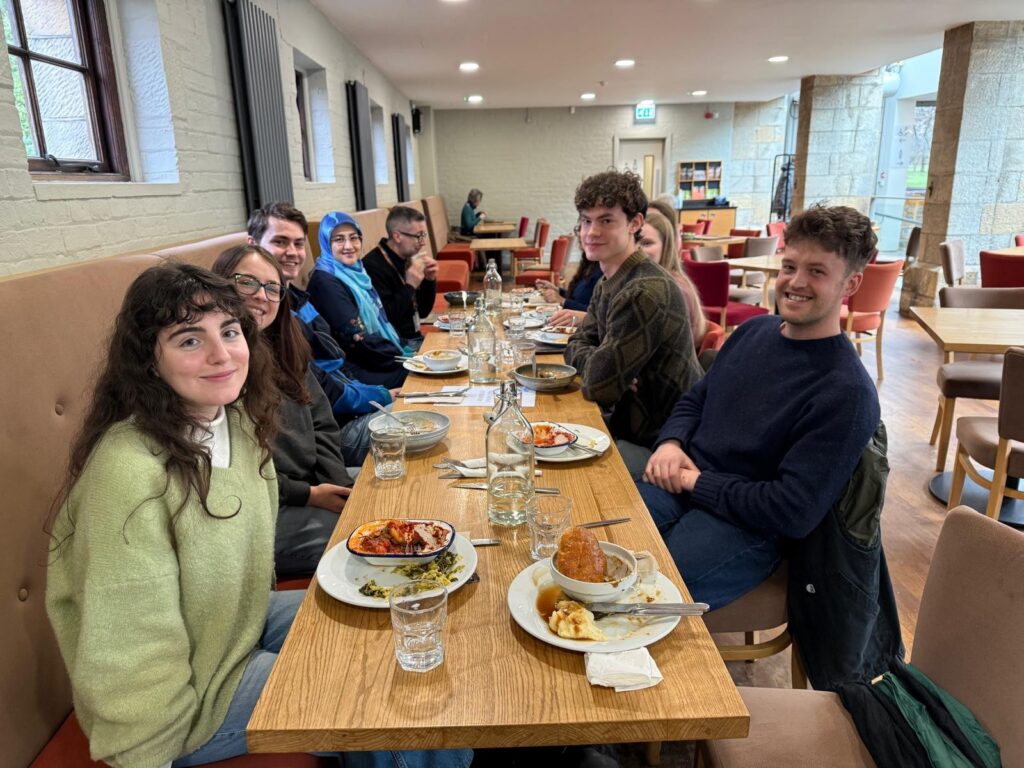
The Interns enjoying a lovely lunch at The Stables, Wakehurst.
In the afternoon, Efisio invited us to take a look behind the scenes at the MSB laboratories and seed processing facilities which are not accessible to the general public! These facilities enable the scientists and curators to germinate and study seeds, helping to identify plants and species that can adapt to the global climatic conditions of the future. Seeds are stored long-term, often for decades, in underground vaults in freezing conditions, whilst others are kept in -196°C liquid nitrogen within cryopreservation tanks.
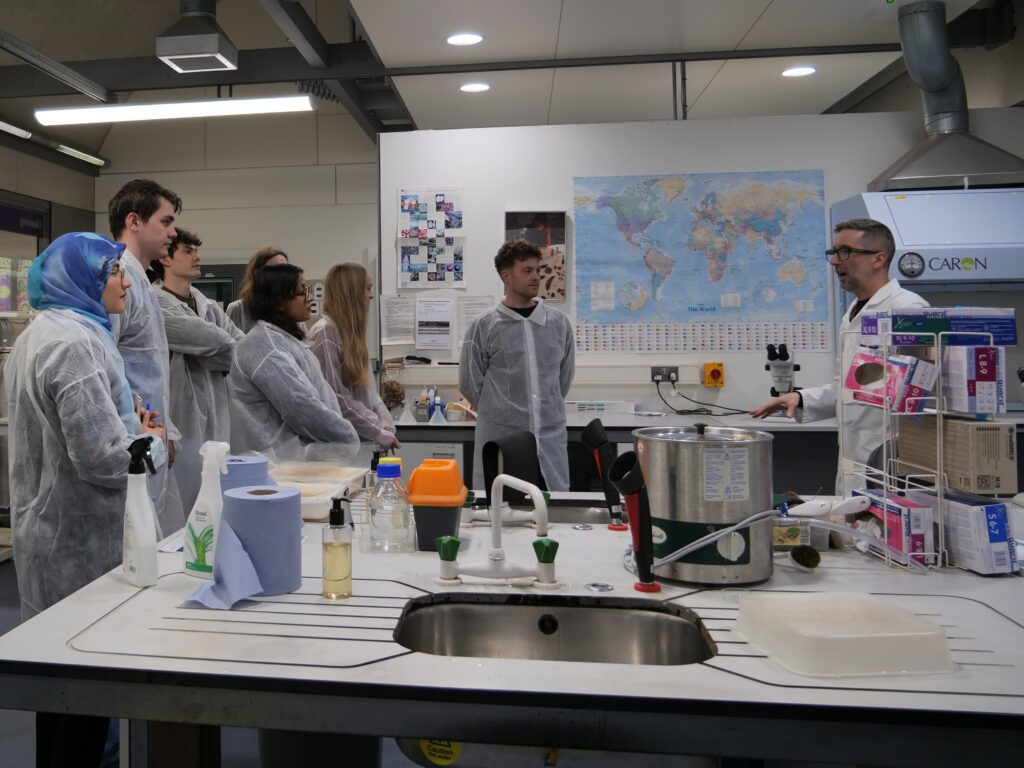
The Interns listening to Efisio explain how Kew scientists use the labs at the MSB to store and study seeds.

Intern Flynn looking at an analytical balance machine in the MSB laboratories.
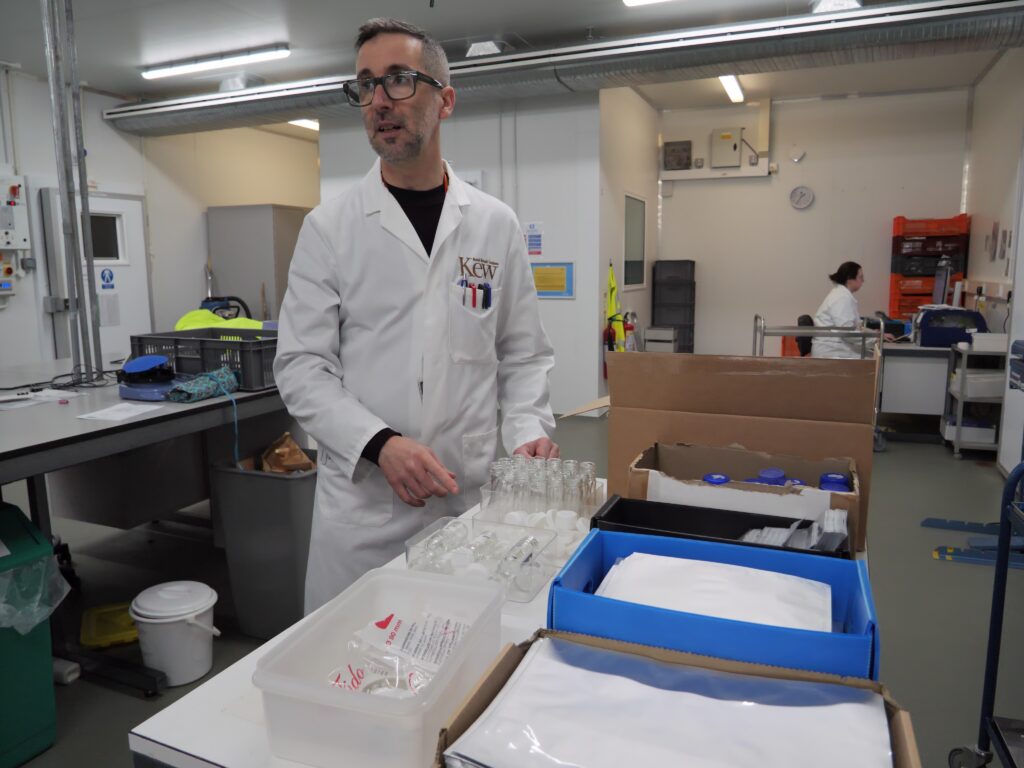
Efisio demonstrating some of the different containers that can be used to store and transport seeds.
We were then treated to a tour of the Wakehurst Place Botanic Gardens, led by Kew volunteer Diane. We learned that one of Wakehurst’s 100+ year old Giant Redwood (Sequoiadendron giganteum) trees unfortunately had to be removed from the gardens in summer 2025 due to safety concerns and heard about the work that Kew scientists are doing to use its timber and propagate a new specimen from its seeds.
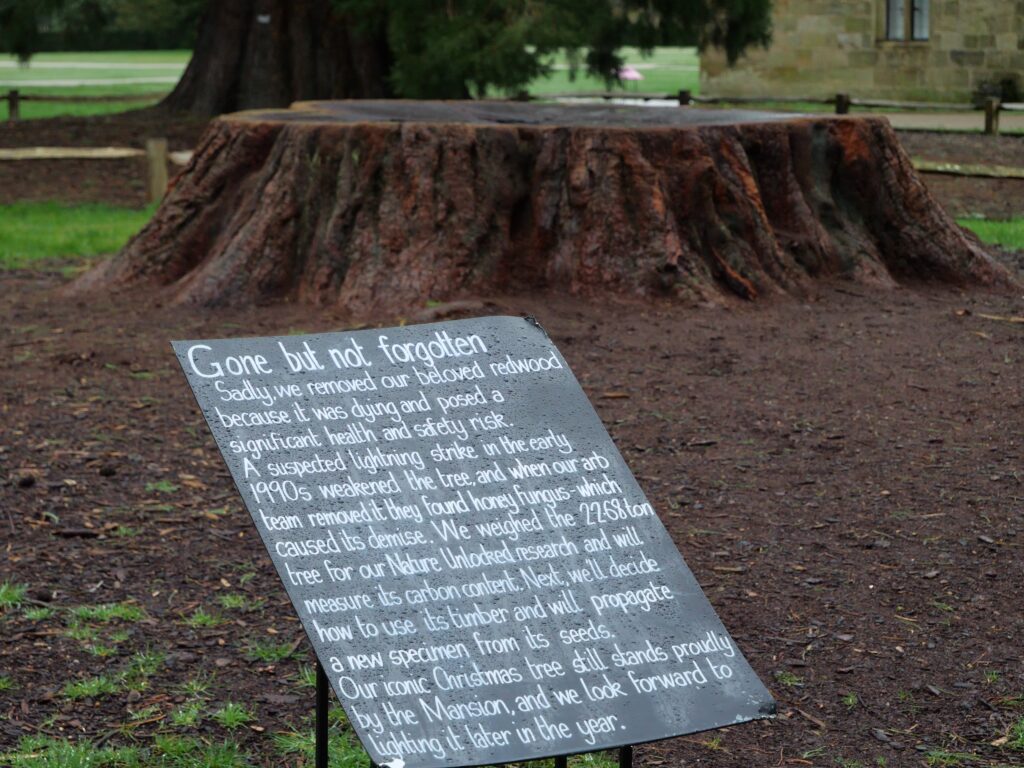
The stump of the Giant Redwood (Sequoiadendron giganteum) which was removed in summer 2025 for safety reasons.
The tour was rounded off with a visit to the particularly vibrant Winter Garden which featured Mature Himalayan silver birch (Betula utilis), and Tibetan cherry (Prunus serrula tibetica) trees, as well as Midwinter fire (Cornus sanguinea), adding a burst of colour to the otherwise grey and damp February day!
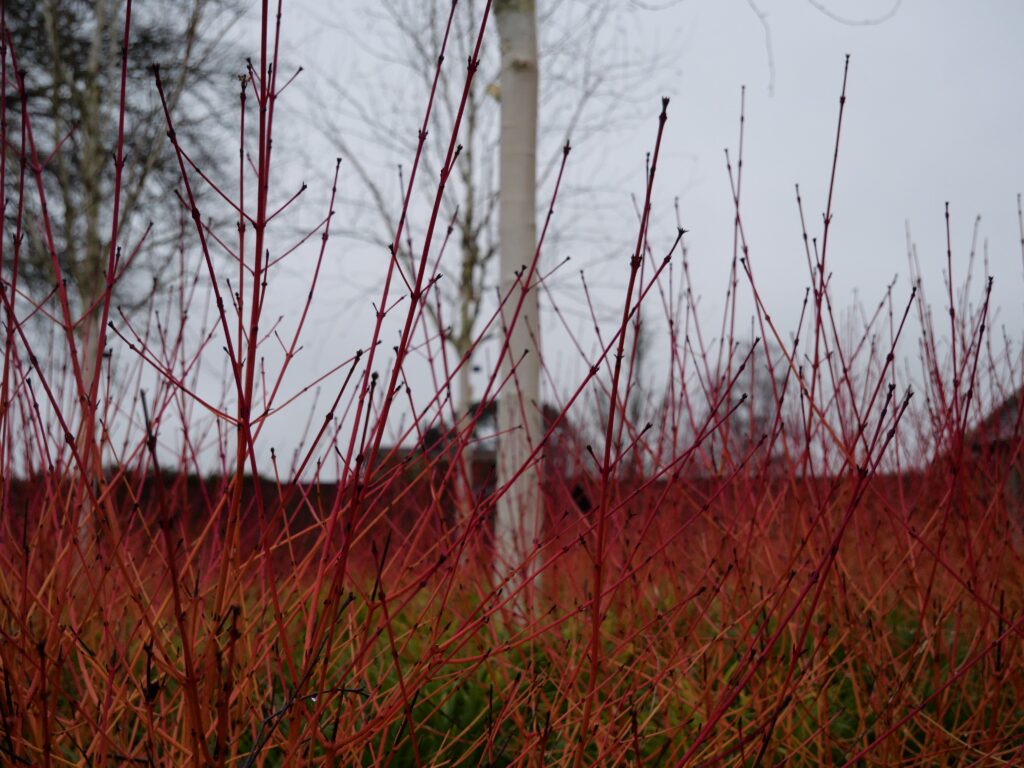
Mature Himalayan silver birch (Betula utilis), and Midwinter fire (Cornus sanguinea) in the Wakehurst winter garden.
Thank you very much to the staff at Kew and Wakehurst who helped to facilitate this day for us, and thank you to our interns for asking lots of interesting questions throughout the day. It was a great experience for everyone involved!
As part of their internship, each of our interns will be writing a diary about their experience, which will be shared via the Centre for Forest Protection website and social media channels. Keep an eye out for these over the next few months!
Find out more about the Centre for Forest Protection Internship Programme.