Centre for Forest Protection Internship Programme

The Centre for Forest Protection (CFP) internship is a six-month programme where interns get to work on a research project within one of the CFP research teams.
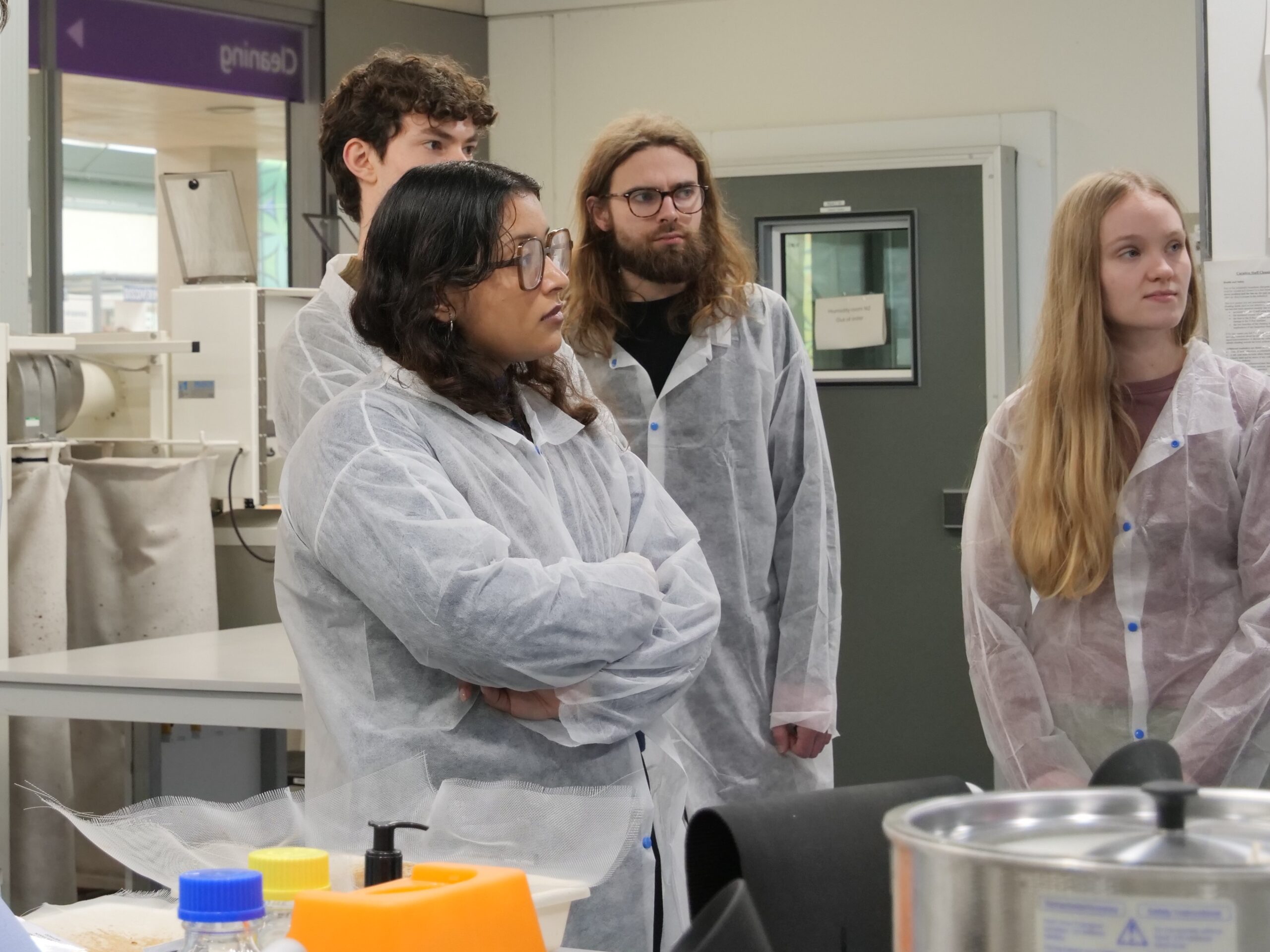
A group of people wearing lab coats stand together in a laboratory, appearing to listen to someone outside the frame. The room contains lab benches, equipment, and bright overhead lighting. Various containers and supplies are visible on the work surface in the foreground.

About our internship programme:

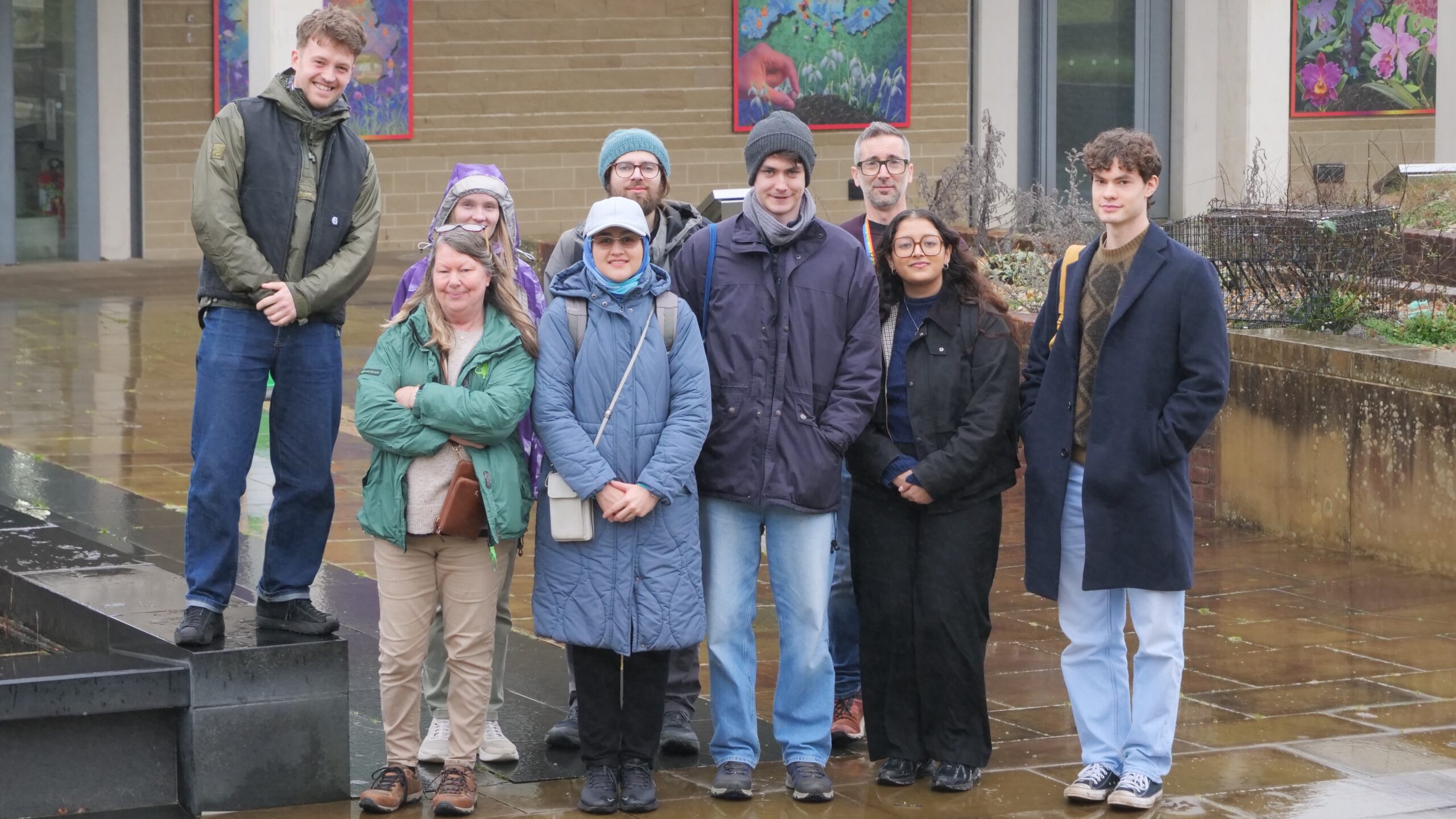
Our internship programme, introduced in early 2023, aims to nurture the next generation of forest scientists. Interns get to work on a research project with some of our research teams, complemented by additional sessions visiting labs and discussing career options.

Many of our previous interns have gone on to PhD research in the field, or have continued working in the sector. It served as a stepping stone between university and work, and in some cases allowed a change of direction into forest science.

Internships at the Centre for Forest Protection

👉 Apply for a CFP Internship!

A group of nine people stand outdoors on a wet, paved area in front of a building with colourful artwork in the windows. They are dressed in winter clothing, including coats, hats, and scarves, and they smile for the camera. The scene is overcast and rainy.

%

of our former interns have either gone on to further study or have secured jobs in the sector (as of February 2026).

We are delighted to offer six exciting new Centre for Forest Protection internships for 2026/27!

These will run from October 2026 to March 2027 and are focused on important topics in tree health and forest protection.

These internships offer an excellent chance to develop knowledge, skills and hands-on research experience, while contributing to innovative and impactful projects at two of Britain’s leading research institutes: Forest Research & Royal Botanic Gardens, Kew.

Find out more about the internships on offer below:

CFP Internships with Forest Research

Application deadline: Sunday 19 July 2026 at 23:55

Internship: Researching complex yew decline (Forest Research)

Close-up of a yew tree with clusters of bright red, cup-shaped berries among dense, dark green needle-like leaves. The foreground berries are in sharp focus, while the surrounding foliage and additional red berries are softly blurred in the background under natural sunlight.

Yew tree and berries © Crown Copyright. Forestry Commission – Isobel Cameron.


Our Researching complex yew decline project is investigating the causes of the ongoing decline of ancient yew trees in southern England by examining links between tree health, soil conditions, and the microbiome.

As an intern, you will support fieldwork across the UK to assess and collect samples from yew populations, and laboratory analysis at the University of Birmingham to study the metabolomic status of affected trees. There may also be opportunities to analyse hyperspectral imagery and contribute to plant pathogen diagnostics with the Tree Health Diagnostic and Advisory Service at Alice Holt.

Location: Forest Research, Alice Holt, Farnham, Surrey GU10 4LH and The University of Birmingham (Blended working).

Find out more and apply here: Centre for Forest Protection Internship – Complex Yew Decline – Civil Service Jobs (1 position available).

Application deadline: Sunday 19 July 2026 at 23:55.

Internship: Grey squirrel bark stripping behaviour (Forest Research)

A grey squirrel clinging to the trunk of a large tree in a forest setting. The squirrel has a bushy tail and is positioned vertically on the bark, looking toward the camera. The ground is covered with dry, fallen leaves, and another slender tree trunk is visible nearby. The background shows a mix of brown and green tones, indicating an autumn woodland environment.

Grey squirrel on a sweet chestnut tree © Crown Copyright. Forestry Commission – Isobel Cameron.

Our Understanding grey squirrel bark stripping project is aiming to understand the chemical and behavioural factors behind grey squirrel bark-stripping damage by combining principles of chemical ecology, behavioural ecology, movement ecology, biologging, and machine learning.

The research seeks to identify natural tree chemicals that deter squirrel feeding and develop new tools to analyse squirrel behaviour using video observations, accelerometer data, and movement-tracking techniques.

As an intern, you will support behavioural data collection and analysis, carry out woodland surveys and squirrel population assessments, and gain training in machine learning, ecological field methods, and interdisciplinary wildlife research.

Location: Forest Research, Alice Holt, Farnham, Surrey GU10 4LH (Blended working).

Find out more and apply here: Centre for Forest Protection Internship – Grey Squirrel Bark Stripping Behaviour – Civil Service Jobs (1 position available).

Application deadline: Sunday 19 July 2026 at 23:55.

Internship: Farmers and trees (Forest Research)
Three cows grazing on green grass in a field with rows of young trees protected by light-coloured plastic guards. The cows have brown and white coats, and the field is dotted with small yellow flowers. In the background, there are more tree guards arranged in neat lines, indicating a managed agroforestry or reforestation area.

Cattle grazing among newly planted trees © Crown Copyright. Forest Research.

Our Farmer action for tree resilience project is aiming to understand what motivates farmers to improve the health and resilience of trees on their farms and to co-design practical resources that support informed decision-making and action. Proposed interventions include a farmer guide, podcast, and peer-learning activities, developed with farmer input and supported by six farmer champions who will help test, promote, and refine them.

As an intern, you will contribute to developing, testing, launching, and disseminating these interventions through content editing, stakeholder engagement, communications, and collaboration with farmers, experts, and policymakers.

Location: Forest Research, Alice Holt, Farnham, Surrey GU10 4LH (Blended working)

Find out more and apply here: Centre for Forest Protection Internship – Farmers and Trees – Civil Service Jobs (1 position available).

Application deadline: Sunday 19 July 2026 at 23:55.

CFP Internships with Royal Botanic Gardens, Kew

Application deadline: Wednesday 22 July 2026 at 23:59

Internship: Predicting pest and disease risks to non-native trees (Kew)

Young sycamore (Acer pseudoplatanus) tree seedling emerging from dark brown soil, with a thin stem and several bright green leaves unfolding. The close-up image focuses on new growth against a blurred soil background, highlighting early plant development.

Sycamore (Acer pseudoplatanus) seedlings © Crown Copyright. Forest Research – George Gate.

This internship will build on the work of our Predicting risk to non-native tree species from potential threats in the UK project to develop a model for predicting biotic threats to non-native tree species (NNTs) in the UK.

As an intern, you will focus on testing and optimising an existing prediction pipeline that identifies potential pest and pathogen threats to non-native tree species in the UK. Key tasks will include incorporating data on pest and pathogen occurrence and distribution, assessing whether information on the severity of damage caused by native pests and diseases can improve predictions, and evaluating the overall effectiveness of the model. The project will conclude with the production of a short report summarising the research and findings.

Location: Royal Botanic Gardens, Kew, Richmond (Blended working).

Find out more and apply here: Science Project Intern – Predicting pest and disease risks to non-native trees (1 position available).

Application deadline: Wednesday 22 July at 23:59.

Internships: Integrating genomics and dendrochronology to predict tree growth for resilient future forests (Kew - 2 Positions)

Close-up view of a large Scots pine tree trunk lying on the ground, showing a freshly cut cross-section with visible growth rings. The bark around the edge is rough and reddish-brown, while the inner wood is smooth and light-coloured. In the background, leafless trees and a grassy area are visible under a clear sky.

Scots pine rings © Crown Copyright. Forestry Commission – Isobel Cameron.

Our Applying dendrochronology for genomic resilience project supports UK afforestation goals by combining tree-ring data, genomics and climate modelling to identify which oak tree populations are best suited to future climates, moving beyond the traditional “local is best” approach.

Two interns will help analyse genomic and growth data to improve predictions of tree adaptation under climate change and inform future woodland planting and assisted gene flow strategies. As an intern, you will join the midway through a three-year research programme and contribute to helping the project understand whether assisted gene flow is a useful or perhaps necessary tool to support the future climate adaptation of UK tree populations.

The two internships available with this project are:

  • Dendrochronology analysis

This internship will focus on analysing dendrochronology data and evaluating a range of tools (e.g. mixed models, random forest and/or counterfactual approaches) to predict growth based on multi-decade training data, after controlling for covariates. Towards the end of the internship, the data will be combined to test whether genomic offset, a measure of local adaptation, can improve the predictive performance of tree growth models.

  • Genome identification

This internship will focus on identifying parts of the genome that are associated with different environmental conditions across the study sites. By analysing DNA data from oak trees, the research will look for evidence of local adaptation, helping us understand how tree populations may respond to future climate change.

Location: Royal Botanic Gardens, Kew, Richmond (Blended working, at least 2 days/week in-person at Kew).

Find out more and apply here: Science Project Intern – Integrating genomics and dendrochronology to predict tree growth for resilient future forests (2 positions available)

Application deadline: Wednesday 22 July at 23:59.

Please note, the application deadline for the internships based at Forest Research is Sunday 19 July at 23:55, and for those based at Kew Gardens the deadline is Wednesday 22 July at 23:59. 

You can hear from some of our previous interns by reading the diaries they wrote about their time with us here: Intern Blogs.

You can also find out about what several of our previous interns have been up to since completing the programme, and how their internship helped them get to where they are now, below!

Former interns – where are they now?

Since 2023, 25 interns have successfully completed a Centre for Forest Protection internship. Below you can find out about what some of our former interns have been up since completing the programme, and how their internship helped them get to where they are now:
A person with long, blonde hair stands outdoors in front of a mountainous landscape. The sky is partly cloudy, and green cliffs and ridges stretch into the distance behind them.

Alice (CFP Intern 2022/23)

Shortly after finishing the internship, I received a PhD offer from the University of Edinburgh looking at the ecological strategies of trees in African Woodlands on the E4DTP. I am currently in third year and my deadline is August 2027. I have been fortunate to spend several months based in Namibia and Angola collecting data on tree growth rates, quantifying ontogenetic stages (seed, seedling, sapling and mature tree) and building a functional trait dataset. I am yet to publish my research but last year I did write a blog and a post fieldwork report as part of my funding requirement. Further details can be found here.

This internship gave me extra research experience outside of university, helping separate me from other candidates. It also confirmed to me that I wanted to work in academia and with trees. You can read more about Alice’s time as a CFP intern here: Intern diary – Alice.
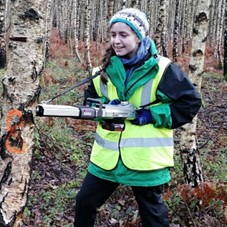
A person wearing a bright yellow safety vest, winter clothing, and gloves stands in a birch woodland while using a handheld tool against the trunk of a tree.

Eve (CFP Intern 2023/24)

Since completing my CFP internship at Forest Research, I have started a PhD at the University of Edinburgh and am now in the second year of my research, investigating the drivers of invasive plant distributions across the French Polynesian Islands.

The internship strengthened my research skills, introduced me to new statistical methods, and gave me valuable fieldwork experience. I also had the opportunity to expand my knowledge of forestry and ecology through conferences, field trips, and learning from my colleagues. The internship confirmed how much I enjoy research and gave me the confidence to pursue a PhD. You can read more about Eve’s time as a CFP intern here: Intern Diary – Eve.
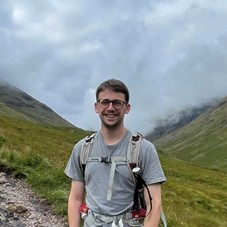
A person wearing a grey T-shirt and hiking backpack stands on a path surrounded by grass covered mountains, with misty clouds hanging low over the landscape.

Jack (CFP Intern 2024/25)

Since leaving the CFP I’ve been working with the National Trust for Scotland at Glencoe NNR as a Long-term Volunteer Ranger. This has been a busy and practical role covering everything from visitor engagement, practical conservation, habitat and species surveying, and estate maintenance.

Whilst I have taken a more hands-on career turn, my time with the CFP was helpful in boosting my communication, project design and community engagement skills, as well as helpful in building my connections within the conservation sector, something which has been incredibly useful as I look for next steps towards paid work. You can read more about Jack’s time as a CFP intern here: Intern Diary – Jack on public perceptions of ‘lost’ tree species.
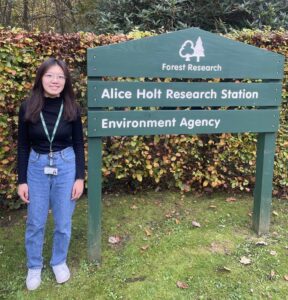
A young woman standing next to a sign reading 'Alice Holt Research Station'

Katy (CFP Intern 2024/25)

After my internship, I am now working in an eDNA company performing molecular lab work that feeds into Next Generation Sequencing. My experience as an CFP intern has certainly helped build my career path. I gained confidence working in the lab and experience with molecular techniques in particular.

Moreover, I enhanced my soft skills, such as communication, team collaboration, and time management, which are helpful in my current role. You can read more about Katy’s time as a CFP intern here: Intern diary – Katy on methods to detect a bacterial threat.

Further resources:

Click on the buttons below to access resources from some of our interns:

Stay up to date:

Subscribe to our newsletter and follow our social media channels to hear when applications open for our next cohort of interns.

Science & Research

Our science programme will support the UK governments' forest and tree strategies and the successful delivery of tree planting programmes. Research outcomes will also directly contribute to the improved resilience of the UK’s forests, woodlands and trees and help promote enhanced capacity and capability in forest and tree health research.

A fisheye lens view of a dense forest with tall trees and green foliage. The perspective curves the edges of the image, creating a circular frame with black borders. Sunlight filters through the leaves, casting patches of light and shadow on the forest floor. The sky is partially visible through the canopy, showing hints of blue.

Our partners