
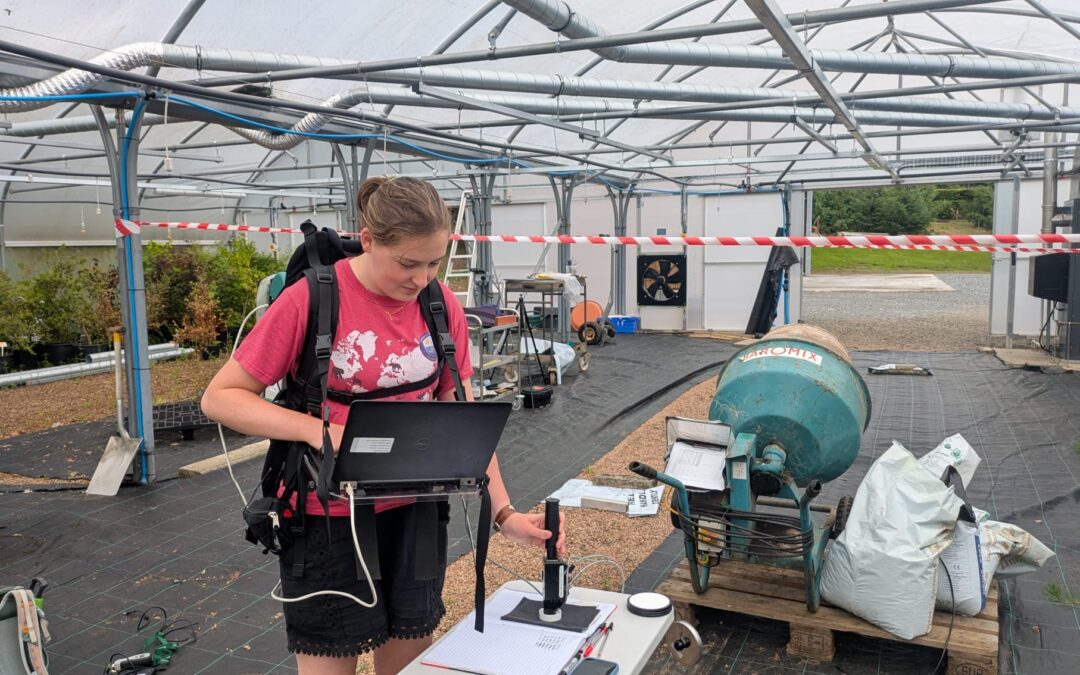
Collecting hyperspectral data from Scot’s pine needles using an ASD Field Spectrometer © Crown Copyright. Centre for Forest Protection; Forest Research.
Throughout the summer, our REWARD project team hosted undergraduate student Louisa, as part of the Royal Society of Biology (RSB) Plant Health Undergraduate Studentship Programme. Read on to find out what she got up to!
Growing up in the forest and farmland of the south of England, I’ve always had an interest in trees. They were the first parts of nature I learned the names of and often carried a mysticism and charisma that went far beyond the pages of a storybook. To that end, I made the decision to study Ecology and Conservation Biology at the University of Exeter’s Penryn campus in Cornwall. During my first-year compulsory placement, I worked for a local woodland management organisation and attended a site visit with a Defra Plant Health Officer who shared in my fascination with the inner workings of trees and opened my eyes to the ability to ‘read’ a woodland. I was hooked.
When it came to finding opportunities for my second year summer, I knew something tree-related would be high on my list. As one of the tree-related projects available via the Royal Society of Biology’s (RSB) Plant Health Undergraduate Studentships, Forest Research’s (FR) advertisement for an assistant on the Centre for Forest Protection (CFP) REWARD project, funded by Defra, caught my eye. Reading further into the project’s intriguing exploration of remote sensing technology for pre-visual detection of pathogen– or drought-induced stress cemented my choice. I was lucky to be accepted to the project and was welcomed with open arms to FR’s Northern Research Station (NRS).
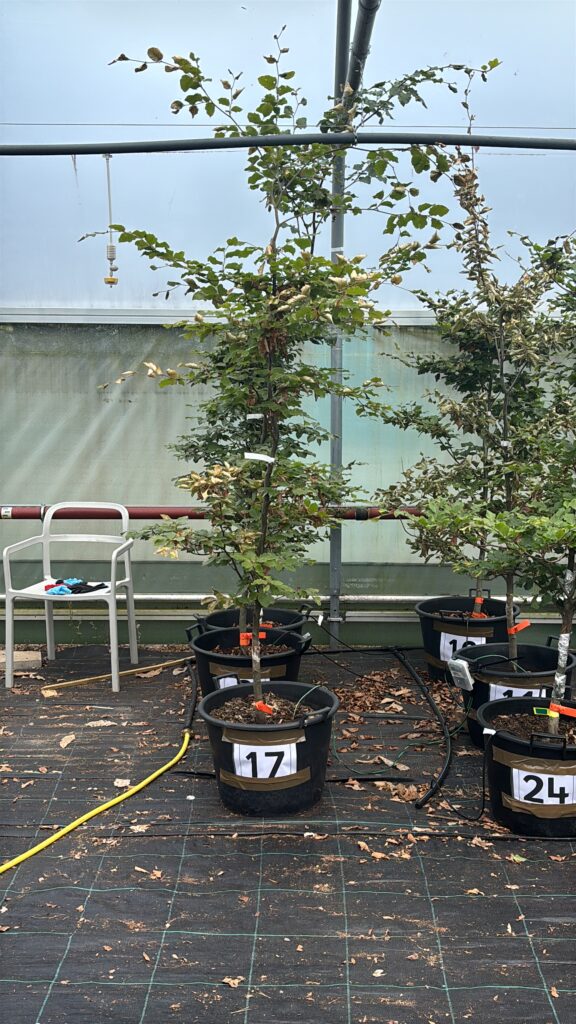
European beech specimens in the polytunnel © Crown Copyright. Centre for Forest Protection; Forest Research.
I was able to largely schedule my own time while at FR. Every week consisted of polytunnel work collecting a variety of data from European beech (Fagus sylvatica) and Scots pine (Pinus sylvestris) specimens sorted into various controls, pathogen-exposed, drought-exposed and mixed groups. These included hyperspectral readings using an ASD FieldSpec, chlorophyll fluorescence measurements using a Fluorpen and fortnightly visual surveys to assign each of our one hundred trees a score for discolouration and defoliation. Uploading this data, joining weekly meetings with the team and attending to technological hiccups under the guidance of the NERC Field Spectroscopy Facility’s brilliant Dr Robbie Ramsay also came under my purview. One of my on-site supervisors – Alastair MacLaren – was also kind enough to teach me how to perform DNA extractions, nested polymerase chain reaction (PCR), gel electrophoresis and subsequent visualisation on soil samples in the lab, which I enjoyed immensely and has added enormously to my microbiological skillset.
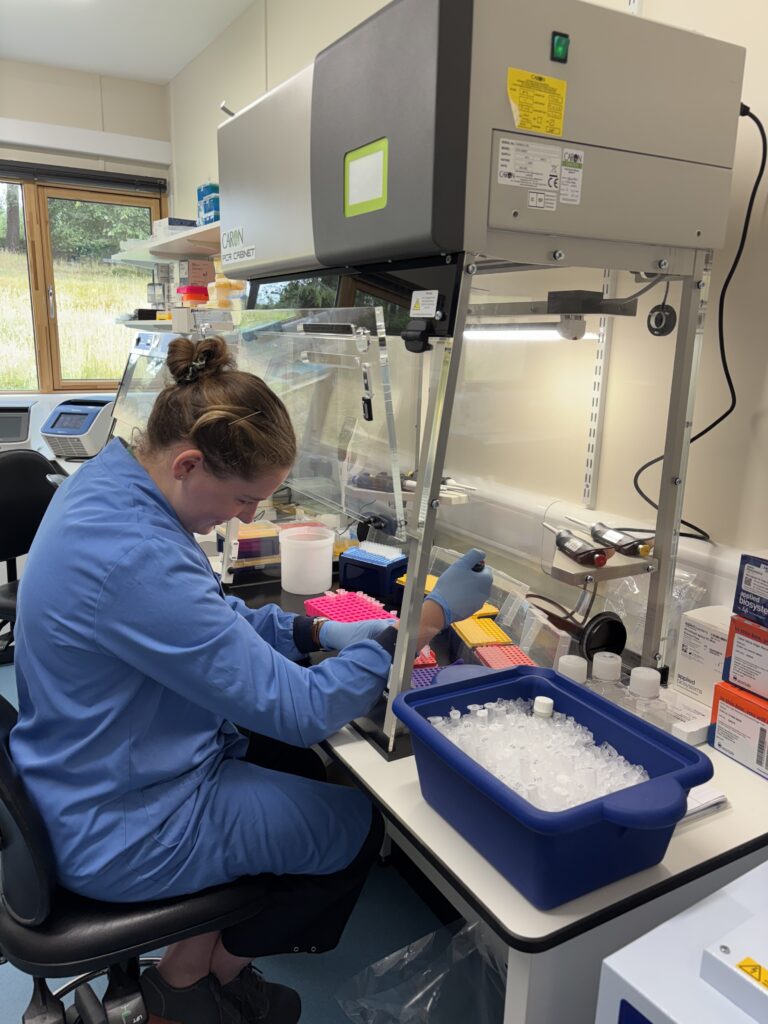
Here I was preparing soil samples for polymerase chain reaction (PCR) © Crown Copyright. Centre for Forest Protection; Forest Research.
One of the highlights of my time with the CFP project was my week-long trip to the University of Birmingham, supported by the generous travel fund offered to interns through the RSB’s programme. There I was welcomed by Professor Robert Jackson and Dr Diana Vinchira-Villarraga, a metabolomics expert who receives frozen leaf samples from our project and transforms them into some extremely helpful results regarding tree biochemistry. She showed me around her labs and dedicated three days to a masterclass in metabolite extraction from plant material and computational analysis of High-Performance Liquid Chromatography (HPLC) readouts, as well as introducing me to an extremely kind and knowledgeable cohort of PhD students and staff who were all willing to answer my many questions and get me excited about a future working in plant sciences.
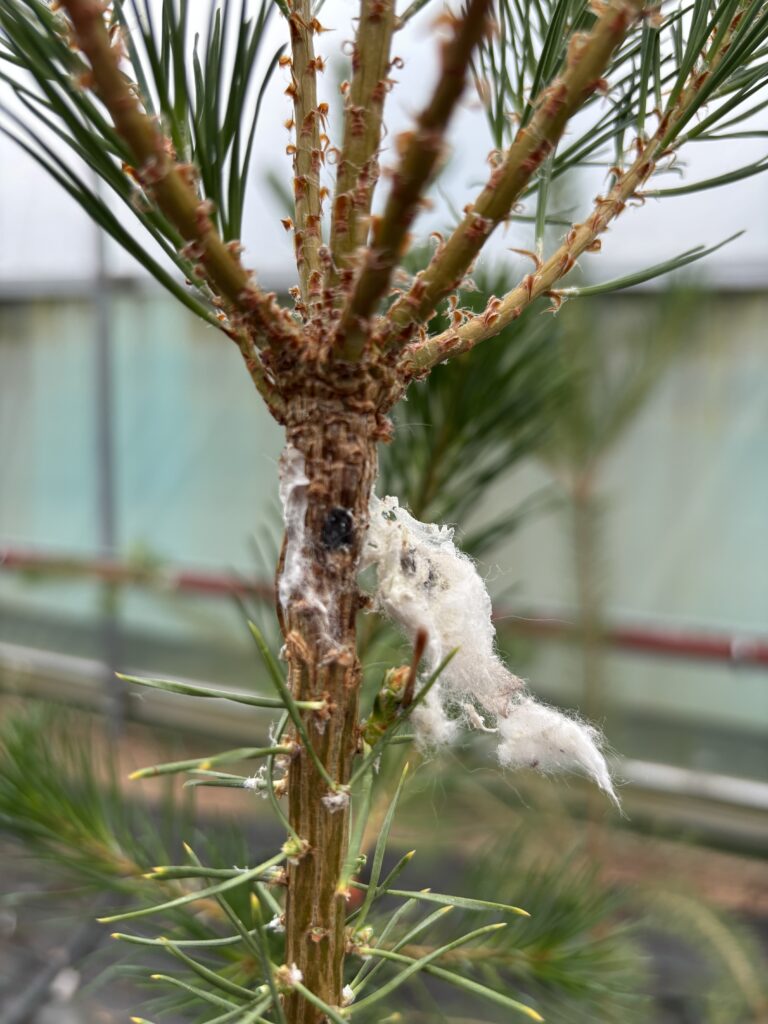
The inoculation site for deliberate pathogen infection using an agar plug on a Scot’s pine specimen © Crown Copyright. Centre for Forest Protection; Forest Research.
I cannot emphasise enough how grateful I am to all of the staff at FR and those otherwise associated with the CFP REWARD project for their kindness, generosity and openness. To Dr Lisa Ward and Dr Gerrard English for getting me to FR in the first place, supporting me throughout and to Dr English especially for his provision of figures and code that aided my presentation of this project to the RSB in late September. To Dr Robbie Ramsay, Dr Juan Suarez and Alastair MacLaren for helping me through when machines went awry, a smile and a seemingly endless list of contacts, and hours of good chat in the lab, respectively. To Vicen Carrió for being the best data collection partner and the voice of reason. To the staff I saw in reception each morning and the groups I slotted into each lunchtime who never hesitated to say hello, include me in conversation and offer advice that has proved invaluable. As someone who moved to a new part of the country alone and was practically the only placement student on site, it made an enormous difference to be seen and considered. Finally, my heartfelt thanks to the RSB, Defra and the ever-reliable Dr Raksha Harwood, without whose stipend, travel fund and supervision this studentship would not have been accessible.
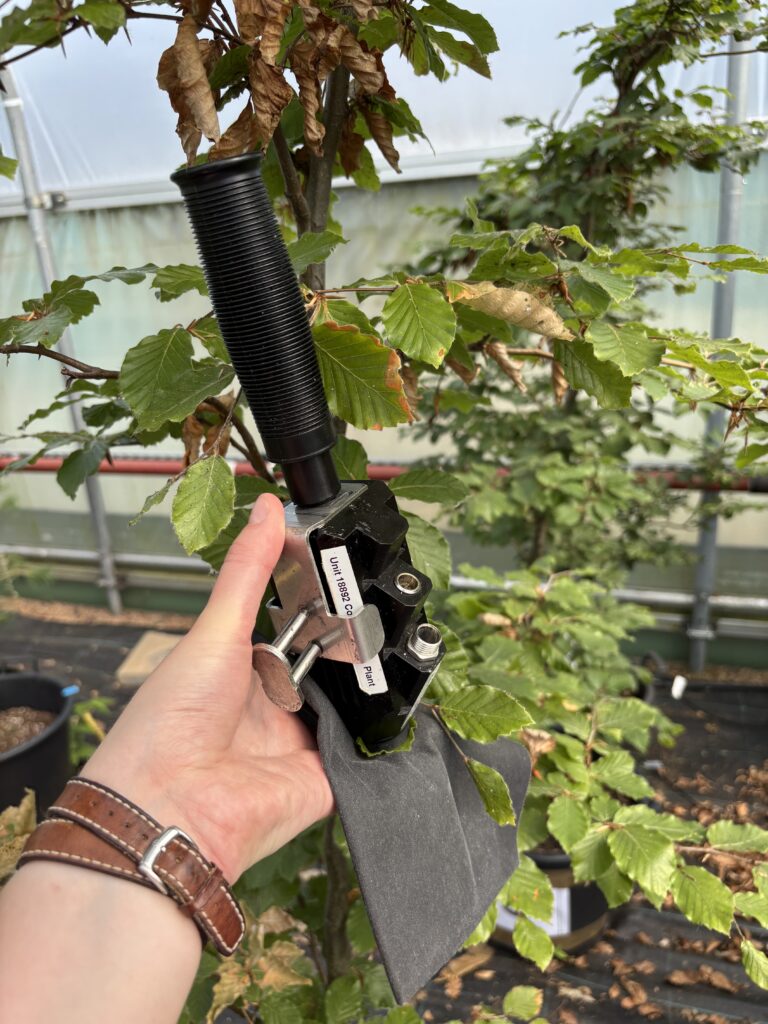
A demonstration of how hyperspectral data was collected for the beech specimens, with the leaf sandwiched between low-reflectance fabric and the probe © Crown Copyright. Centre for Forest Protection; Forest Research.
This summer has undoubtedly aided my future plans. Through my time in the lab and some fascinating conversations with experts, I found a love for genetics. This is a field I am looking to pursue at master’s level and even beyond, at home and abroad. I look forward to delving further into the world of plants and their DNA and perhaps, one day, coming back to where it all started at FR NRS.
The RSB Plant Health Undergraduate Studentships are funded by Defra, the Association of Applied Biologists, SCI Horticulture Group, and the Colegrave Seabrook Foundation. To find out more, please visit: RSB Plant Health Undergraduate Studentships.
Stay connected!
Keep an eye on our website, follow us on social media (LinkedIn & Bluesky) and subscribe to our newsletter to be kept up to date on the latest CFP research, news and events!