
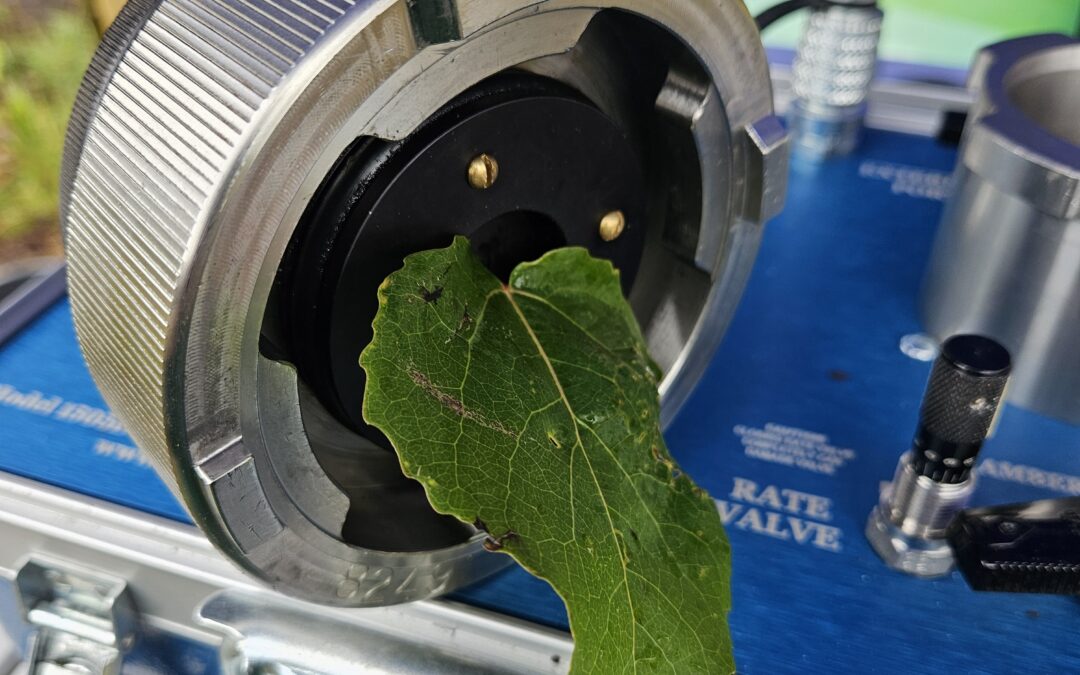
Measuring stress levels within leaves © Crown Copyright. Centre for Forest Protection; Forest Research.
As climate change brings more frequent and severe droughts, establishing healthy and resilient forests is becoming increasingly challenging. In this blog and new video, Dr George Xenakis who leads our EXPLORATION project takes us through the importance of investigating whether planting different tree species together could help young forests better withstand dry conditions and use water more efficiently…
EXPLORATION began in 2025 as a three-year research project. We are working with the University of Edinburgh to combine detailed field measurements with drone-based remote sensing technology, helping to understand how trees respond to drought both on the ground and across entire forest sites.
The EXPLORATION project give an update on their year 2 fieldwork in Wark Forest, Northumberland.
Why is this research important?
Young trees are particularly vulnerable to drought because their root systems are still developing. Hot and dry weather can slow growth and increase the risk of tree mortality. By studying mixed-species planting, the project aims to determine whether certain tree combinations use water more efficiently, reduce drought stress, and improve the chances of successful forest establishment.
Understanding how trees may help each other
One of the project’s key questions is whether different tree species can complement one another during dry periods. Different species develop different rooting strategies, with some accessing water deeper in the soil than others. We are testing whether deeper-rooted trees can move water towards shallower soil layers through a process known as hydraulic redistribution, potentially benefiting neighbouring trees growing in mixtures.
If this happens, it could help explain why some species mixtures perform better than monocultures during drought conditions.
Research at Wark Forest
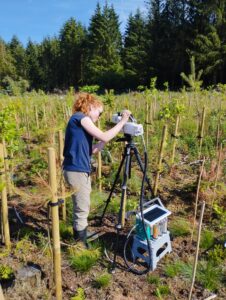
Measuring leaf-level photosynthesis and water use with a portable infrared gas analyser © Crown Copyright. Centre for Forest Protection; Forest Research.
The project’s experimental site is in Wark Forest, Northumberland, where drought is expected to become an increasingly important challenge for forestry. The site represents conditions found across large parts of Britain’s forests, making it an ideal place to test approaches that could help forests adapt to a changing climate.
We have established two neighbouring experiments. The first compares pure stands with mixed-species plantings to examine how different tree combinations use water. The second explores whether combining species mixtures with beneficial mycorrhizal fungi, which form important partnerships with tree roots, can improve tree establishment when water is limited.
Which species are being studied?
The project includes several tree species combinations that are already of interest to forestry practitioners. These include mixtures of Scots pine and oak, Sitka spruce and Douglas fir, and alder and aspen. The larger experiment focuses on Sitka spruce and Douglas fir, reflecting a key question from the forestry sector: how can productive forests be maintained as drought becomes more common?
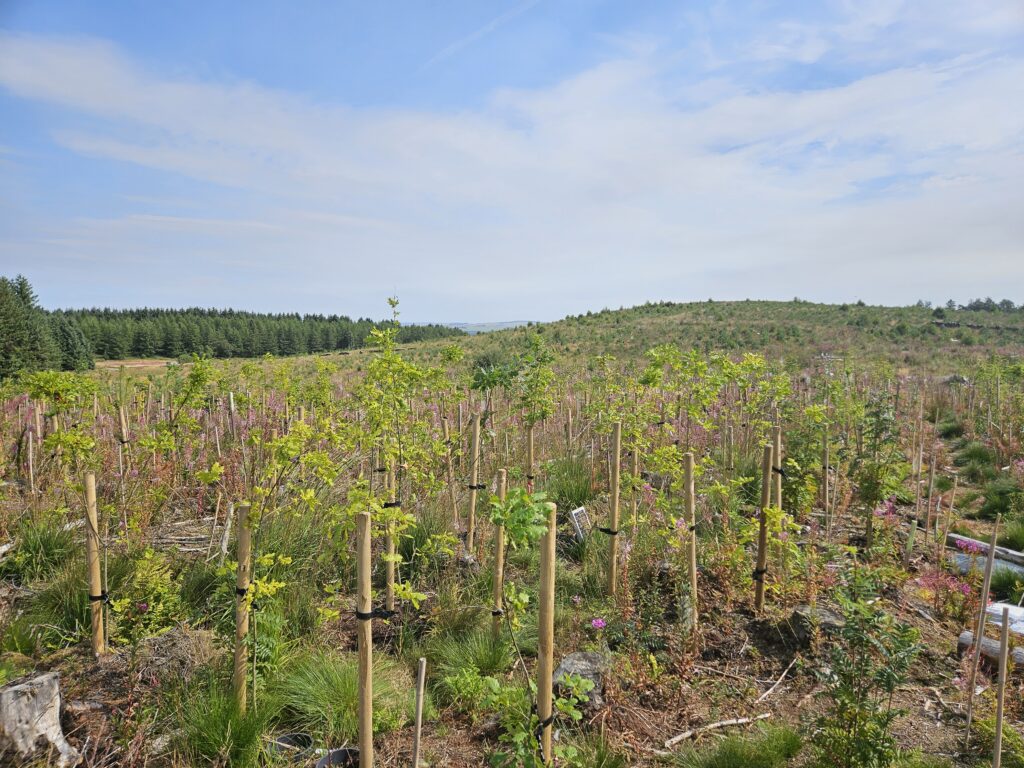
Species combinations in Wark Forest © Crown Copyright. Centre for Forest Protection; Forest Research.
A unique opportunity to study drought in real time
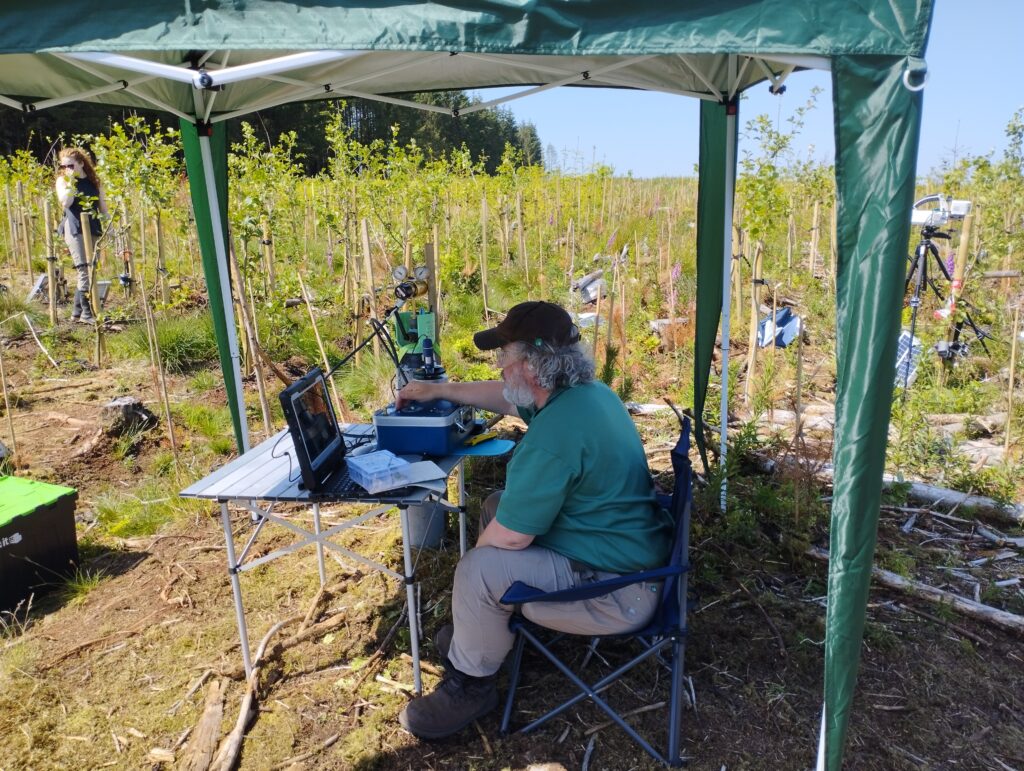
During the summer of 2026, the research site experienced periods of heatwave conditions and drought, providing a valuable opportunity to observe how young trees respond to real-world water stress. The team carried out seven field campaigns between June and September, collecting measurements every two weeks to track changes in tree health, soil water and environmental conditions.
The early results are already giving us important insights into how trees cope with increasingly challenging conditions.
What are the early findings?
Monitoring data showed that the site’s upper soil layers became almost completely depleted of water during the dry period. As conditions became drier, trees appeared to draw on water stored deeper in the soil profile.
Measurements of tree water use also showed that trees responded to drought by reducing water loss. We observed a decline in transpiration, the movement of water through trees, towards the end of the dry period. This suggests that trees were closing the small pores in their leaves, known as stomata, to conserve water as soil moisture became limited.
In situ measurements of leaf water stress. A leaf sample is placed inside a chamber and pressurised. The more pressure required to move water through the leaves, the more stressed the trees are © Crown Copyright. Centre for Forest Protection; Forest Research.
Weather station measurements provided further evidence of how drought conditions affected tree functioning. The data suggested that periods of intense heat and atmospheric dryness influenced how trees regulated water use, highlighting the combined effects of heatwaves and drought on forest establishment.
We also measured stress levels within leaves throughout the summer. These observations showed clear differences between wetter periods, drought conditions and the period immediately after the heatwave, helping the team understand how quickly young trees recover once environmental conditions improve.
Looking at forests from above
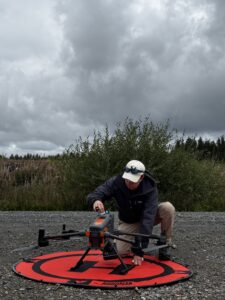
Preparing a drone for flight, equipped with a laser sensor ready to scan the monitoring area. Laser scanning provides information about the stand structure and detects drought-related changes, such as defoliation © Crown Copyright. Centre for Forest Protection; University of Edinburgh.
Alongside ground measurements, the project has completed five drone surveys between May and September 2026 using thermal, RGB, LiDAR and multispectral sensors. These surveys allow us to identify patterns of tree stress across the site and compare aerial observations with detailed measurements taken from individual trees.
Early drone imagery has already highlighted differences in tree conditions across the experimental plots, including signs of browning and poor performance in some individuals. As analysis continues, the team hopes to better understand how different species and species mixtures respond to drought at a larger scale.
What happens next?
With field campaigns now complete for the 2026 season, our project team is focusing on analysing the large volume of data collected from trees, soils, weather stations and drone surveys.
The next stage of the project will assess tree establishment and survival, while continuing to investigate how species mixtures influence water use and drought resilience. Ultimately, EXPLORATION aims to provide practical guidance for forest managers by helping answer three important questions: how species mixtures work, where they work, and why they work.
As climate change increases drought risk across Britain, this evidence will help support decisions about the forests we plant today and the resilience of the forests we depend on tomorrow.
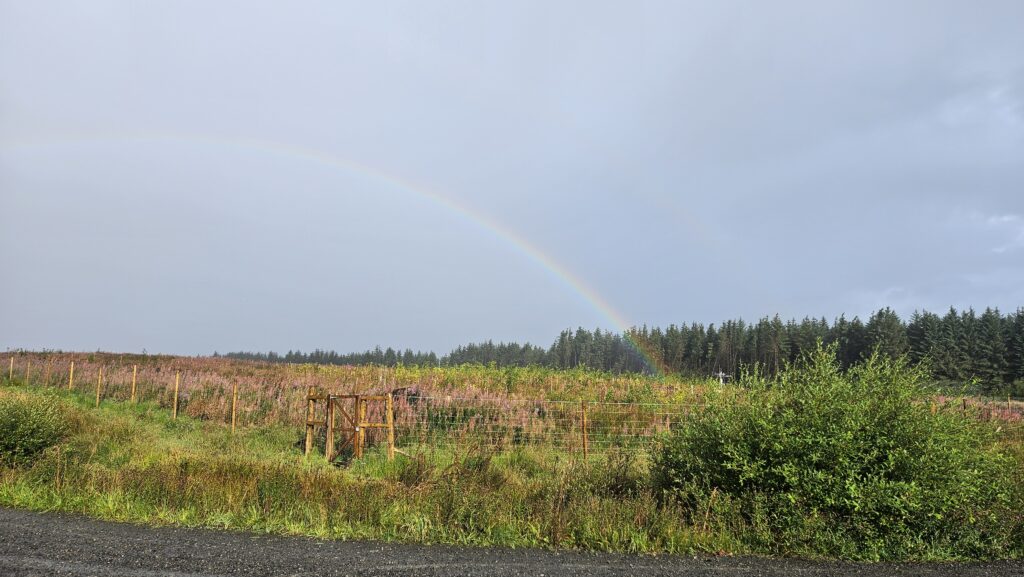
A rainbow over the research site © Crown Copyright. Centre for Forest Protection; Forest Research.
Find out more about this project: EXPLORATION: Mixed species planting for drought adaptation.
If you want to learn more about how Centre for Forest Protection research is tackling the threat of drought, you can read our recent blog on the topic: Drought declared in parts of the UK: How CFP research is tackling this tree health threat.
Stay connected!
Keep an eye on our website, follow us on social media (LinkedIn & Bluesky) and subscribe to our newsletter to be kept up to date on the latest CFP research, news and events!