
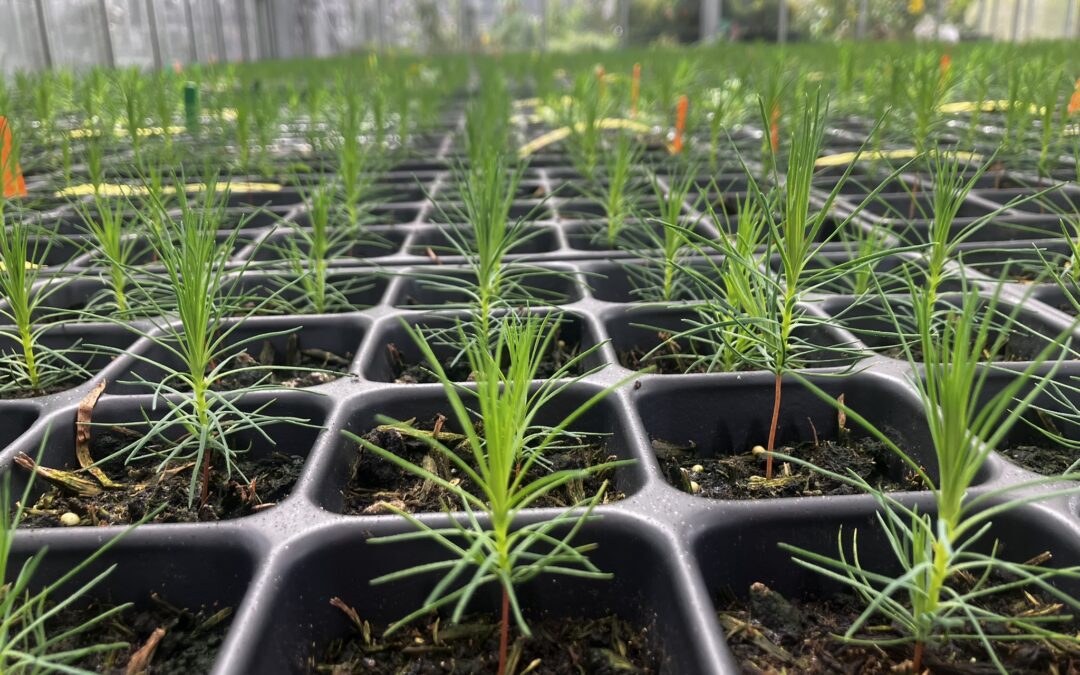
Scots pine seedlings being grown at Forest Research Northern Research Station (NRS) as part of CFP project ‘Infusing resilience into the Scots pine genetic resource’ © Crown Copyright. Forest Research – Jessica Vallance.
In December, Forest Genetics Operations Manager at Forest Research and member of our Infusing resilience into the Scots pine genetic resource project Kirsten O’Sullivan took us behind the scenes of the project team’s trip to the Scottish Borders to collect pine cones for vital genetic research.
Now Jessica Vallance, Research Assistant and former CFP intern, updates us on the team’s seed extraction work as part of the preparation for reopening the Scots pine breeding programme…
Restarting the Scots pine breeding programme serves to promote this native species into the future of forestry. This is critical in the face of biotic threats such as Dothistroma needle blight and abiotic stressors intensified by climate change.
In our last update, Kirsten told the story of our fieldwork to collect the pinecones that would provide part of the seed supply for the first round of new breeding trials.
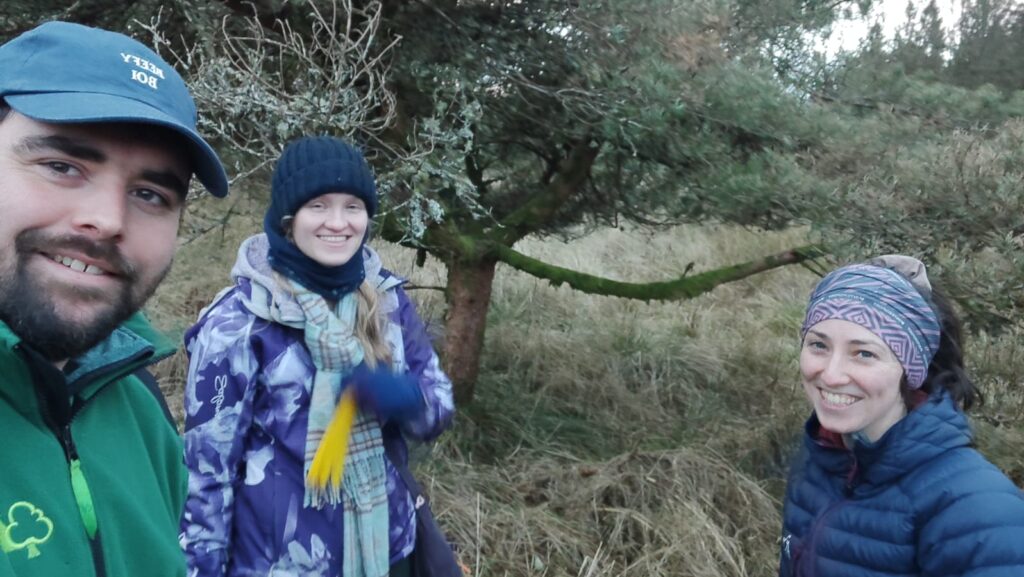
Scots pine resilience project team on fieldwork in Nov 2025 © Crown Copyright. Forest Research – Richard Whittet.
Where did we go from there and, six months on, how are the new seedlings looking?
After Christmas – seed extraction
Seed extraction begins by placing the closed pinecones into an oven and lowering the humidity to encourage them to open. The sound of the scales cracking open and the fresh woodland scent was a highlight of the work! My favourite part of the seed extractions was tumbling the opened pinecones as it was satisfying to see all the seeds falling out en masse. However, some steps required extra patience. For example, the process for removing the seed wings wasn’t always quick, but it is important for preventing mould in stored seeds.
Tumbling the pinecones we had collected to encourage the seeds to fall out © Crown Copyright. Forest Research – Jessica Vallance.
Before Easter – seed stratification
I brought together the seeds I had extracted with seed obtained from the Conifer Breeding Cooperative and seed that had been sourced a year prior from a trial site called Yair. Altogether, there were 36,000 seeds to prepare for the new breeding trials.
To break seed dormancy and improve germination rates, I kept the seeds damp in the walk-in fridge for several weeks, with regular visits to shake the bags which encourages airflow. The cold, damp conditions mimic the winter weather that would occur naturally.
Counting our seeds using a seed counting machine © Crown Copyright. Forest Research – Jessica Vallance.
Easter time – sowing
Once Kirsten and I had dried the seeds on paper towels, they were finally ready to be sown. Thankfully, there are experienced hands to keep the young plants alive. The sowing and plant care are all the hard work of the nursery team at Forest Research’s Northern Research Station: Dave, Gus and Gavin.
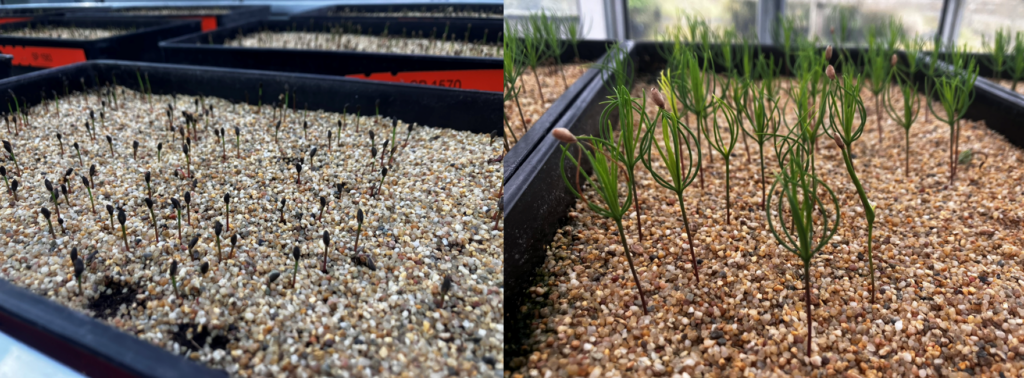
Scots pine seedlings being grown at Forest Research Northern Research Station (May 26) © Crown Copyright. Forest Research – Jessica Vallance.
It is rewarding to watch the seeds I took care of become young healthy plants. At the earliest stage, the seedlings had a particularly interesting appearance whilst the seed casing was pushed upwards.
Soon after, each plant must be moved into individual wells to reduce competition for resources. This process is still ongoing, and the rows of Scots pine are now filling up a third room of the glasshouse.
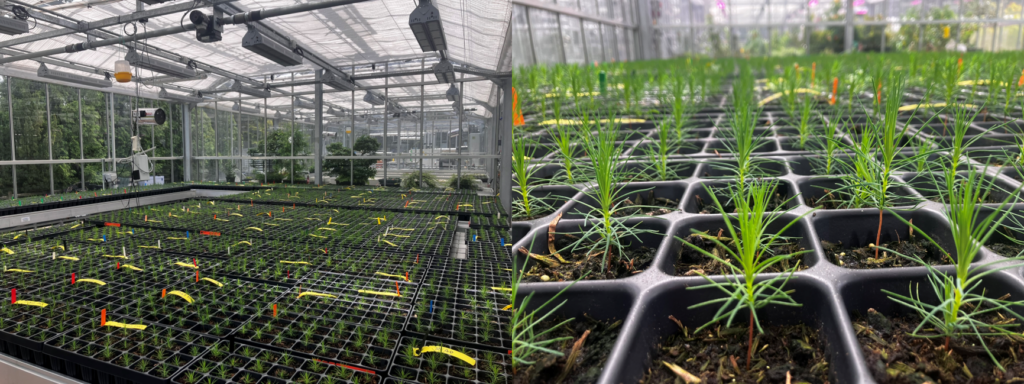
Scots pine seedlings being grown at Forest Research Northern Research Station (June 26) © Crown Copyright. Forest Research – Jessica Vallance.
DNA verification to confirm the identities of their seed orchard parents
We also collected pine needle samples from the parent trees in the Kershopefoot seed orchard to confirm that the pinecones were collected from the correct trees. The DNA from these samples was analysed by Agena Bioscience in Hamburg, using a method called a Single Nucleotide Polymorphism (SNP) array. This technique looks at specific points in the DNA where individuals can differ and identifies which DNA building blocks are present at each of these locations. This allowed us to verify the identity of the parent trees.
I analysed the data from the SNP arrays to check that the samples matched up to previous records from copies of the same genetic individuals. As a result of the analysis, two mismatches were identified and resolved, preventing inaccurate results in the upcoming trials.
What’s next for the seedlings?
In 2028 these seedlings will be planted out in field sites across the UK. In the 2030s and beyond, field measurements such as the survival and height of the trees will be recorded. The data will facilitate further research including analysis of the heritability of traits of interest and the selection of superior trees.
In addition, we plan to conduct further genetic analysis about the paternity of the seedlings which had come from cones pollinated with a pollen mixture.
Keep an eye on our project webpage for future updates!
How my Centre for Forest Protection (CFP) internship has helped
I was fortunate to be able to carry out the pinecone collection and seed extraction work as part of my CFP internship which ran from October 2025 to March 2026.
The internship immersed me in tree breeding, forestry, and current research. I am delighted to be continuing my role as a Research Assistant, where I am building on the analytical skills and knowledge that I developed during the internship.
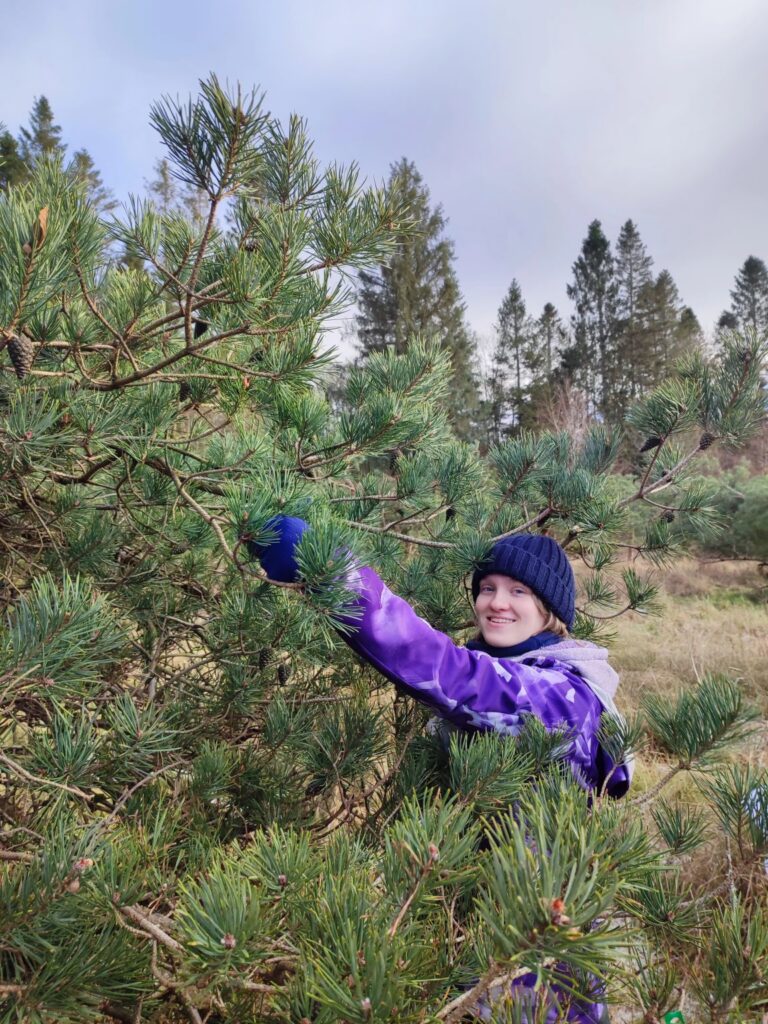
Collecting pinecones during our fieldwork in the Scottish Borders (Nov 25) © Crown Copyright. Forest Research – Jessica Vallance.
I would strongly recommend CFP internship opportunities to other graduates. My internship diary, which covers the experience in further detail, can be found here.
Stay connected!
Keep an eye on our website, follow us on social media (LinkedIn & Bluesky) and subscribe to our newsletter to be kept up to date on the latest CFP research, news and events!