
Consolidating and curating datasets for ash genomics
Project lead Dr Laura Kelly | Royal Botanic Gardens, Kew
Lead organisation Forest Research
Collaborator University of Kentucky
Project status Pilot year project complete
Project funding £96,000
Research outcome Adaptation
Context
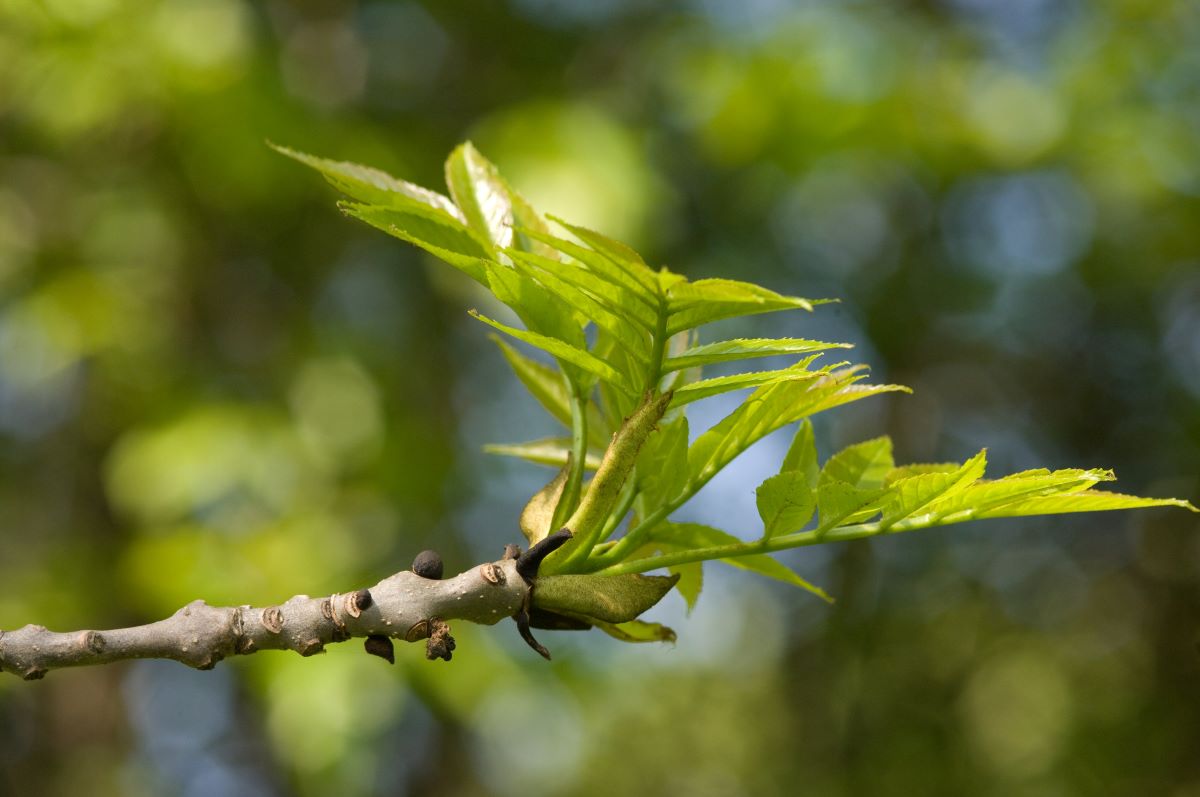
Ash dieback (Hymenoscyphus fraxineus) is predicted to cost the UK £15 billion, and further devastation may occur if the emerald ash borer (Agrilus planipennis) were to be introduced to the UK. Kew have undertaken substantial research on ash genomics and discovered genetic variation that can give resistance to these threats.
Research aims and objectives
Aim
Consolidate our existing datasets and make sure we get full value from them.
Objectives:
- Complete the analysis of a dataset we have in-hand from a pilot woodland in Surrey, looking for loci associated with resistance to ash dieback, and the ongoing effects of natural selection for ash dieback resistance.
- Re-annotate new ash genome reference sequences in collaboration with the University of Kentucky and using this to seek more genes associated with resistance to emerald ash borer.
- Re-analyse previous ash dieback genome-wide association study (GWAS) datasets using the new reference assemblies, to more fully understand the basis for ash dieback resistance.
- Further analyse the evolution of the genus Fraxinus using new genome assemblies.
- Enhance the accessibility of this data for the use of other groups.
Expected outcomes
- A scientific paper on natural selection for ash dieback resistance in Marden Park Wood.
- New publicly available ash reference genome annotations and improved public access to ash genome data.
- A report on the distribution of ash dieback resistance markers in the ash genome.
Further resources linked to this project
Living Ash Project
The Living Ash Project was a collaboration between the Future Trees Trust, Forest Research, and Royal Botanic Gardens, Kew that ran from 2013 to 2024.
The project aimed to identify a large and diverse number of ash trees with good tolerance to ash dieback (Hymenoscyphus fraxineus), to secure this material for further breeding work, and to quickly make this material available to industry. Selected trees were further screened for tolerance in two different ways, via chemical fingerprinting and directly through controlled inoculations.
Pilot Project Summary Report: Consolidating and curating datasets for ash genomics (Published: 25 February 2025)
Ash dieback is a highly destructive disease of ash trees, especially the European ash, one of the UK’s most common woodland trees. Caused by an invasive fungus (Hymenoscyphus fraxineus), ash dieback is predicted to cost the UK £7.6 billion by 2030.
The aim of this project was to uncover the genetic basis of resistance to ash dieback, which can be used to inform potential ash breeding programmes and, ultimately, assist the long-term survival of native ash populations.
CFP Phase 1 Project (2022-2025)
This research was built upon in CFP Phase 1 project: Transforming ash genomics: Creating a pangenome to understand ash dieback resistance.
CFP Phase 2 Project (Active 2025-2028)
The pilot and Phase 1 research is being built upon in CFP Phase 2 projects:
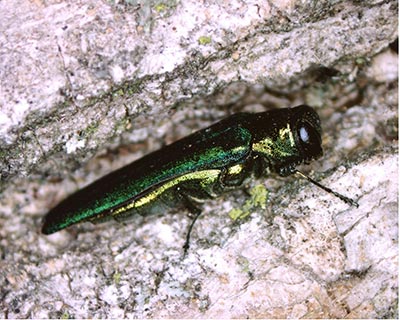
The emerald ash borer (Agrilus planipennis) is an invasive insect from Asia that targets ash trees (Credit: USDA)
Glossary & Key Terms
Ash (Fraxinus)
Broadleaf deciduous trees of the genus Fraxinus, including native species such as common ash/European ash (Fraxinus excelsior) , which are valued in Britain for their strong, flexible timber and high ecological importance, but are now severely threatened by ash dieback disease. For more information, see Ash (AH) - Forest Research.
Ash dieback (Hymenoscyphus fraxineus)
A highly destructive disease of ash trees (Fraxinus species), caused by the fungus Hymenoscyphus fraxineus, which leads to leaf loss, crown dieback, and often the death of affected trees. It is present in the UK and particularly affects the native common ash. For more information, see Ash dieback (Hymenoscyphus fraxineus) - Forest Research.
Emerald ash borer (Agrilus planipennis)
A highly destructive non‑native beetle that attacks ash trees by tunnelling under the bark, damaging the tissues that carry water and nutrients and usually causing the tree to die. It is not known to be present in the UK. For more information, see Emerald ash borer beetle (Agrilus planipennis) - Forest Research.
Genetic variation
The natural differences in DNA sequences among individuals of the same species.
Genome
Genome reference sequences
Genome-wide association studies (GWAS)
Genomics
The study of an organism’s complete set of DNA, including all of its genes.
Loci
Specific, identifiable positions or regions in a tree's DNA where genetic variants can occur.
Natural selection
The process by which trees with heritable traits that help them survive and reproduce are more likely to pass those traits on to the next generation.
Share this project on social media
Related Projects
Our partners




Social media
Explore
Newsletter
Contact us
© 2026 Centre for Forest Protection. All rights reserved.