
Sustainable provenancing for resilient trees
Project leads Dr James Borrell | Royal Botanic Gardens, Kew; Dr Nadia Barsoum | Forest Research
Lead organisations Forest Research; Royal Botanic Gardens, Kew
Project status Active
Project funding 25-26 £245,869.09
Research outcomes Reducing the risk | Adaptation
Context
Climate change poses a threat to the long-term success of newly planted forests in the UK. There is much uncertainty around the resilience of newly established trees and a need to better understand specific threats. Previous research has found that planted and naturally established trees often maintain similar, high levels of genetic diversity.
However, there is also evidence indicating that planted populations are more genetically homogeneous than would be expected by chance and that inbreeding can occur at newly established sites. In addition, current methods of sourcing tree seeds do not always consider the importance of matching seed origin to the local climate. All of this increases the risk of tree populations being maladapted to future climates.
This project will address that challenge by developing tools to select and implement climate-resilient seed sourcing strategies, combining genomic data analysis with remote sensing, climate-modelling, and assessments of how well the trees grow.
Research aims and objectives
Aim:
Ensure new forests are healthy, genetically diverse, and better prepared for the changing climate.
Objectives:
Climate suitability and seed sourcing
- Evaluate whether existing seed sources represent the full range of current and future UK climate conditions. Any identified gaps will guide the selection of additional seed collection locations to support the development of resilient tree populations.
UK-wide recruitment analysis
- Analyse how effectively tree species establish and survive across the UK. Using extensive data from the National Forest Inventory (NFI), areas of high and low success in tree establishment will be identified, highlighting regions where targeted planting efforts could be most beneficial.
Resilient afforestation practices
- Assess the effectiveness of various tree nursery practices and planting methods, such as using bare-root versus container-grown trees, and the use of fertilisers and weed control. Through practical trials, the aim is to determine the best methods to maximise tree health and increase the chances of successful establishment.
Long-term genomic resilience with climate-smart seed selection
- Use genomic data from oak (Quercus) and birch (Betula) trees to understand how they adapt to different climates across the UK. This information will help to predict how well tree populations might perform under future climate scenarios. Adaptive genetic maps will be created to indicate areas at risk of poor adaptation and will recommend optimal seed sources to support climate-resilient tree planting.
Expected outcomes
- Clear recommendations for establishing new seed stands of oak and birch trees, ensuring the trees have a wide range of genetic diversity and area suited to future climates.
- Detailed, species-specific information on how well different tree species establish naturally across the UK, highlighting areas where additional planting efforts are needed.
- Practical guidelines for tree nurseries on how to increase tree survival and growth through improved planting practices.
- A comprehensive map showing the genetic diversity of oak and birch trees across the UK, and how the suitability of different seed sources may shift under future climate conditions. This map will help to guide informed decisions on seed sourcing and tree planting under various climate scenarios.
Further resources linked to this project
CFP Phase 1 Project (2022-2025)
See previous research on this topic from CFP Phase 1 project: Evaluating genetic and environmental bottlenecks in planted and naturally colonised woodlands.

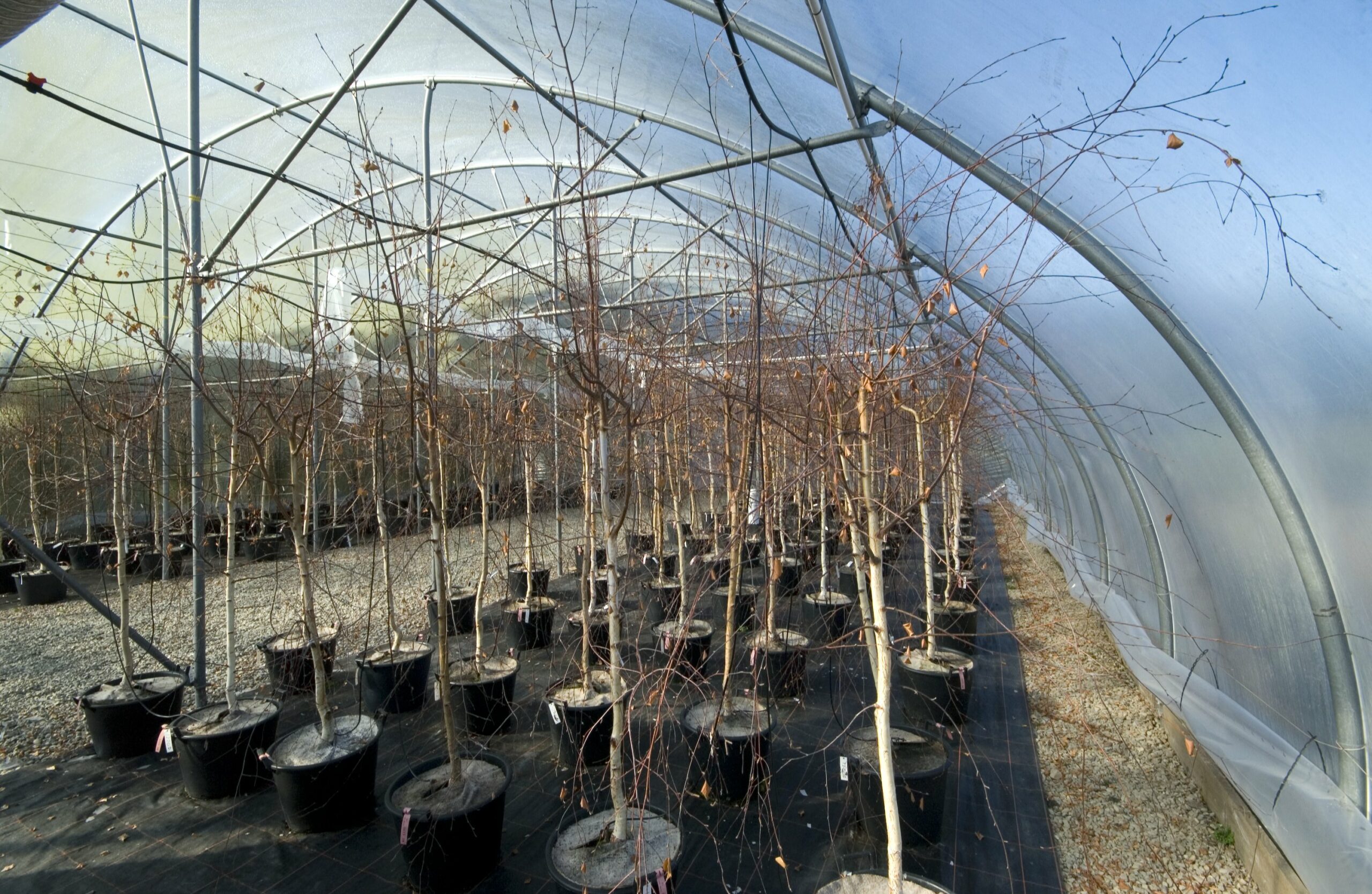
Body image: Crown Copyright. Forest Research – Glenn Brearley
Glossary & Key Terms
Birch (Betula)
Fast‑growing broadleaf deciduous trees of the genus Betula, including native species such as silver birch (Betula pendula) and downy birch (Betula pubescens), which are widespread across Britain and valued as pioneer species for their ability to colonise open ground and support woodland biodiversity. For more information, see Birch - Forest Research.
Genetic diversity
Variation in genetic traits within a species or population.
Genomics
The study of an organism’s complete set of DNA, including all of its genes.
Homogeneous
Being very similar or uniform - e.g. a genetically homogeneous group of trees will have little genetic variation within them.
Oak (Quercus)
Broadleaf deciduous trees of the genus Quercus, commonly found in British woodlands and forests, recognised for their strong timber, characteristic lobed leaves, and acorns, and including native species such as pedunculate oak (Quercus robur). For more information, see Oak - Forest Research.
Remote sensing
The scanning of the earth by satellite or high-flying aircraft in order to obtain information about it.
Share this project on social media
Related Projects
Our partners




Social media
Explore
Newsletter
Contact us
© 2026 Centre for Forest Protection. All rights reserved.