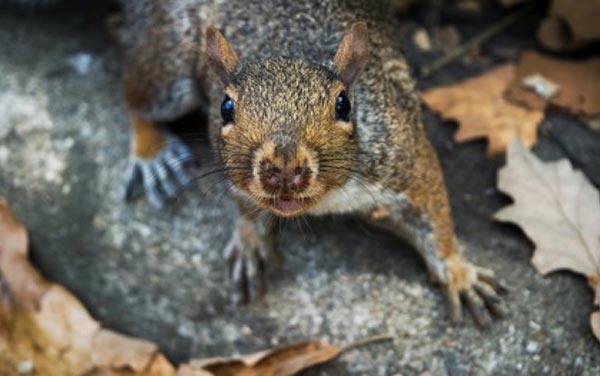
The damage caused to trees by grey squirrels (Sciurus carolinensis) in the UK undermines the Government’s ambitious afforestation targets for expanding woodland area to sequester carbon. However, the motivations behind grey squirrel bark stripping are poorly understood, hindering the development of non-lethal management options that can reduce bark stripping.
Since their introduction to the UK in late 1800s and early 1900s, grey squirrels have caused extensive damage to broadleaf trees through bark-stripping behaviour. Bark stripping damages the phloem layer meaning trees struggle to conduct nutrients up and down the stem. When a complete ring of bark is removed from around a tree’s trunk or branch (ring barking), this severs the phloem layer which eventually starves and kills the tree. Timber losses arise from the secondary effects of bark damage, including decay, structural deformities, and tree mortality.
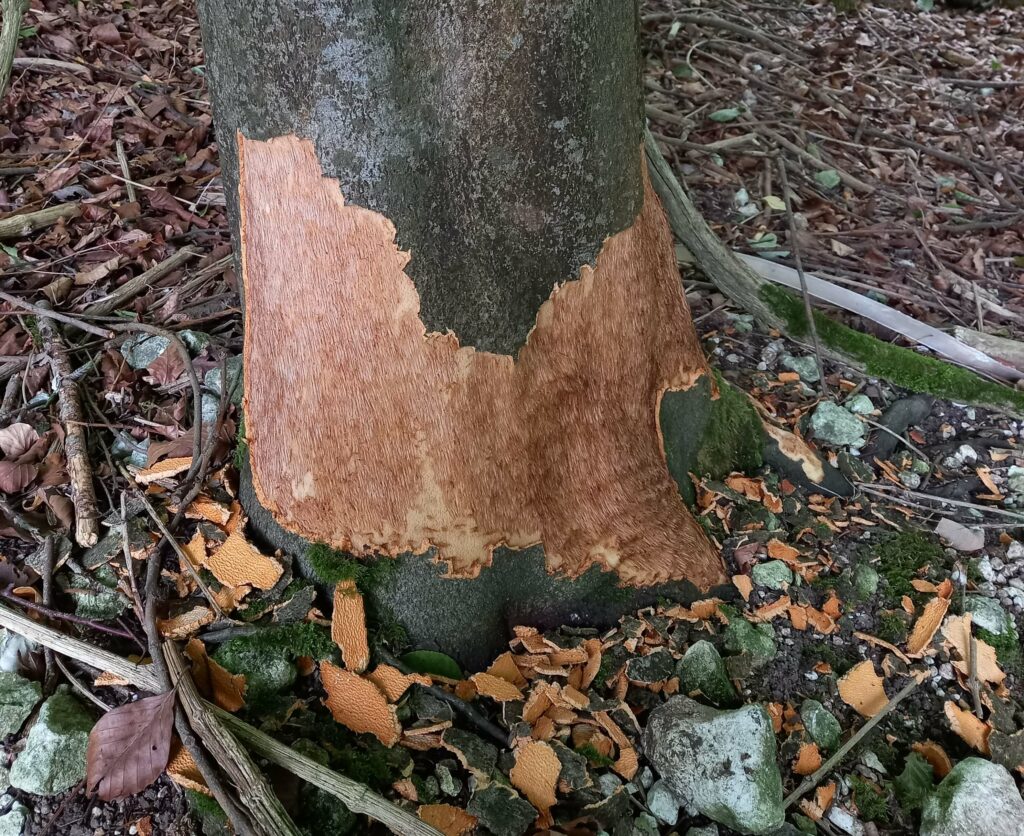
Bark stripping caused by squirrels © Crown Copyright Forest Research – Alexandra Ash.
This has led the Royal Forestry Society to identify grey squirrel damage as the “greatest threat to broadleaf trees, ahead of deer and pathogens”, with the damage they cause estimated to cost £37m a year in lost timber value, reduced carbon capture, damage mitigation and trees to replace those that have died as a result of bark stripping. This behaviour is also undermining the Government’s ambitious targets to increase woodland area and mitigate the effects of climate change as squirrel damage can cause trees to die before they reach maturity and deliver their full biodiversity value.
Recently published in Mammal Review, our Understanding the drivers of grey squirrel damage in UK Woodlands Phase 1 project team have conducted a review of the literature on bark-stripping behaviour with the specific goal of identifying methods to understand and mitigate this within squirrel species across the world.
Of the 188 articles included in this review, 15% focused on experimental studies that aimed to identify methods to prevent damage caused by squirrels. However, none of these were able to identify a practical and humane solution for preventing or reducing damage.
“Evidence for the causes of bark-stripping behaviours remains sparse, particularly for species that cause significant economic damage.”
The project team are continuing their research in Phase 2 of the CFP, with the aim of identifying which tree species are least ‘attractive’ to grey squirrels, based on the complex mix of chemicals found in their bark. They hope to identify an antifeedant or deterrent compound within the bark and understand how this may be utilised to protect other tree species. These new tools will help future studies to attribute causes to the behaviour.
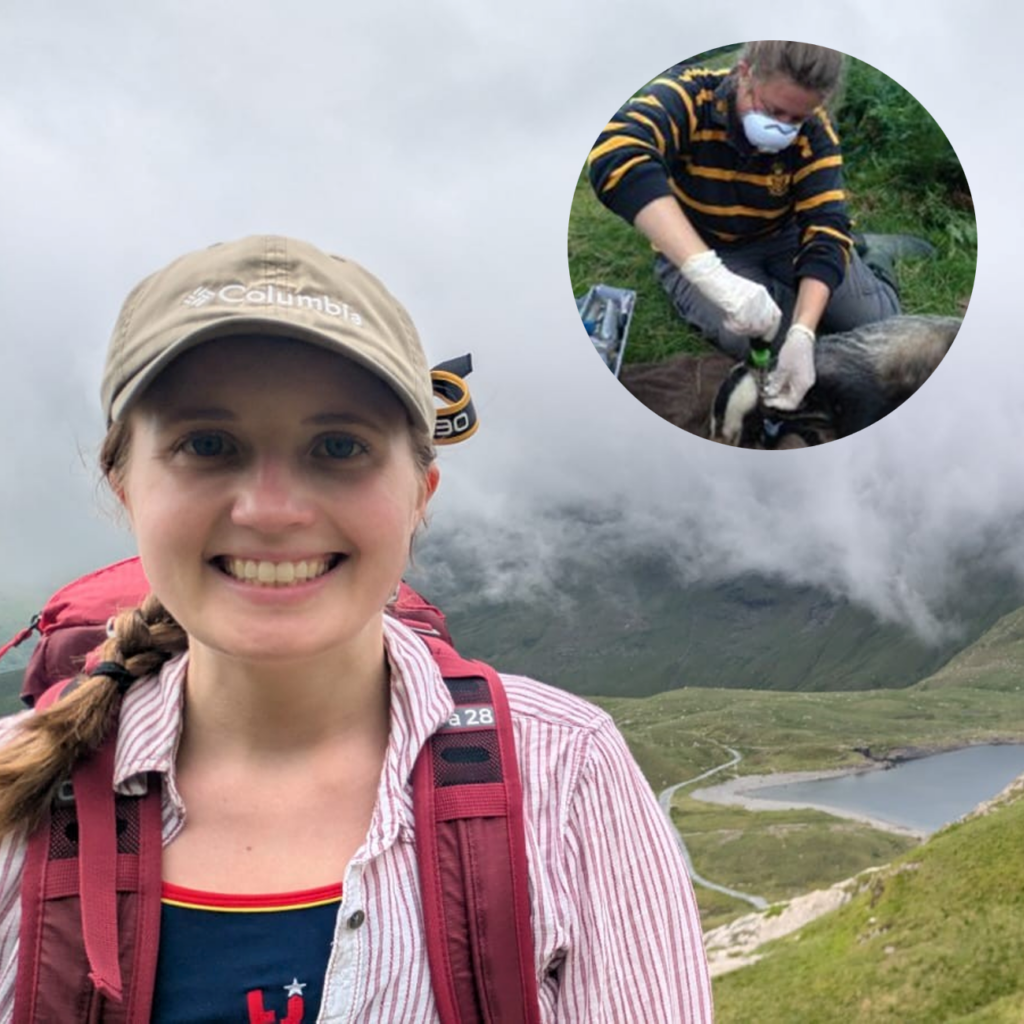
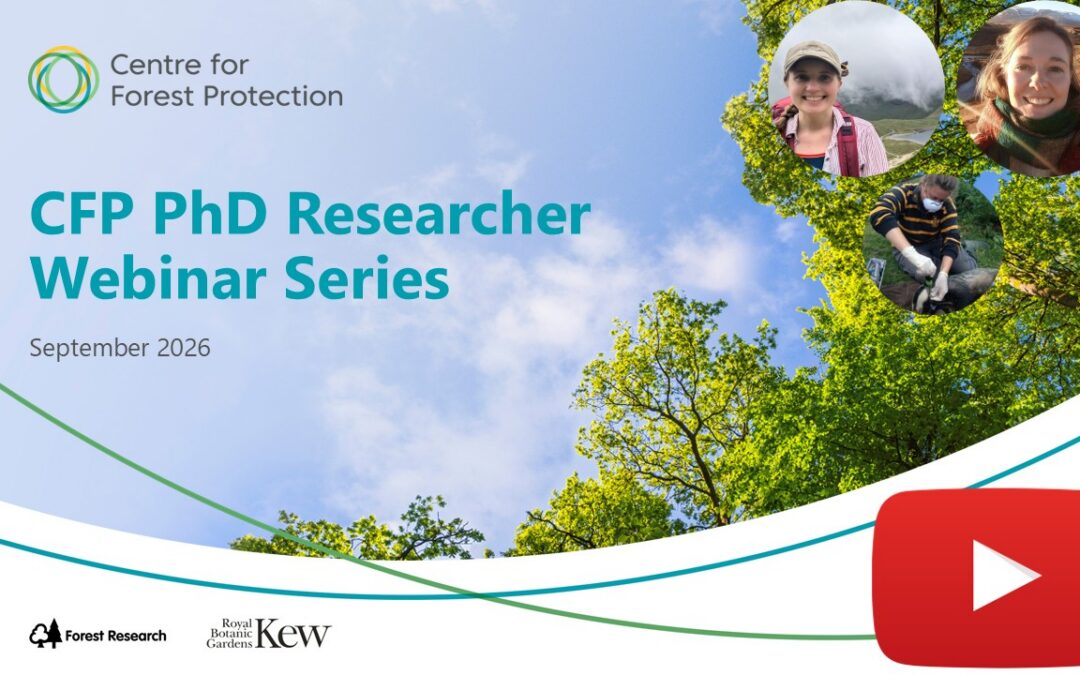
Dr Alexandra Ash, Behavioural Ecologist at Forest Research (left) and Dr Cally Ham, Senior Mammal Ecologist at Forest Research (inset) will be presenting this research during our upcoming webinar series.
If you are interested in hearing more about this research, we are hosting a free webinar on Tuesday 15 September 2026 at 11:15 am – 12:00 pm (BST).
The webinar will be led by Dr Alexandra Ash, Behavioural Ecologist at Forest Research and lead author on this study, who will be giving an overview of her CFP-funded PhD research into the drivers of bark-stripping behaviour in grey squirrels. Dr Cally Ham, Senior Mammal Ecologist at Forest Research, will also provide a short update on the ongoing research into grey squirrel bark stripping behaviours.
Register for the webinar here: Centre for Forest Protection Webinar – Understanding grey squirrel damage in UK woodlands.
Read the journal article: Understanding Why Grey Squirrels (Sciurus carolinensis) Bark Strip in British Woodlands: A Systematic Map.
Find out more about the team’s ongoing research into grey squirrel bark stripping: Understanding grey squirrel bark stripping – Centre for Forest Protection.
Stay connected!
Keep an eye on our website, follow us on social media (LinkedIn & Bluesky) and subscribe to our newsletter to be kept up to date on the latest CFP research, news and events!