A Forest Sector Model (FSM) combines forest growth and dynamics models with economic models and is used to investigate future forestry scenarios and the impacts these may have on forestry markets. Such models have been developed in a range of different countries, with Norway and France being two strong examples. Our Forest Sector Modelling – risks and resilience project aims to build the foundation for a new proof of concept FSM to help the UK better manage and protect its forests.
In 2025, members of the project team, Romain Thurin and Helen Slater, undertook research trips to France and Norway. During these visits, Romain and Helen met with the model developers to better understand the theory underpinning them, and learned more about how the models are constructed, their data requirements, and how they can be applied to investigate different forestry scenarios.
There are a number of case studies that use these models including examining how incentivising carbon sequestration or biodiversity gain might impact forest management and markets, and different ‘add-on’ modules can be built for such models to test many different scenarios, such as drought risk, or pests and diseases, or government policy scenarios.
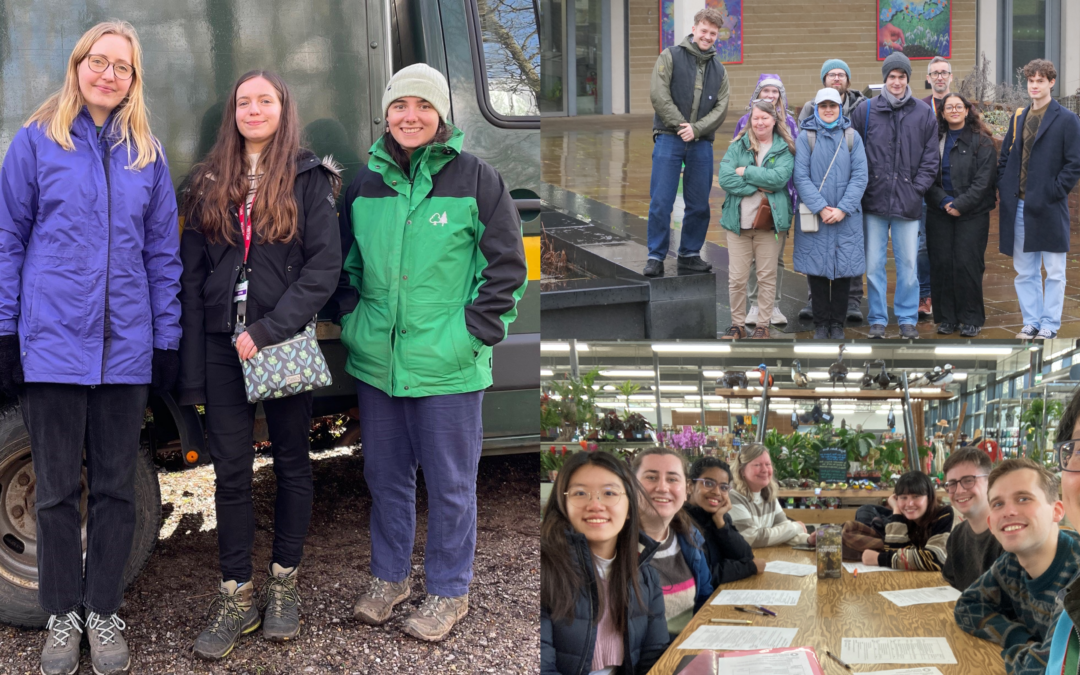
Stakeholder workshop
The workshop aimed to develop stakeholder project buy-in and also to brainstorm the biggest challenges within UK forestry. The insights gained will go on to inform the development of the UK FSM, and specifically which additional ‘modules’ would be developed during the remainder of the project to test specific scenarios. However, to manage expectations, stakeholders were also reminded of the short time frame of this project, and that, for example, the French FSM took 20 years to develop to its current state.
Participants represented a range of organisations including Natural Resources Wales, Scottish Forestry, Defra, Forestry Commission, Grown in Britain, Maelor, ICF, Forestry England. The project team will be organising online meetings with industry organisations who were unable to attend.
The workshop included presentations from Romain and Helen, which summarised the existing French and Norwegian FSMs, as well as a presentation from Robert Matthews, Head of Mensuration, Growth and Yield at Forest Research, about existing forestry models, their applications, and limitations. The rest of the workshop was taken up with discussions, during which several suggestions were made for the types of questions that a UK FSM could help answer including:
- Understanding the impacts of biotic threats, such as pests and disease, on forest dynamics and markets. Incorporating these into the model was highlighted as important for future forestry success.
- Assessing the impacts of abiotic risks, such as drought, wind, flooding and wildfire, and the role of compound risks, where one or more risks interacts, may increase uncertainty around future impacts.
- Exploring how to bring more woodland into active management
- Evaluating the outcomes of trade-offs between carbon sequestration, biodiversity, and timber production.
Other key discussion points included:
- The UK acts as a in the timber market due to its high reliance on imported timber, where locally produced timber must compete with imported timber, influencing local timber markets and prices.
- Choosing an appropriate approach for modelling forest dynamics and economic markets across regions and the devolved nations is essential, particularly given policy differences between them.
- Identifying sensible modelling timeframes (e.g. 50 to 100 years) will enhance the model’s usefulness, and ensure it supports real-world decision making, rather than serving purely academic purposes.
- Acknowledging data availability, quality and limitations is critical to building a successful model.
- Ensuring clear communication and transparency around model assumptions throughout the project will minimise confusion and reduce the risk of misinterpretation or misuse.
The workshop concluded with very positive endorsements from attendees, who were keen to follow the progress of the project, and offer support where possible.
Next steps
The information gathered during the stakeholder workshop will directly inform the development of a UK FSM over the next two years.
Year 2 of the project will entail building a simple, base model incorporating forest dynamics and economic modelling.
Year 3 will incorporate development of scenario ‘modules’ to model specific questions (informed by stakeholder priorities and data availability), and further stakeholder engagement events will be held in the future to further narrow the scope of priority challenges to UK forestry.
You can find out more about this project here: Forest Sector Modelling – Risks and Resilience – Centre for Forest Protection.
Stay connected!
Keep an eye on our website, follow us on social media (LinkedIn & Bluesky) and subscribe to our newsletter to be kept up to date on the latest CFP research, news and events!