
Evaluating genetic and environmental bottlenecks in planted and naturally colonised woodlands
Project leads Dr. James Borrell I Royal Botanic Gardens, Kew; Dr. Nadia Barsoum I Forest Research
Context
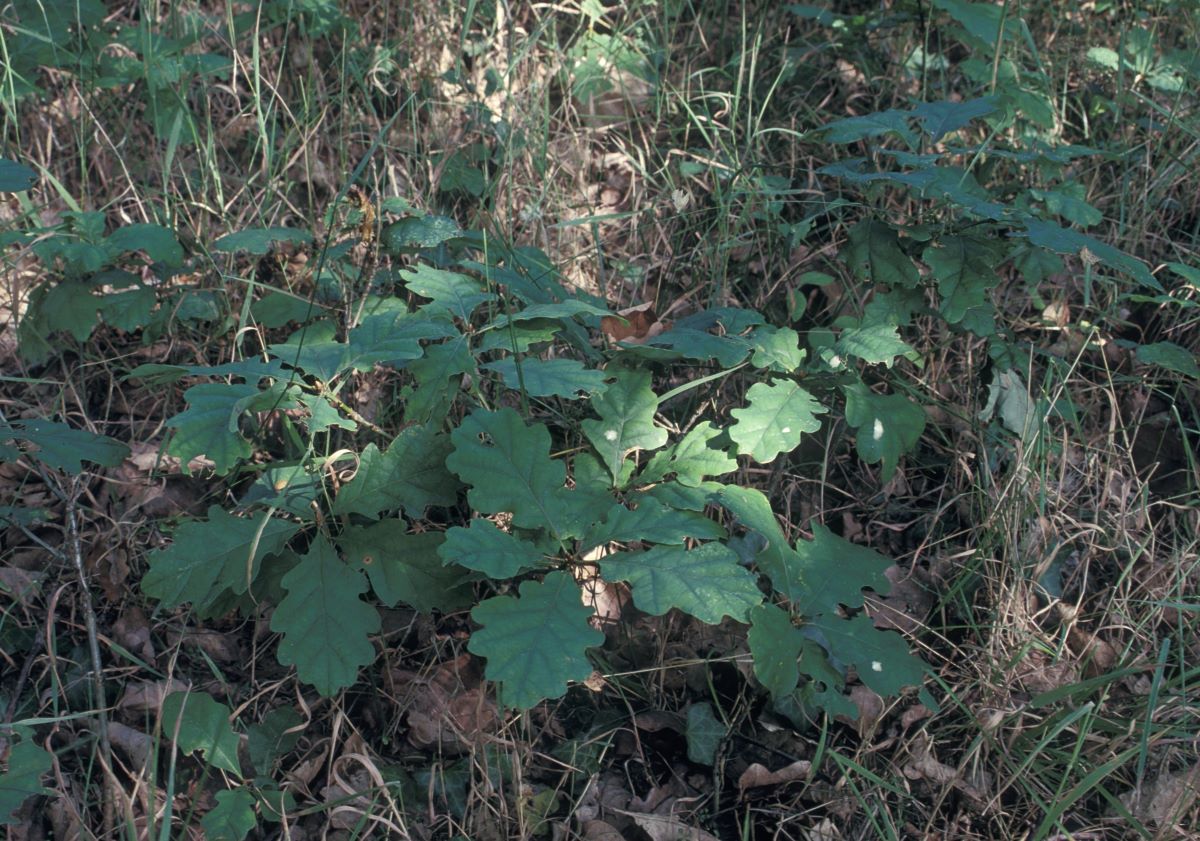
However, as we move towards ambitious afforestation goals, there is a major knowledge gap around the resulting genetic diversity in planted versus naturally colonised woodlands and how this will influence resilience to environmental change, pests, and diseases.
Research aims and objectives
Aim
By working closely with industry stakeholders, who contribute substantially to current afforestation activity we will contribute to development of best practice, aiming to deliver resilient woodland expansion in the UK.
Objectives
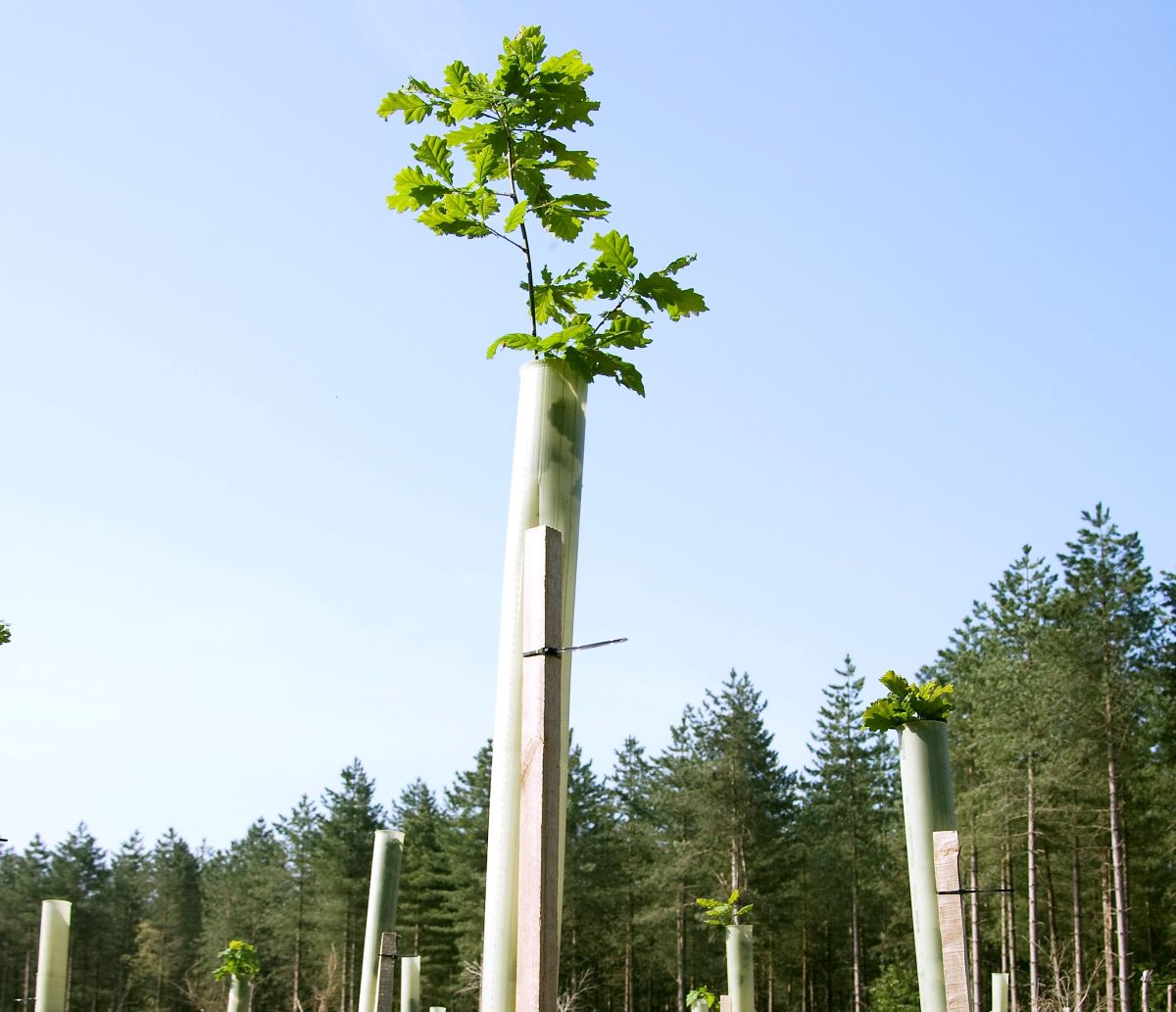
This project will assess the differences in genetic diversity in planted versus naturally colonised woodlands, and particularly where climatic, ecological or management drivers result in genetic bottlenecks to young tree populations. It will:
- Compare the tree health and genetic diversity in planted and naturally colonised young woodlands, focusing on oak (Quercus) and birch (Betula).
- Characterise potential genetic bottlenecks and selection in planted and natural afforestation pipelines.
- Draw up actionable recommendations for optimising afforestation activities to help deliver genetically diverse and resilient tree populations.
Expected outcomes
- The project will provide recommendations on best practice improvements to current tree planting and natural colonisation protocols, including any recommendations to improve current seed sourcing guidelines, record-keeping and propagation.
- The project will also provide a peer review publication and popular press outputs to communicate findings to a range of audiences.
Further resources linked to this project
Intern Diary: Alice - 2022/23 (Published: 11 Jul 2023)
Blog: Intern diary – Alice J
Alice was one of our first cohort of interns, working at Kew on a three month project from January to March. She helped on our landscape resilience project learning how to use ArgGIS Dashboards. She also learned how to do DNA extractions and helped with our oak project.
Blog: Curious cows and slime flux – a fieldwork update on our genetic bottlenecks project (Published: 03 Nov 2023)
Blog: Curious cows and slime flux – a fieldwork update on our genetic bottlenecks project
Researchers Nikki Cotterill from Forest Research, and Guillermo Friis from Kew tell us about their fieldwork this spring and summer. They have been sampling trees for genomic analysis and assessing tree health in naturally colonised and planted woodlands.
Research Talk: Conservation Genetics Across Multiple Species (Broadcast: 27 July 2024)
Watch Dr Guillermo Friis present CFP work from 1:37:47.
News: CFP Researcher Presentation on Genetic Bottlenecks (Published: 09 August 2024)
News article: CFP Researcher Presentation on Genetic Bottlenecks
Our recent findings on genetic bottlenecks were presented at the 3rd International Congress on Evolutionary Biology.
Research Talk: Evaluating genetic diversity in planted & naturally colonised young woodlands (Broadcast: 24 March 2025)
In this talk, Dr Guillermo Friis (Royal Botanic Gardens, Kew) and Nicola Cotterill (Forest Research) present research comparing genetic bottlenecks in planted and naturally colonised woodland on nearby sites and assessing tree health in the different types of woodland creation.
This talk was part of the ‘Planting, Natural Colonisation, and Adaptation: Oak and Birch’ webinar originally broadcast by the Centre for Forest Protection on 24 March 2025.
Journal Article: Genetic Consequences of Tree Planting Versus Natural Colonisation: Implications for Afforestation Programmes in the United Kingdom (Published: 27 August 2025)
Journal Article: Genetic Consequences of Tree Planting Versus Natural Colonisation: Implications for Afforestation Programmes in the United Kingdom
ABSTRACT
The United Kingdom aims to dramatically accelerate the establishment of new woodlands by 2050, yet the impact of different afforestation strategies on landscape genetic diversity and resilience remains unclear.
This study integrates environmental data, whole-genome sequencing and phenotypic assessments to compare bioclimatic envelopes, genetic diversity and plant health indicators in naturally colonised versus planted populations of pedunculate oak and silver birch. We found that registered seed stands significantly under-represent the wild bioclimatic envelopes of both species, as well as those of 21 out of 39 UK native species assessed, potentially limiting adaptive diversity in planted populations. Yet, genetic diversity metrics (π, HO and AR) based on genome-wide markers in planted populations were comparable to naturally colonised woodlands. Planted populations exhibited higher within-group coancestry and moderate genetic homogenisation among sites, possibly reducing adaptive differentiation. Naturally colonised populations showed higher inbreeding coefficients (FROH) in both species, potentially due to fragmentation of source populations.
Genotype–environment associations based on redundancy analysis revealed divergent selection at functionally relevant loci, indicating distinct selective pressures in commercial tree production versus natural colonisation. Health indicators revealed reduced browsing in planted trees, and differences in mildew and leaf-spot incidence, suggesting potential selection divergence between afforestation strategies. These findings support a role for both afforestation strategies in enhancing the resilience of future woodlands while highlighting pathway-specific risks of introducing unintended impacts on forest diversity.
Policy and Practice Note: Genetic Consequences of Tree Planting Versus Natural Colonisation (Published: 28 August 2025)
Policy and Practice Note: Genetic Consequences of Tree Planting Versus Natural Colonisation
The Policy and Practice Note outlines the headline findings, background of the project, and overview of the research, and considerations for policy and practice, and can be viewed as a summary of the Genetic Consequences of Tree Planting Versus Natural Colonisation: Implications for Afforestation Programmes in the United Kingdom journal article.
Research Talk: Evaluating genetic diversity and tree condition in planted & naturally colonised young woodlands (Delivered: 18 November 2025)
This presentation was delivered by Dr Guillermo Friis, one of the project leads on CFP Phase 1 project ‘Evaluating genetic and environmental bottlenecks in planted and naturally colonised woodlands’, as part of the ‘Creating a sustainable supply of seeds and saplings’ session at Britain’s Forest Future: Research-Practice Exchange in Durham, UK on 18 November 2025. The key messages from Guillermo’s presentation were:
- Natural colonisation and tree planting can both contribute to resilient woodlands, but each pathway carries different genetic risks and opportunities. Understanding these helps ensure new forests maintain high genetic diversity and adaptive potential.
- Careful seed sourcing and mixing provenances (the geographical origin of the seed or planting stock) can help reduce inbreeding and increase adaptive capacity, supporting the long-term health and resilience of planted forests under changing climates.
Britain’s Forest Future: Research-Practice Exchange was a forest and woodland research, policy and practice knowledge-exchange event organised by Defra, the Future of UK Treescapes, and the Centre for Forest Protection. It was held on the 17 & 18 November 2025 in Durham, UK.
CFP Phase 2 Project (Active 2025-2028)
This research is being built upon in CFP Phase 2 project: Sustainable provenancing for resilient trees.
Glossary & Key Terms
Afforestation
Birch (Betula)
Genetic bottleneck
A sharp reduction in genetic variation caused by a significant decrease in the number of reproducing individuals. In the context of afforestation, collecting seeds from a limited number of parental trees within a larger population can lead to genetic bottlenecks.
Genetic diversity
Variation in genetic traits within a species or population.
Oak (Quercus)
There are two native oak species in the UK: pedunculate oak (Quercus robur) and sessile oak (Quercus petraea), and three non-native species: turkey oak (Quercus cerris), holm oak (Quercus ilex), cork oak (Quercus suber). For more information, see Oak Trees – Forest Research.
Share this project on social media
Related Projects
Our partners


Social media
Explore
Newsletter
Contact us
© 2026 Centre for Forest Protection. All rights reserved.