Forests, woodlands, trees and plants provide a huge amount of environmental, social, and economic benefits including helping in the fight against climate change and biodiversity loss.
However, they are facing increasing challenges from pests and diseases, both native and non-native, climate change, and other environmental factors including windstorms, flooding, wildfires, and drought.
The Centre for Forest Protection (CFP) is an important part of wider efforts to boost the resilience of our forests – we do this through the provision of innovative science, interdisciplinary research, expert advice and training, informed by world-leading experts from across the UK and further afield.
One of the main aims of the CFP is to increase scientific capacity and capability and address skills gaps by delivering an education and training programme. But how are we doing this?
CFP Education & Training Programme
Our education and training programme aims to train future forest protection scientists as well as provide continuous professional development (CPD) opportunities for those already working in the sector.
We offer:
A highly regarded internship programme
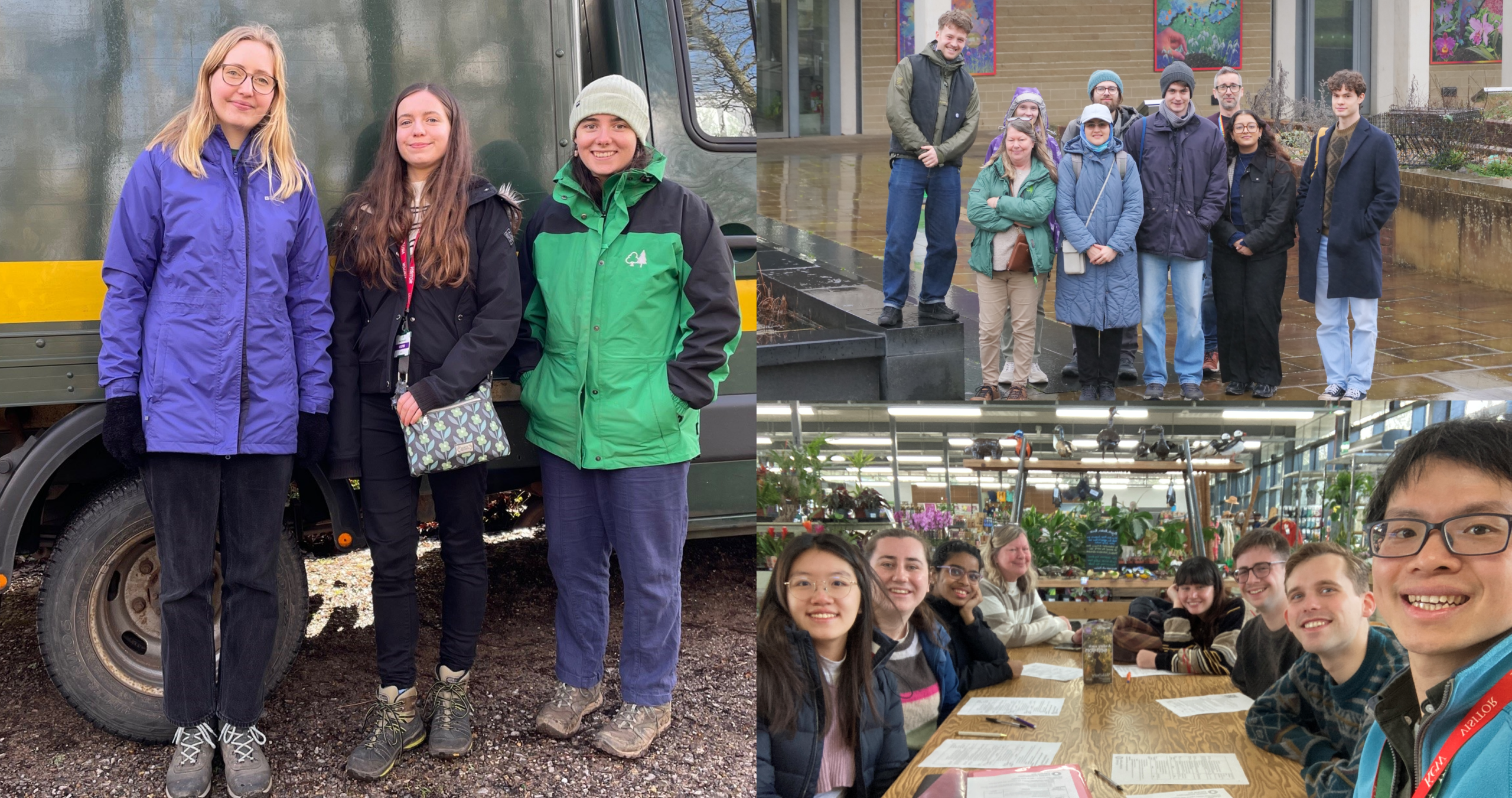
Interns from three of our previous cohorts.
Our internship programme is aimed at undergraduates, postgraduates, and those looking for a change of career direction into forest science. Interns have the opportunity to work on a project with some of our research teams, complemented by additional sessions visiting labs and discussing career options. As of May 2026, 25 interns have successfully completed an internship with us!
An MSc module in Forest Protection
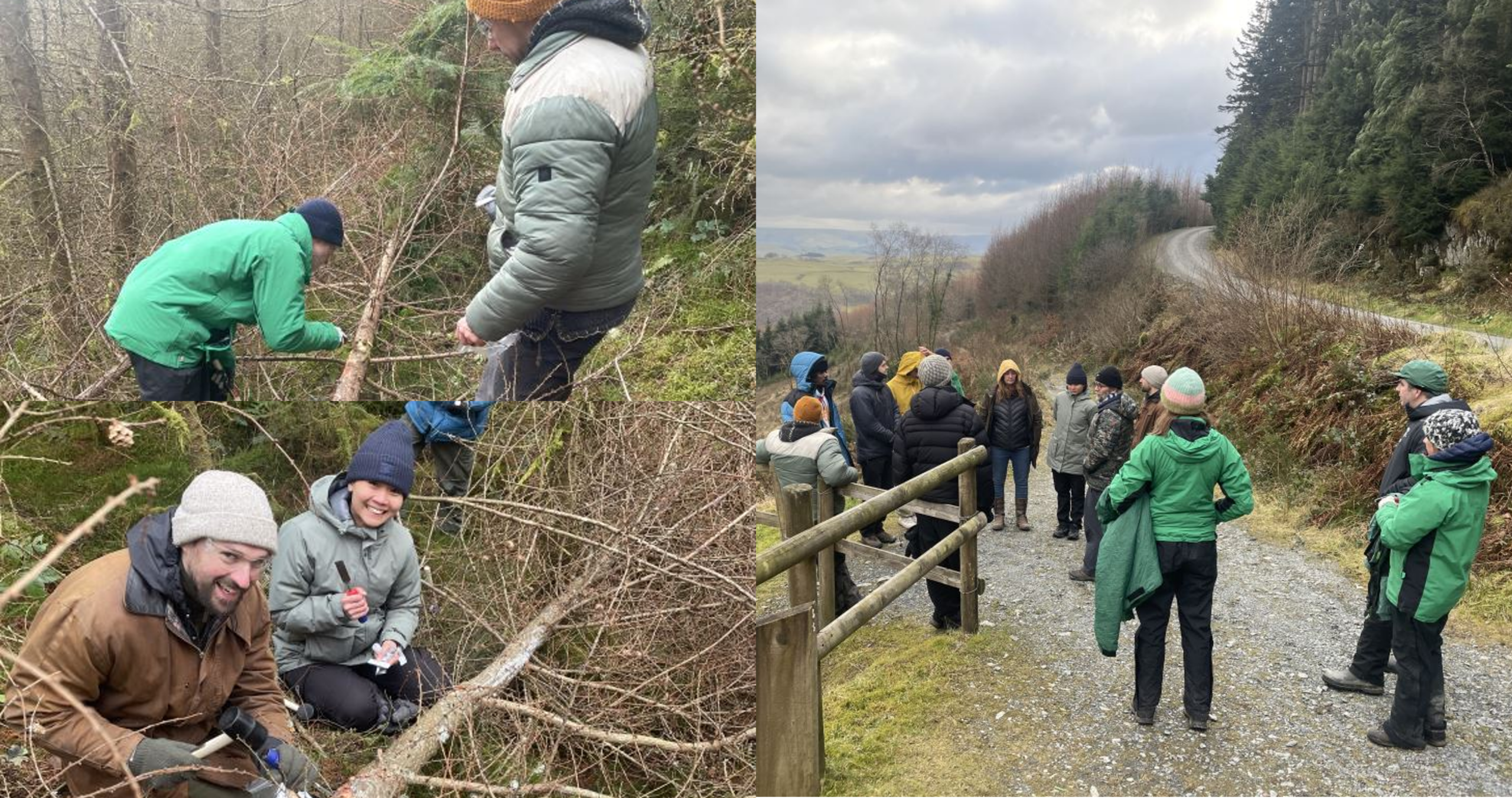
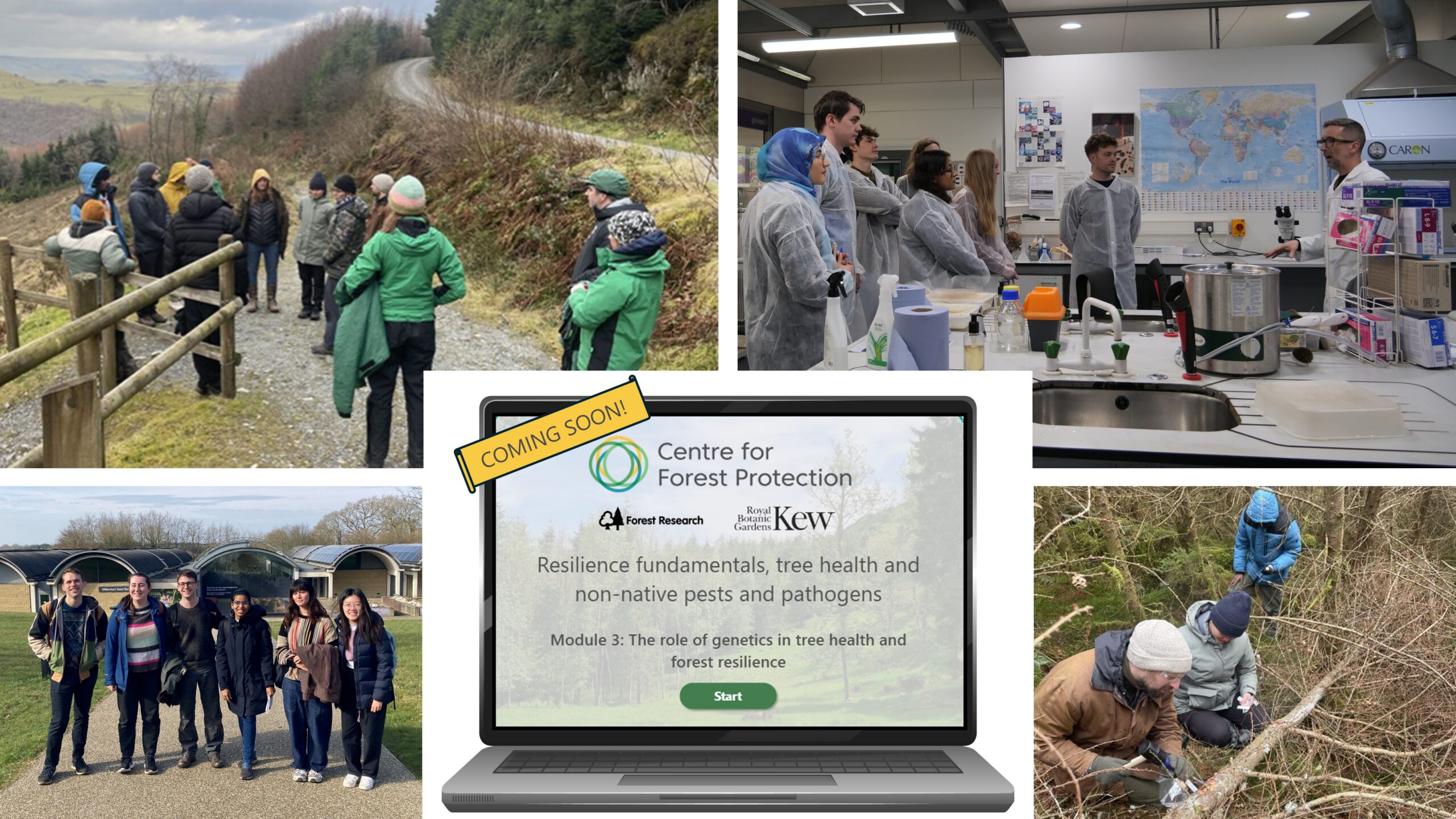
MSc Forest Protection module – field trip to Dyfi Forest, Wales, February 2025.
Our MSc module in Forest Protection is developed in partnership with, and delivered at, Bangor University.
The module is taught by specialists from Forest Research and Royal Botanic Gardens, Kew with support from several other organisations including the Forestry Commission, Forestry England, and Cyfoeth Naturiol Cymru / Natural Resources Wales. As of May 2026, 40 students have successfully completed the Forest Protection module at Bangor.
A growing suite of professional and technical training modules
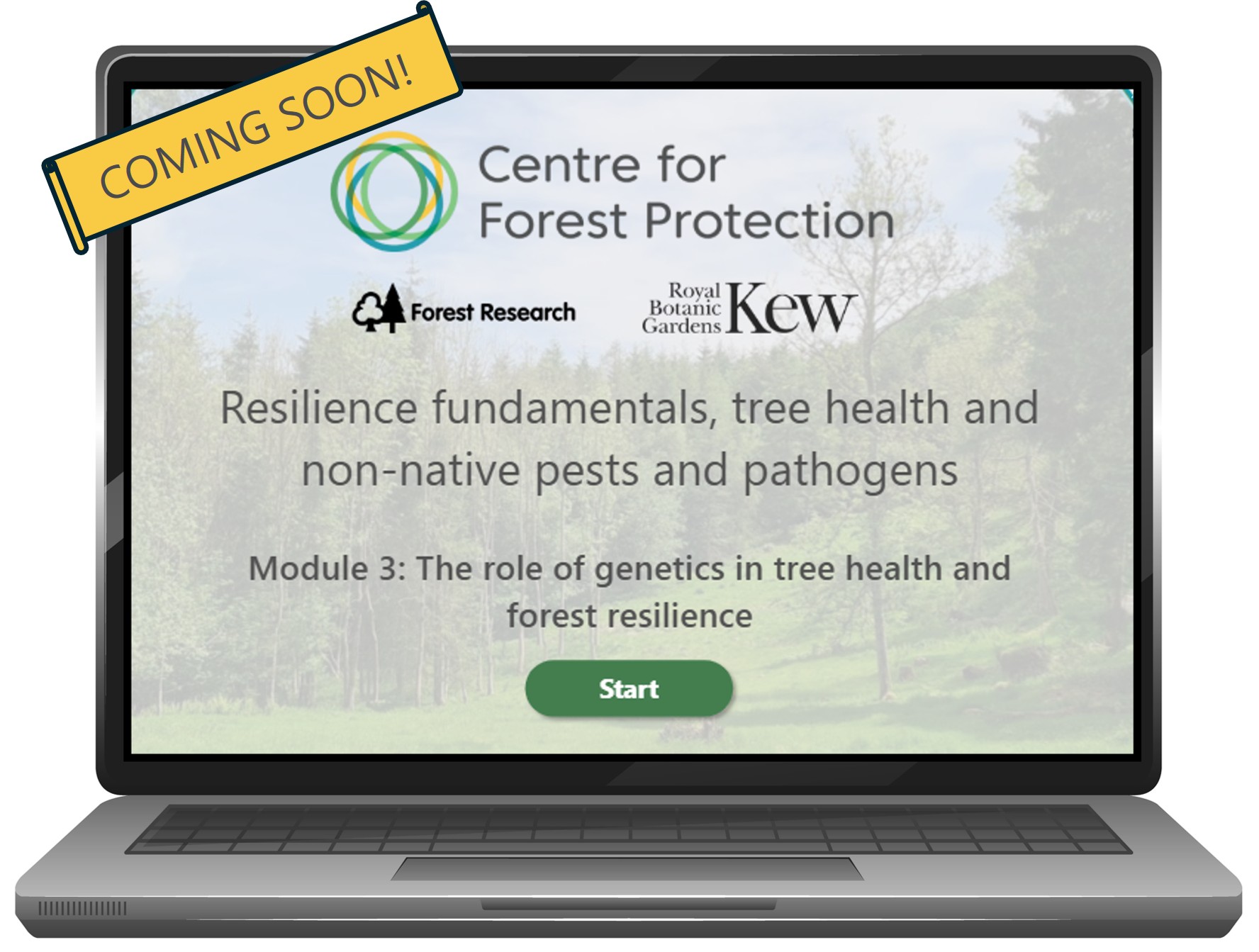
Our third module, on the role of genetics in tree health and forest resilience, will be available soon.
Our suite of freely available professional and technical training modules sits under the theme of ‘Resilience fundamentals, tree health and non-native pests and pathogens’, and is hosted on the Institute of Chartered Foresters online learning platform, Silvestor.
As of May 2026, over 200 people have enrolled in our initial two modules: ‘Meet the threats’ which gives an overview of the risks and challenges that non-native pests and pathogens present to trees, and ‘Reducing risks for resilient trees’ which explores pest and disease transmission pathways, biosecurity measures, and how the risks from non-native pests and pathogens can be minimised to enhance resilience in trees. You will also receive a certificate upon successful completion of each module.
We will shortly be publishing our third module on ‘The role of genetics in tree health and forest resilience‘. You will learn:
- What we mean by genetics and genomics – what are genetic variants, how do they affect tree properties, how are they inherited from parents to offspring?
- Why genetic diversity matters for treescapes, making them more adaptable to future threats.
- About the impact of genetics on tree performance in different locations, and how this can be harnessed to ensure resilient treescapes despite a changing environment.
- About the role of genetics and genomics in resistance to novel pests and pathogens, and how we can use knowledge of this to maintain healthy tree populations.
We will be advertising this new module via our website, social media, and mailing list once it is available to complete.
Stay connected!
Keep an eye on our website, follow us on social media (LinkedIn & Bluesky) and subscribe to our newsletter to be kept up to date on the latest CFP research, news and events!
Find out more about National Plant Health Week 2026.