
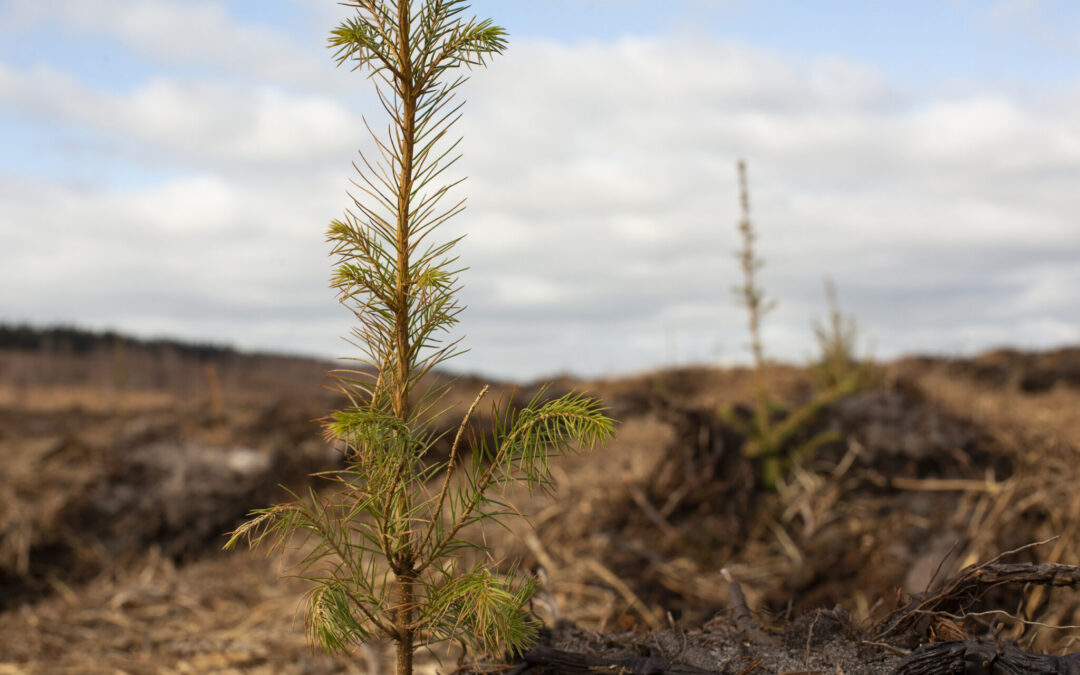
Newly planted sapling with wilting needles and slight discolouration © Crown Copyright. Forestry Commission.
Much of the UK has experienced multiple heatwaves this summer, with record-breaking temperatures and prolonged dry weather having widespread impacts on the environment, human health and key sectors like agriculture and water.
According to the Environment Agency, in the first three weeks of July, England received only 3% of its average rainfall for the month, and the south and east received none; at the time of writing, over two-thirds of England have been declared in drought. The picture is similar in Wales, with drought declared across the country. Drought is predicted to become more frequent and intense due to climate change, so while these conditions feel unusual now, they are likely to become more familiar.
How does drought affect trees and forests?
Prolonged periods of extreme heat and dry weather pose a threat to the health of trees, forests and woodlands, from young saplings through to ancient trees. The risks are complex; drought susceptibility varies between tree species, and site-specific factors (such as soil characteristics) are also at play. Some drought impacts are very visible to us all – for example, last summer, which had four heatwaves, saw a ‘false autumn’, with some trees dropping leaves in August as a result of stress.
Other impacts may be less immediately obvious but are equally concerning, and can include reduced growth and productivity, higher risk of mortality and crown dieback and increased vulnerability to pests and diseases.
Hot, dry conditions also increase wildfire risk, and the realities of this have sadly been seen this year, for example in the Cairngorms in Scotland and on a huge scale in France and Spain.
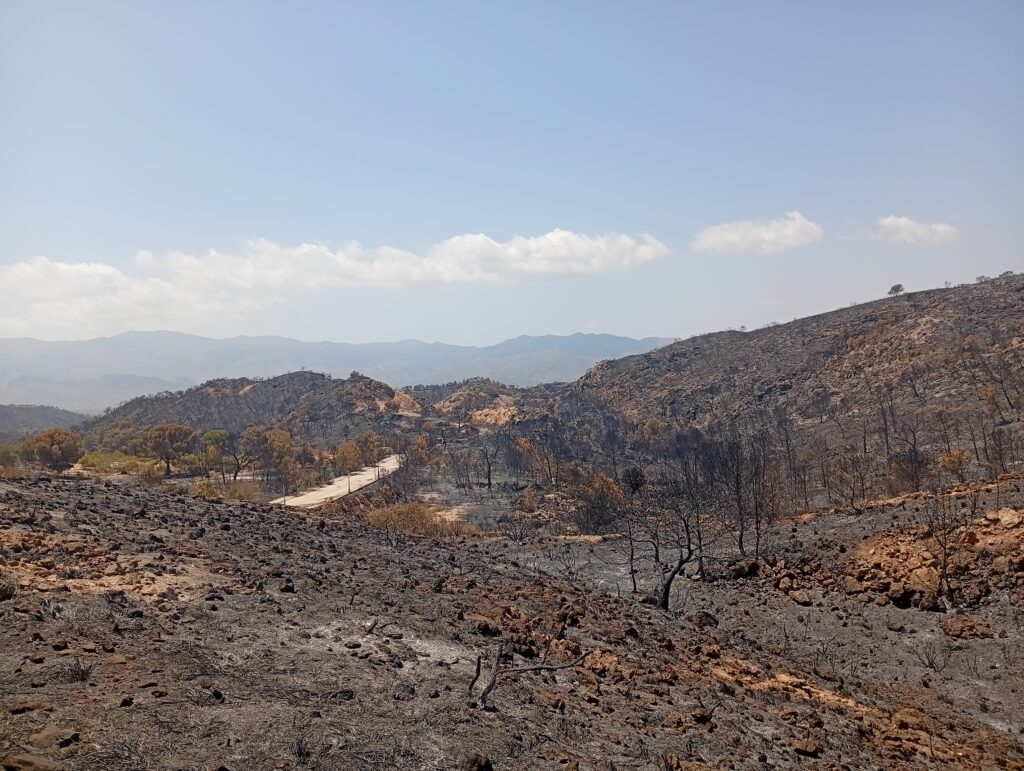
Wildfire damage in Los Gallardos in the Los Pinos area, within the municipality of Bédar, Spain. Image credit: Urci dream, Wikimedia Commons.

Find out what the Forestry Commission is doing to manage and respond to wildfire risk in England.
Newly planted trees are likely to be particularly vulnerable to drought and tree establishment could become more challenging at a time when we need to expand tree cover to minimise and cope with climate change impacts.
Our treescapes provide a wealth of crucial services and are vital for people, nature and the economy; the forestry sector employs around 21,000 people, and over 70% of the public have visited forests or woodlands in recent years. To sustain this, it is critical that forests are managed in a way that considers climate resilience (as highlighted in the UK Forestry Standard) and gives them the best chance of flourishing in the future.
How is the CFP helping to improve forest resilience to drought?
The CFP’s science and research programme has a broad scope that includes abiotic threats like drought. Projects funded through the CFP are generating important evidence that informs relevant policy and practice. Here, we take a quick look at some of our current research relating to drought resilience, but you can also browse our full science programme on our website.
‘EXPLORATION: Mixed species planting for drought adaptation’ project
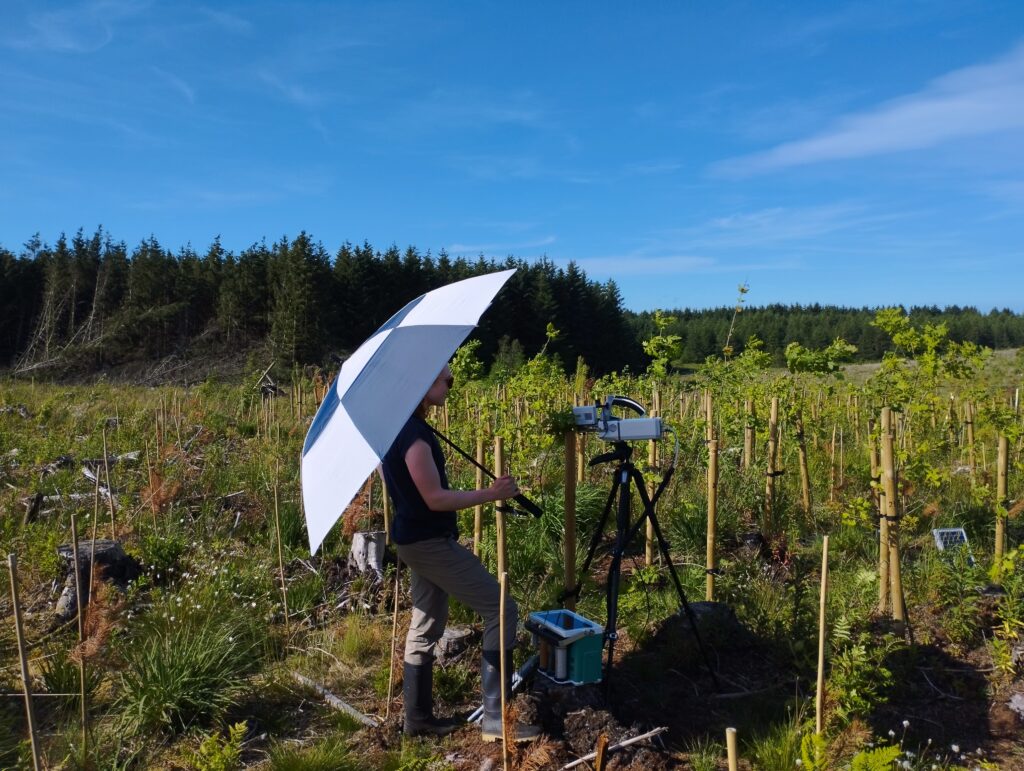
Anna Cumming from the EXPLORATION project team, taking leaf level photosynthesis measurements on English oak trees at the project research site in Northumberland (July 2026).
This is an exciting project investigating whether planting multiple tree species together can improve drought resilience in newly established forests. Led by Forest Research, working alongside collaborators at the University of Edinburgh, the team has established a new 2-ha experimental site in Northumberland. This will enable the comparison of monocultures and different mixtures of species and planting designs.
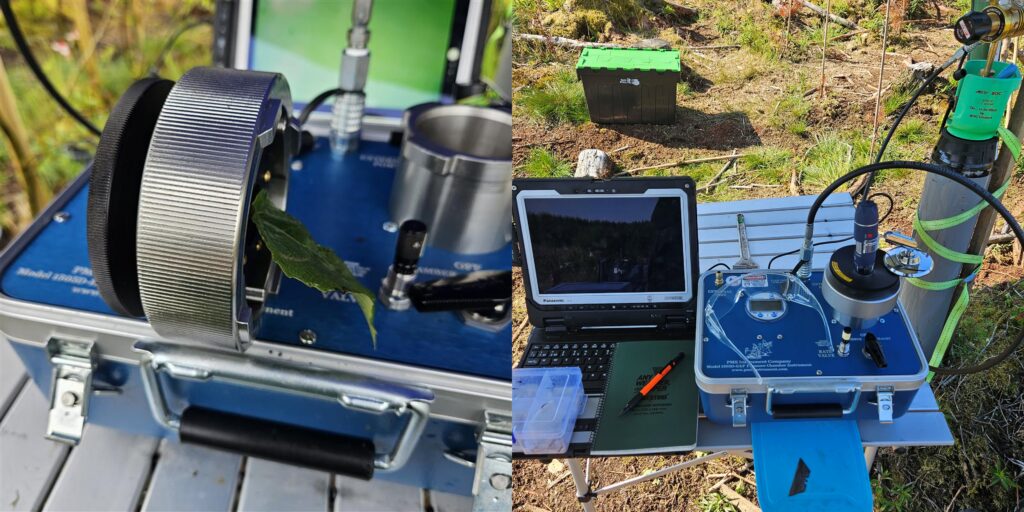
Leaf pressure chamber for measuring water stress; a leaf sample is inserted inside a chamber and put under pressure using compressed gas to determine the levels of water stress leaves have experienced. Images from the EXPLORATION project research site in Northumberland (July 2026).
Data collection is now well underway and sure to yield interesting findings. With newly planted trees especially vulnerable to drought, the evidence and insight generated through this research could help improve planting success in future conditions. The project is also engaging with key stakeholders, for example through an interactive workshop, to ensure the research meets real-world needs. Keep an eye on our blog in the autumn to hear all about the team’s summer fieldwork!
‘Enhancing forest resilience through stand structural complexity’ project
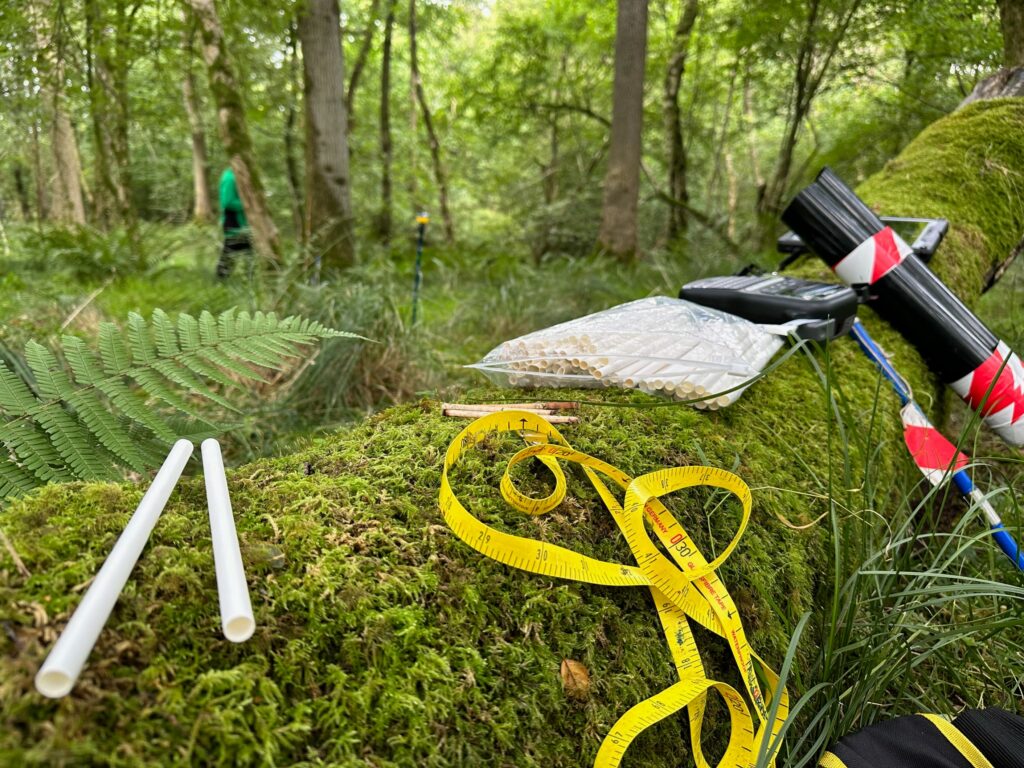
Dendrochronology (tree ring data) analysis equipment used by the Enhancing forest resilience through stand structural complexity project team.
As well as species, another aspect of forest diversity is variation in physical structure, including tree sizes, shapes, ages and spatial arrangements. This project, led by Forest Research, is focused on understanding how forest structure influences drought resilience. The research involves collecting, combining and analysing LiDAR and tree-ring datasets to advance scientific knowledge of the relationship between structural diversity and drought response and the implications for timber quality.
Alongside this, the project is conducting social research to investigate forest managers’ perspectives and understand the barriers and enablers to increasing structural diversity. It is great to see researchers from multiple disciplines working closely together to develop a holistic understanding of this component of forest diversity and its relevance to drought.
Scots pine resilience projects
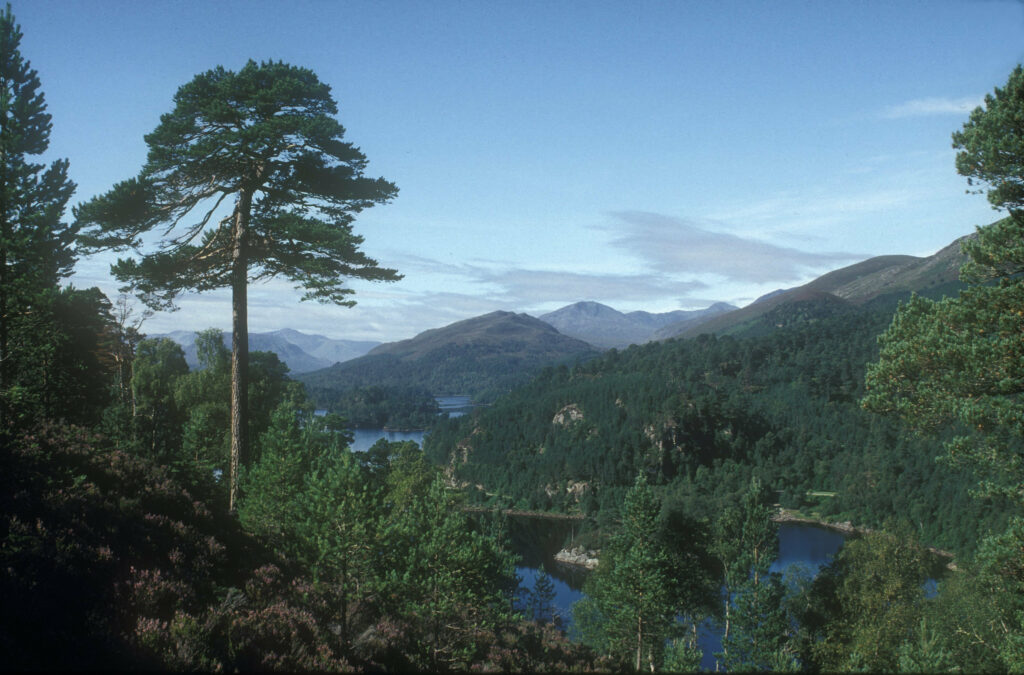
Native Scots pine woodlands in Glen Affric, Inverness, Scotland © Crown copyright. Forestry Commission.
Tree genetics and provenance can be another factor in resilience to stresses like drought – understanding this could enhance breeding and planting programmes. Two CFP projects are focusing on the resilience of Scots pine, one of our most ecologically and economically important species.
Both projects involve close collaboration between Forest Research and the UK Centre for Ecology and Hydrology (UKCEH). They are investigating responses to different stresses, including drought, waterlogging and disease, applied independently and in combination, and exploring how this knowledge can be used.
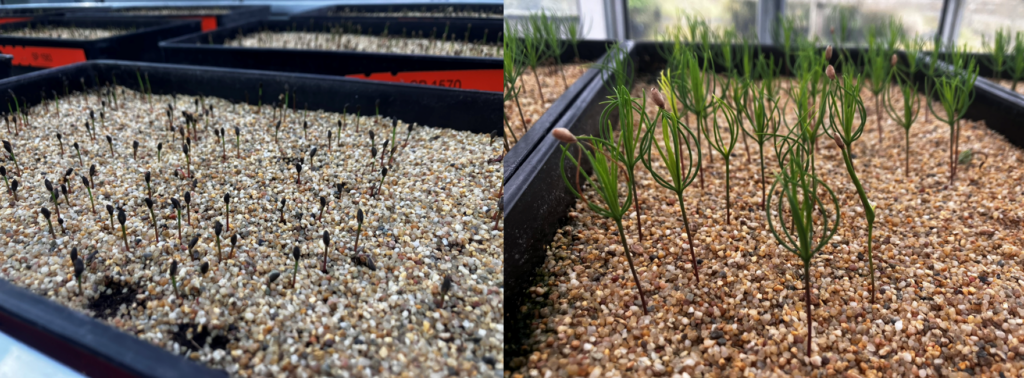
Scots pine seedlings being grown at Forest Research Northern Research Station (NRS) as part of the Infusing resilience into the Scots pine genetic resource project (May 26) © Crown Copyright. Forest Research – Jessica Vallance.
One project is taking forward the national Scots pine breeding programme, including a new breeding arboretum and progeny trials. The second project is running an experiment that began in a controlled glasshouse setting before moving into field conditions, and is investigating how trees of different provenance respond to stress and whether relevant traits are inherited.
If you would like to learn more about these projects and Scots pine research more widely, you may be interested in attending ‘Scots pine Science: A Future Rooted in Research’, which will take place in Aviemore on 23-24 March 2027, and will be hosted by UKCEH, Forest Research and the James Hutton Institute. Register your interest here: Preregister to express interest for ‘Scots pine Science: a Future Rooted in Research’.
The projects outlined in this blog will all conclude in March 2028; we look forward to seeing what they discover on this important topic and how this new knowledge supports foresters and woodland managers to enhance drought resilience.
Where can I find current information about drought?
This blog provides a brief insight into drought risk and adaptation – if you’re looking for more information, the following sources are a great place to start:
Check out Forest Research’s Climate Change Hub: Woodland and forest managers are encouraged to delve into the Climate Change Hub developed by Forest Research – this includes useful background information, evidence-based practical advice and a range of case studies. Another practical tool is Forest Research’s Ecological Site Classification (ESC) decision support system – it helps with species selection and incorporates future climate change projections.
Refer to the UK Forestry Standard (UKFS) and practice guides: Drought and other climate change risks are recognised and discussed in the UKFS and a practice guide on adapting forest and woodland management to the changing climate.
Tap into sector advice and guidance: If you are involved in tree planting in your community, organisations like the Arboricultural Association, The Tree Council and Trees for Cities provide useful advice on caring for young trees.
Stay connected!
Keep an eye on our website, follow us on social media (LinkedIn & Bluesky) and subscribe to our newsletter to be kept up to date on the latest CFP research, news and events!