In a new study published today in the journal Nature Communications, researchers from our Transforming ash genomics project team, present the first-ever European ash (Fraxinus excelsior) pangenome, using high-quality DNA to aid research into natural ash dieback resistance.
Scientists sampled DNA from 50 trees from across Europe with a focus on the UK, including resistant individuals, to construct the pangenome. Analysis using the pangenome identified 211 genes, including 16 only present in some trees, that potentially bolster defences against the deadly fungus that causes ash dieback.
Understanding what makes certain individuals naturally less susceptible to ash dieback may help researchers breed new generations of resistant trees.
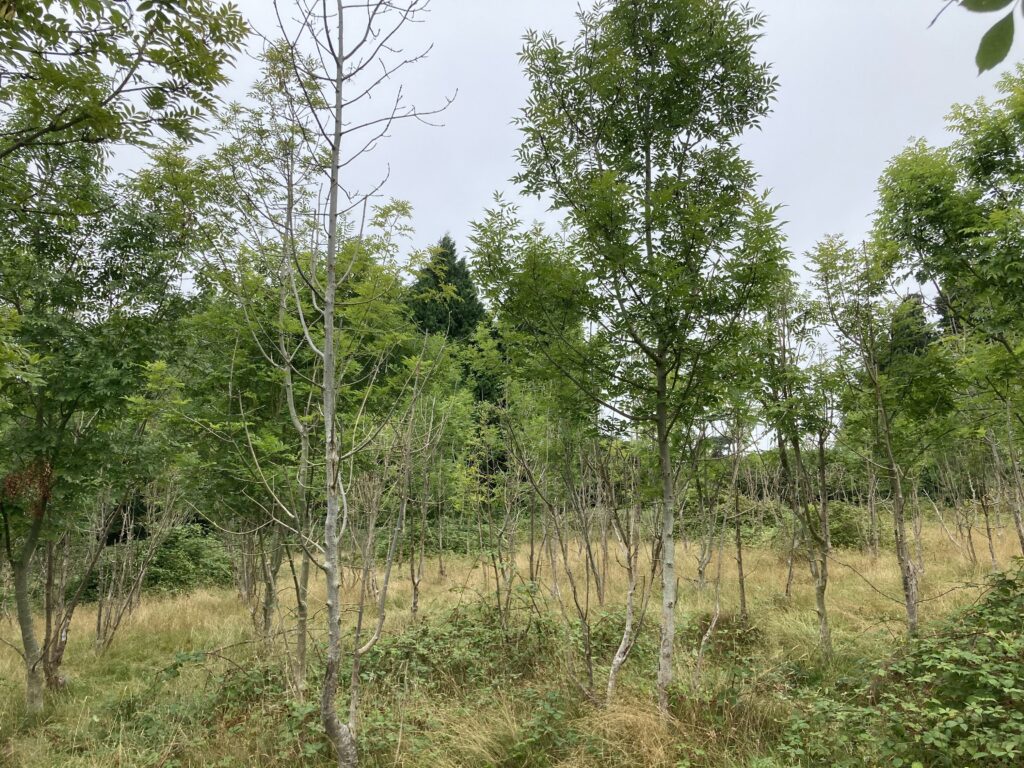
Dead ash tree (left) next to a healthy one (right) at Forest Research trial plot © Dr Laura Kelly (Kew).
Read the full press release from Royal Botanic Gardens, Kew: First-of-its-kind European ash pangenome could help researchers breed a generation of trees resistant to ash dieback | Kew
Read the journal article: European ash pangenome reveals widespread structural variation and genetic basis of low ash dieback susceptibility | Nature Communications
Find out more about the project: Transforming ash genomics: Creating a pangenome to understand ash dieback resistance – Centre for Forest Protection.
This is the fourth journal article from the Centre for Forest Protection. Check out our other publications via our Knowledge Hub and our ongoing research here: Science & Research.
If you would like to learn more about the role of genetics in tree health and forest resilience, check out our latest free training module developed by some of the researchers behind this new publication: Professional and Technical Training – Centre for Forest Protection🧬
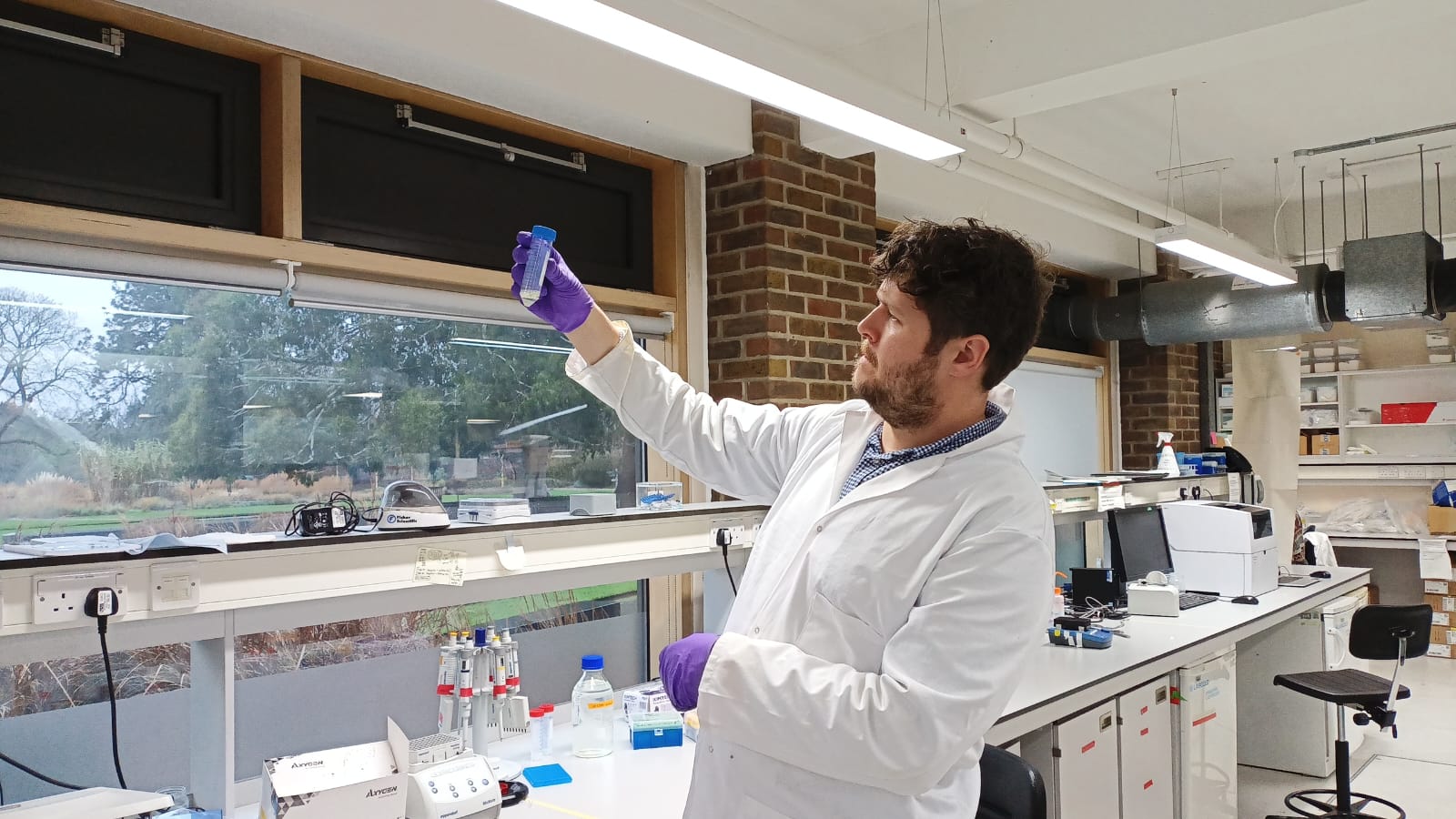
Title image: Dr Daniel Wood, lead author on the study, in a Kew laboratory © Dr Mohammad Vatanparast (Kew).
Stay connected!
Keep an eye on our website, follow us on social media (LinkedIn & Bluesky) and subscribe to our newsletter to be kept up to date on the latest CFP research, news and events!