
Detecting and understanding oak shake
Project leads Adam Ash, Dr Joe Beesley | Forest Research; Dr James Borrell | Royal Botanic Gardens, Kew
Lead organisation Forest Research
Collaborators Royal Botanic Gardens, Kew; Edinburgh Napier University
Project status Active
Project funding 25-26 £249,310
Research outcomes Reducing the risk | Adaptation
Context
Oak (Quercus) is a crucial broadleaved tree species for biodiversity and hardwood timber. However, oak can be affected by a condition known as oak shake, which causes stem cracking and reduces the value and long-term use of harvested timber. There are several biological factors and environmental triggers known to contribute to shake, but the exact causes are not yet fully understood.
As the UK undertakes widespread woodland creation, oak is one of the most commonly planted species. This makes shake a critical economic risk for new oak woodlands intended for timber production and carbon net zero goals.
Research aims and objectives
Aim:
Improve understanding of the drivers behind oak shake, by studying known biological factors and environmental triggers, and linking the presence of shake with external indicators, such as stem form, acute oak decline, and the timing of bud-burst.
Objectives:
- Develop a non-destructive testing methodology to detect oak shake within standing trees using:
– sonic tomography
– resistance microdrilling - Undertake shake assessments on standing oak trees that have had their full genetic makeup studied, using the non-destructive testing methodology, and identify possible genetic and environmental factors linked to shake.
Expected outcomes
- An improved understanding of what makes oak trees more likely to develop shake, what environmental conditions trigger it, and how these factors work together.
- Non-destructive testing methodology developed to detect shake in standing trees.
- Enhanced understanding of the genetic traits that make oak trees more likely to develop shake.
Further resources linked to this project
Report instances of oak shake this felling season - Forest Research (Published: 08 September 2025)
Gathering evidence on oak shake is very important and your observations can make a real difference. By reporting instances of shake, woodland owners can contribute to this research project. For more information, see Report instances of oak shake this felling season – Forest Research.
Intern Diary: Flynn - 2025/26 (Published: 27 May 2026)
Blog: Intern diary: Flynn on detecting oak shake
Flynn had the opportunity to learn how to identify signs of oak shake, use specialist equipment including acoustic sensors to identify cracks or irregularities in oak stems whilst carrying out fieldwork in the Wyre Forest, and conduct dendrochronological analyses to understand the effect of drought and waterlogging on oak shake occurrence.
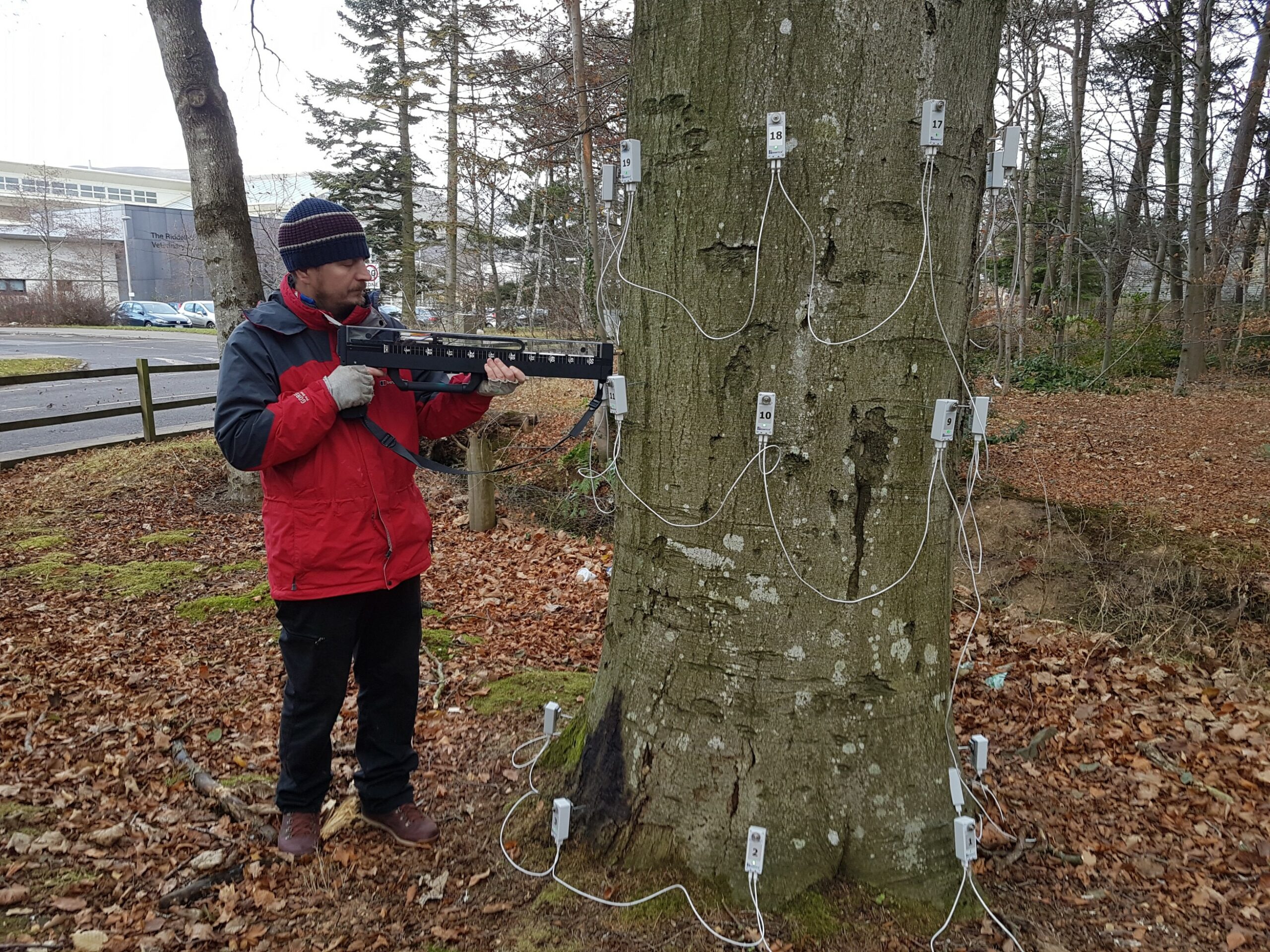
Title image: Resistograph device being used to assess the condition of a tree – Dr Steven Adams, Edinburgh Napier University
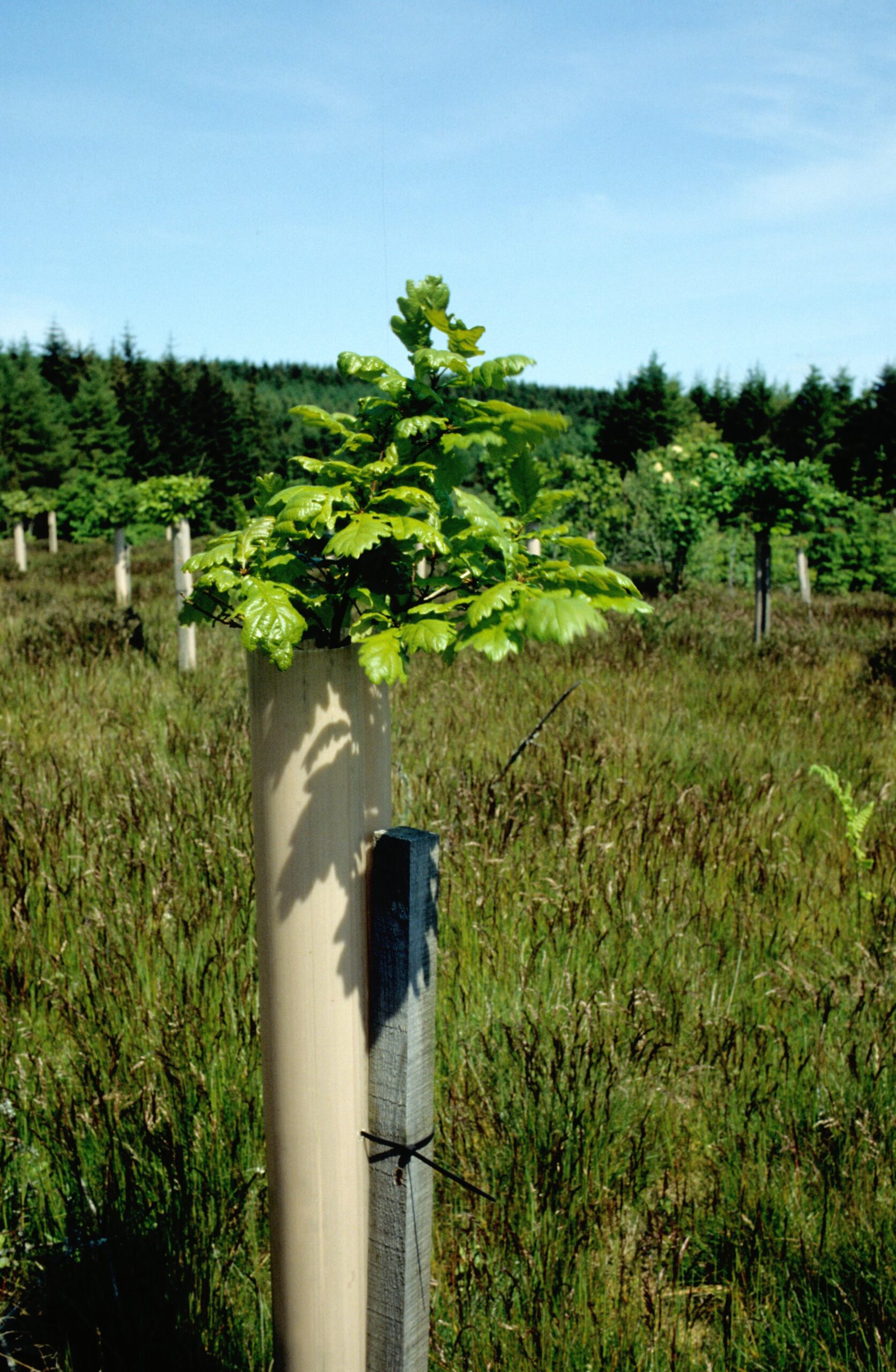
Body image: Young Oak in Tulley tube – Crown Copyright. Forestry Commission – Isobel Cameron
Glossary & Key Terms
Acute oak decline (AOD)
A serious disease of oak trees (trees in the Quercus genus) which was first observed in the UK late in the 20th century. It can kill oak trees within four to six years of the onset of symptoms.The disease is found mostly on mature oak trees, but younger trees can also be affected. It is caused by multiple agents, especially bacteria, and thousands of trees are affected. For infection to occur, it is likely the trees need to be weakened (predisposed) by certain factors, especially environmental factors. For more information, see Acute oak decline - Forest Research.
Broadleaf/Broadleaved
A category of trees that have wide, flat leaves rather than needle-like leaves. These trees are usually deciduous and lose their leaves in winter.
Genetic
Refers to genes - the segments of DNA that contain instructions for how living things grow and function.
Oak (Quercus)
Broadleaf deciduous trees of the genus Quercus, commonly found in British woodlands and forests, recognised for their strong timber, characteristic lobed leaves, and acorns, and including native species such as pedunculate oak (Quercus robur). For more information, see Oak - Forest Research.
Oak shake
A condition affecting oak trees that causes stem cracking, which significantly reduces the value and long-term usability of harvested timber. Whilst several biological factors and environmental triggers are known to contribute to shake, the exact causes remain unclear. For more information, see Report instances of oak shake - Forest Research.
Resistance microdrilling
A minimally invasive testing technique that measures wood resistance using a fine drill needle.
Stem form
The way that the trunk of a tree grows - this includes characteristics such as the straightness, taper, branching pattern, and overall shape of the tree stem.
Sonic tomography
A non-destructive testing technique that assesses the internal condition of trees by analysing how sound waves travel through the wood.
Share this project on social media
Related Projects
Our partners




Social media
Explore
Newsletter
Contact us
© 2026 Centre for Forest Protection. All rights reserved.