Healthy trees, woods and forests are crucial for nature recovery, climate change mitigation and adaptation, and our physical and mental wellbeing. Trees can feel like a steady and stable presence in our landscapes, but they shouldn’t be taken for granted – tree health is increasingly at risk from pests, diseases, drought, windstorms and more. These threats may intensify in the coming decades.
For foresters, woodland managers and other key stakeholders, the complicated and uncertain nature of these risks poses very real challenges and may demand different ways of thinking and acting. This is where science has a critical role – in addressing complex questions, filling knowledge gaps and working with practitioners to create solutions. This is the purpose that drives the Centre for Forest Protection (CFP).
An inspiring day at Kew
Two weeks ago, we convened a meeting of the CFP research programme, bringing together representatives from our 17 current research projects. The projects cover a wide range of tree health and resilience topics, from understanding why grey squirrels strip bark to testing new approaches for the early detection of tree disease – and much more! You can read about all our projects here.
One year into a three-year programme, it was great timing for researchers to share progress, early insights and upcoming plans. It’s difficult to single out highlights from such a brilliant set of presentations, but here are a few examples that capture the breadth of CFP research and activities:
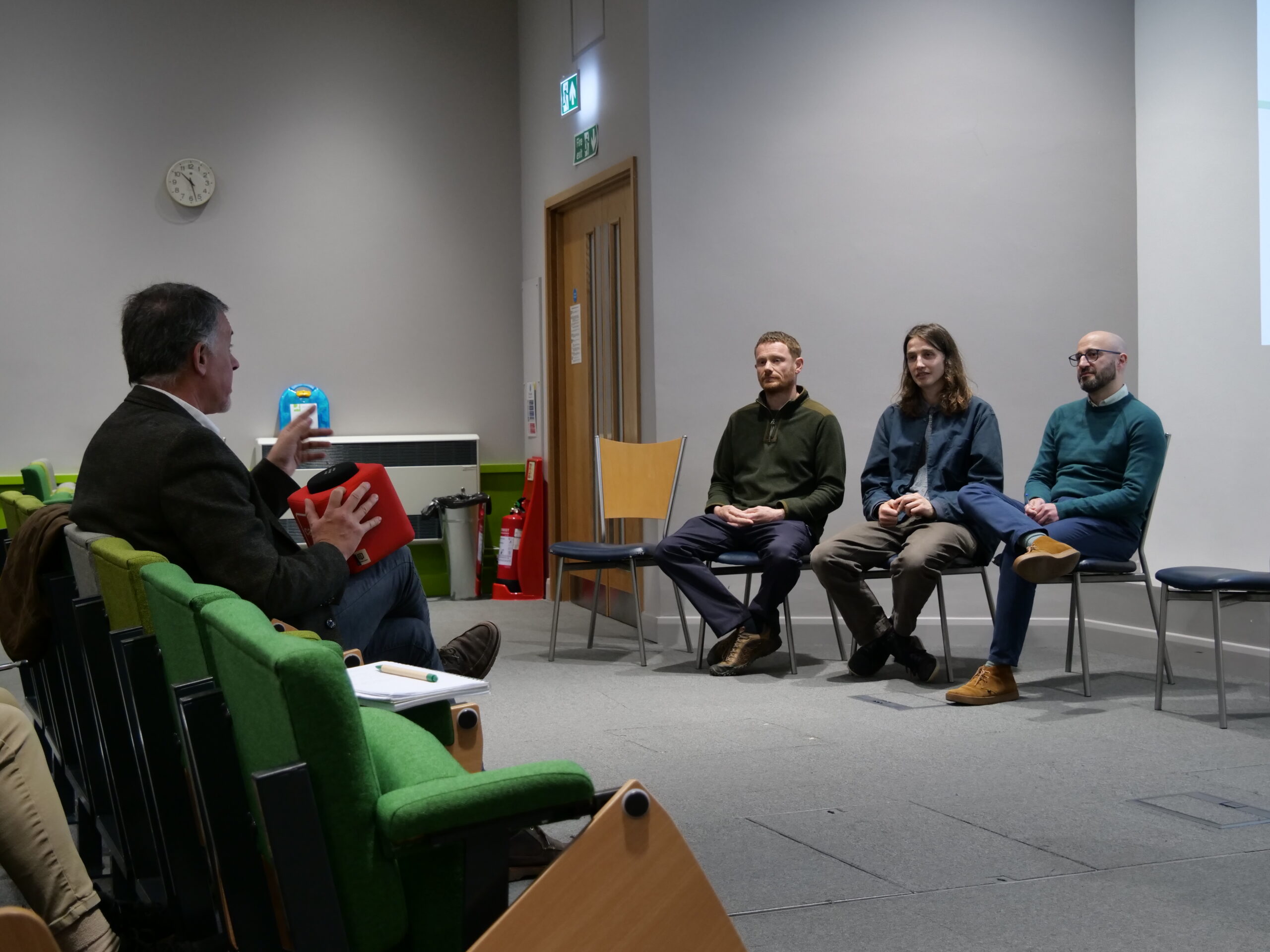
Our first session of the day featured presentations from Geoff Monck (left of panellists) from our Researching complex yew decline project, Joe Beesley (middle), from our Detecting and understanding oak shake project, and Tom Locatelli (right), from our Wind within the trees project, followed by a Q&A panel session (pictured).
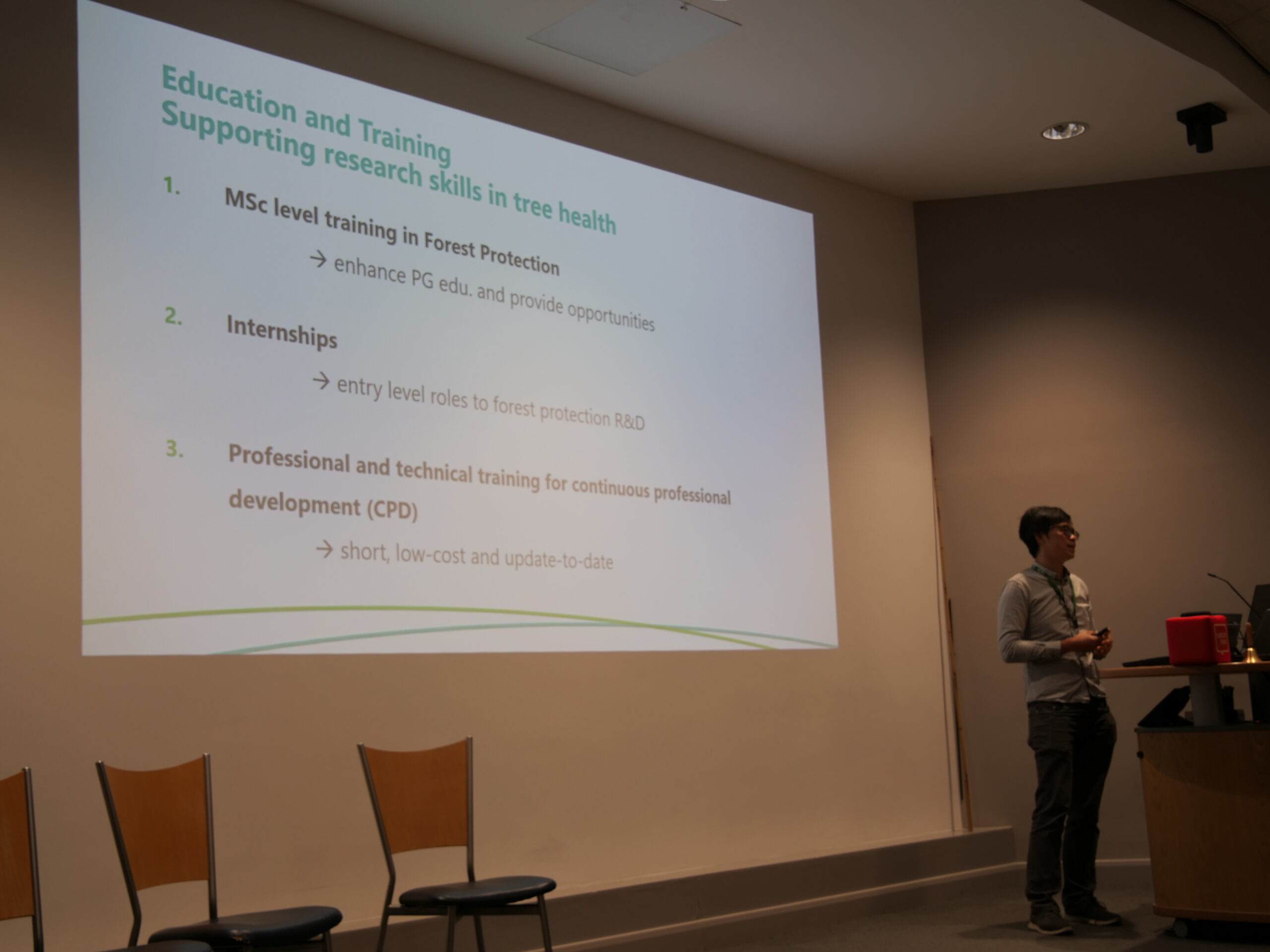
Cheung Tang (RBG, Kew) then took us through the positive impacts of the CFP’s Education & Training programme – it was great to hear how the MSc module at Bangor and CFP internships are providing valuable stepping stones into forest science careers. As part of National Plant Health Week, we will be sharing more information about these, along with our existing and upcoming professional and technical training modules later this week!
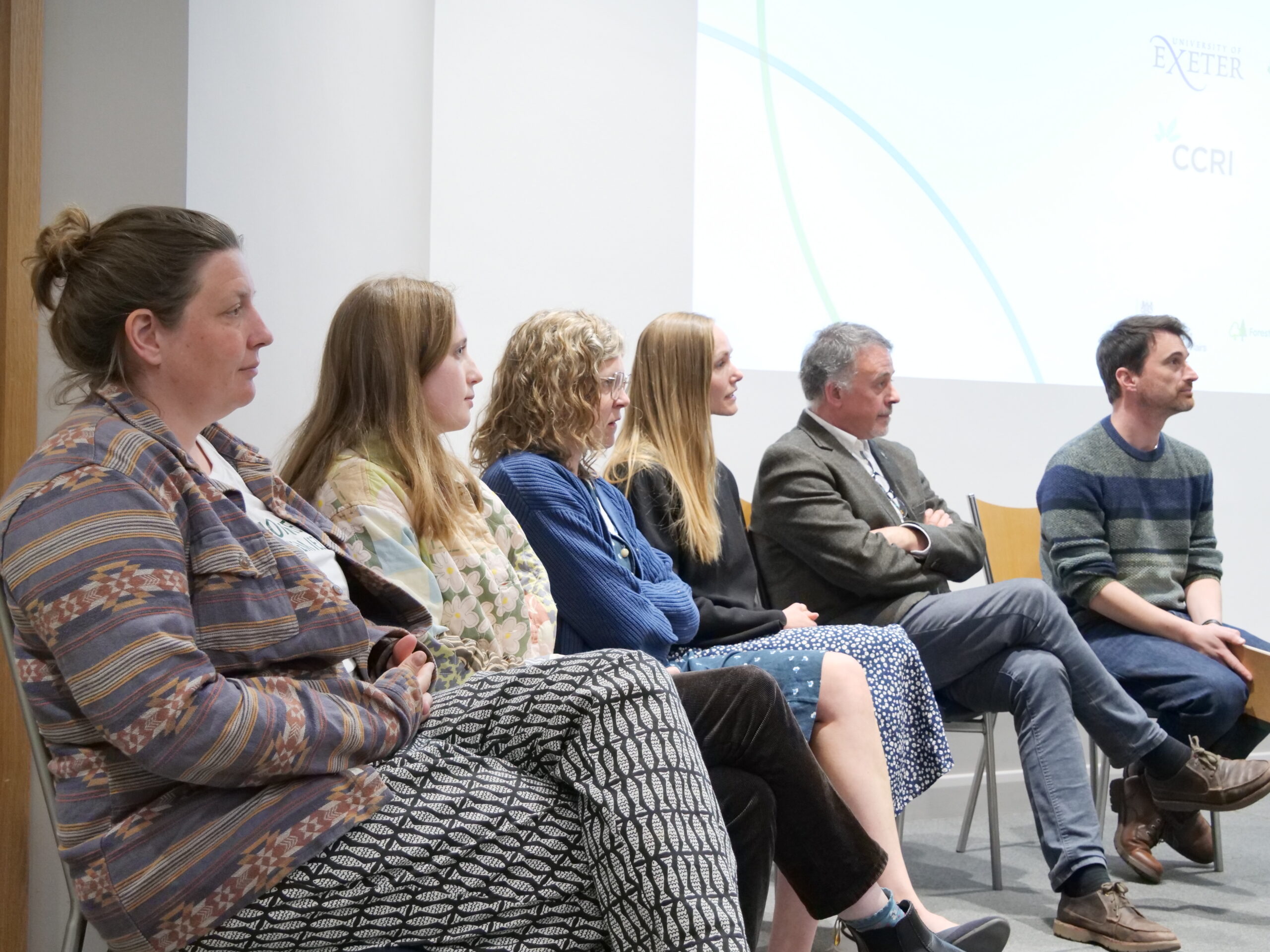
Our second session of the day featured presentations from Cally Ham (left) and Alex Ash (second from left), from our Understanding grey squirrel bark stripping project, Katy Reed (third from left) and Tom Dally (right), from our Dodging the double whammy – ash dieback and emerald ash borer project, Berglind Karlsdottir (third from right), from our Farmer action for tree resilience project, and Juan Suarez (second from right), from our Innovating remote early detection and response to tree disease project, followed by a Q&A panel session (pictured).
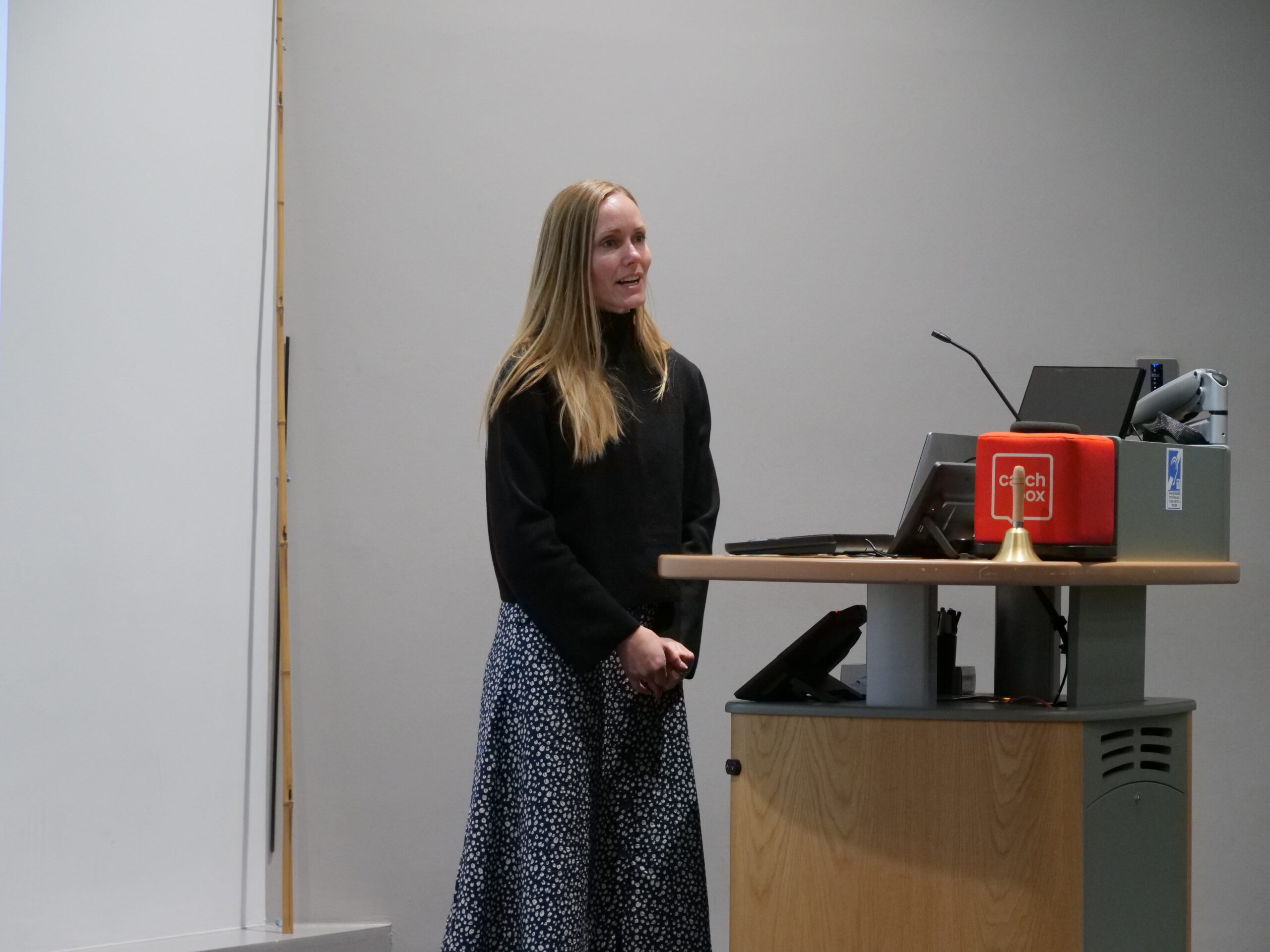
Berglind Karlsdottir (Forest Research) shared progress on social research with farmers, which aims to better understand their motivations for improving tree health and resilience on their farms and how they can be enabled to implement positive changes. We will also be publishing a blog written by Berglind on some of the early findings from this project later this National Plant Health Week.
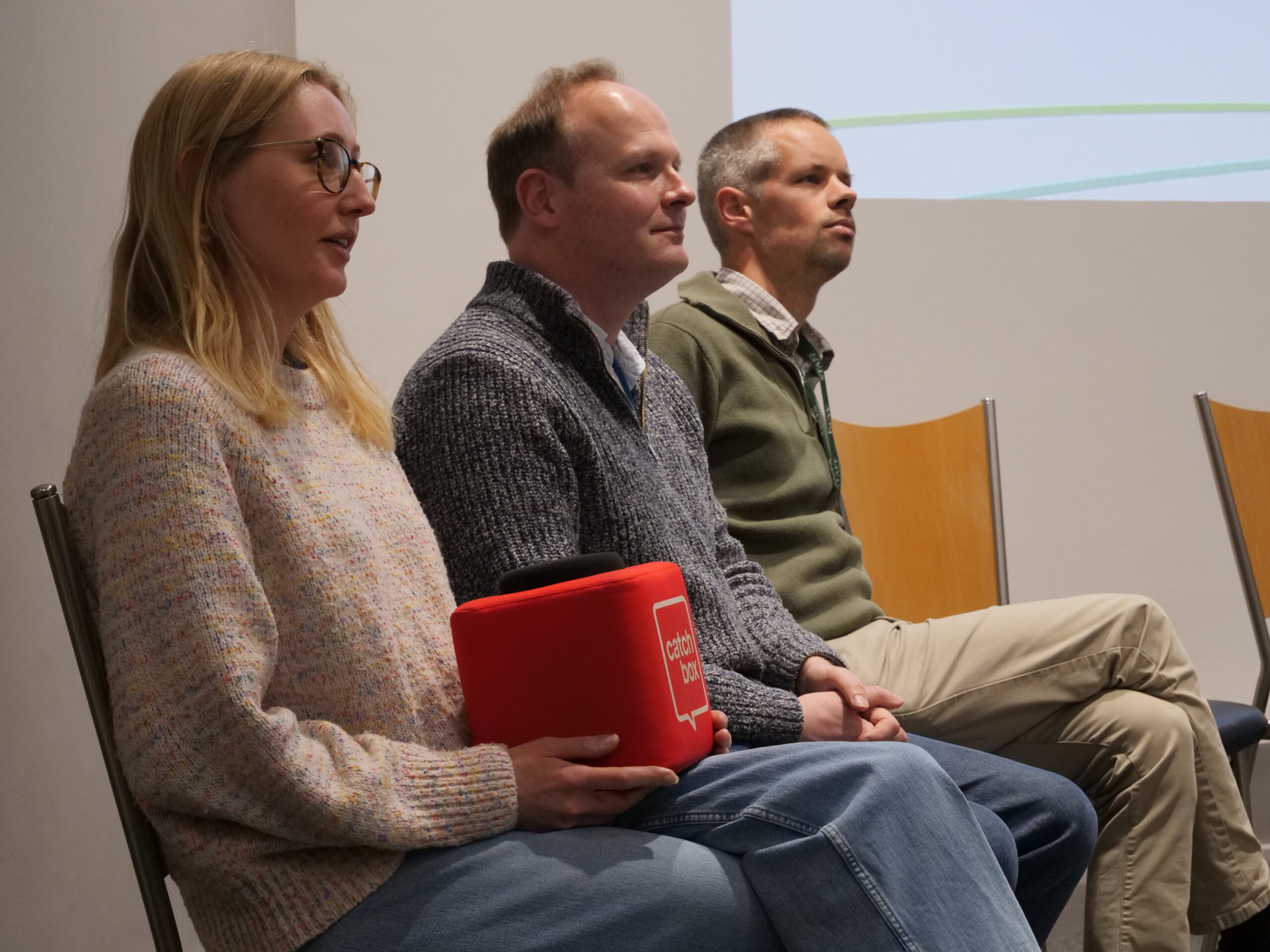
Our third session of the day featured presentations from Phoebe Swift (left) from our Investigating ash health genomics after long-term ash dieback exposure project, Andrew Plackett (middle) from our Speed breeding technologies for UK broadleaved trees project, and James Borrell (right) from our Applying dendrochronology for genomic resilience project, followed by a Q&A panel session (pictured).
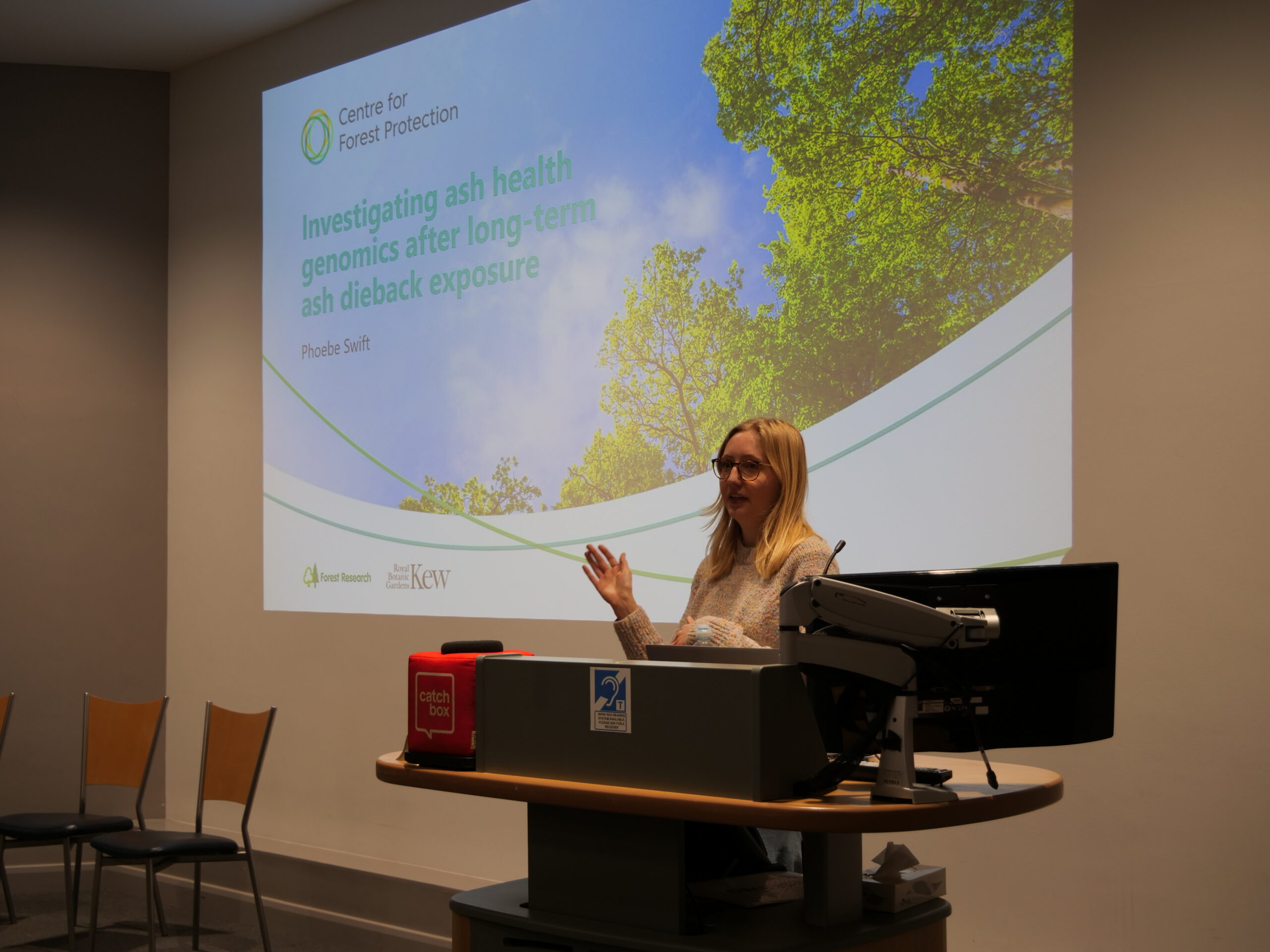
Phoebe Swift, a PhD student at Kew and Queen Mary University of London (and a former CFP intern!), presented research on ash health genomics, highlighting a huge amount of fieldwork by the project team, which included collecting leaf samples from over 2000 ash trees at trial sites.
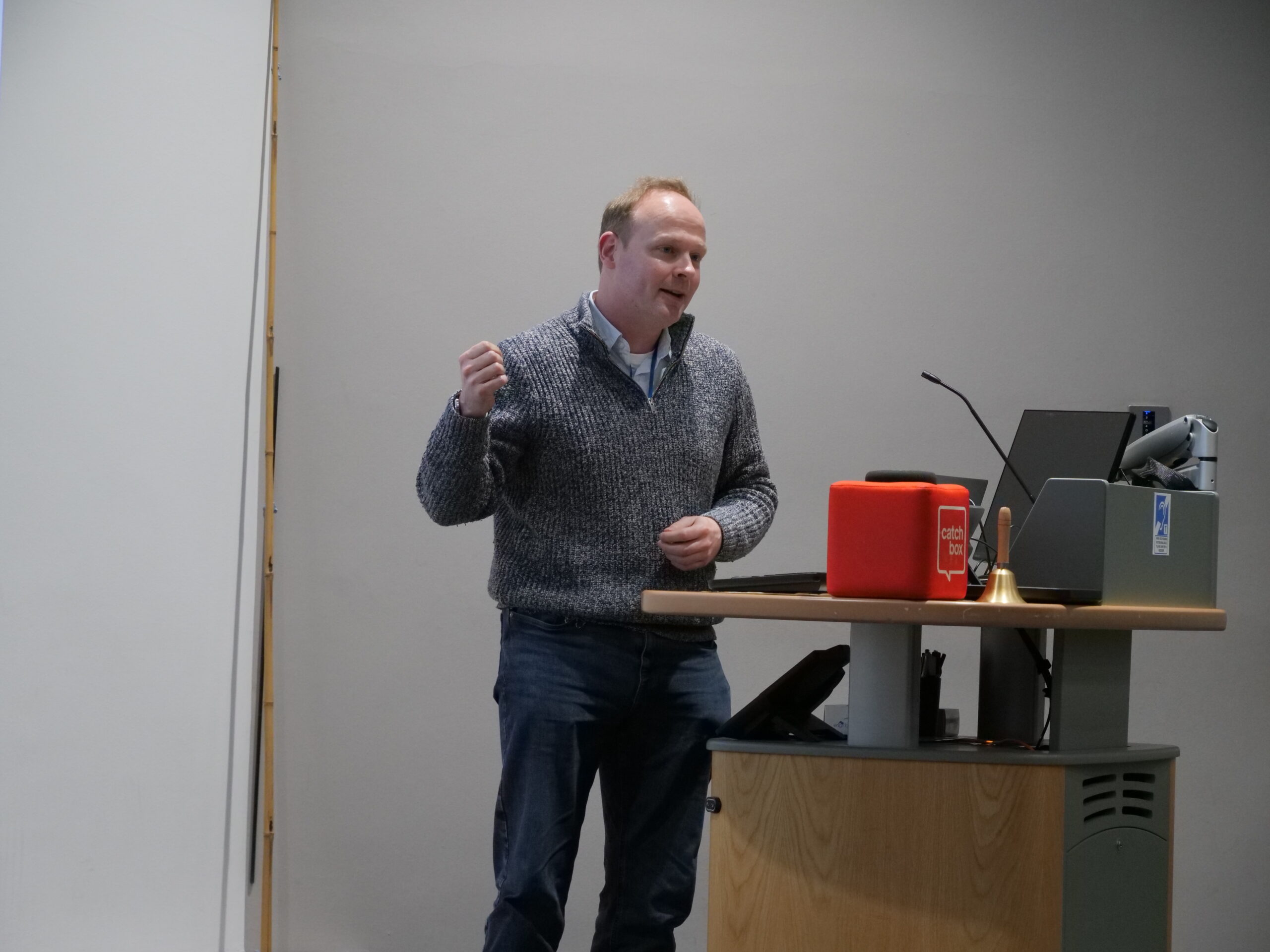
Andrew Plackett from the University of Birmingham shared an update on an exciting research trial on ‘speed breeding’ of broad-leaved trees, which is being delivered by Birmingham, Kew and Niab.
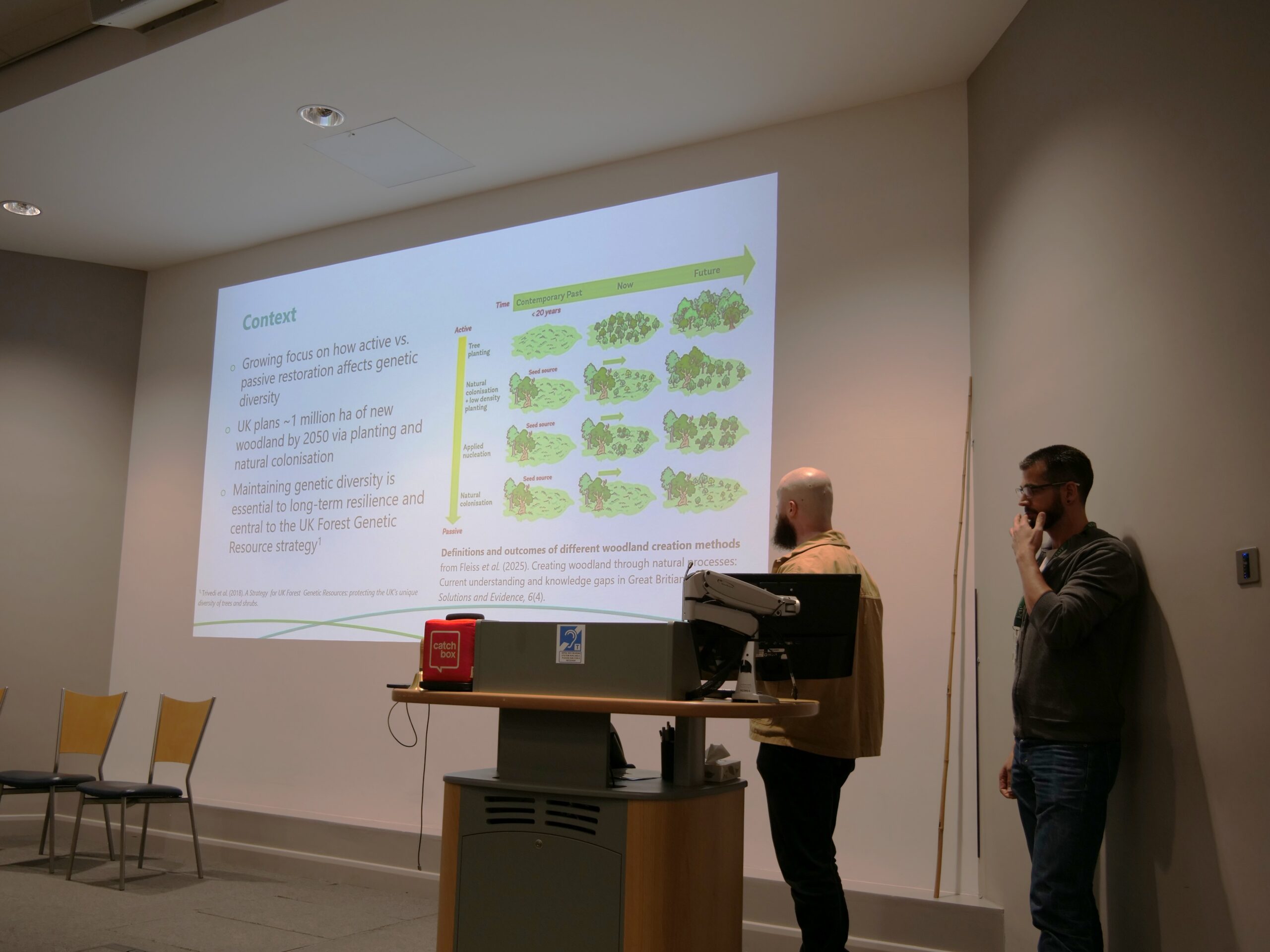
A Kew & Forest Research double-act of Tom Jameson (left) and Guillermo Friis (right) then gave an update on a collaborative research project that has continued from Phase 1 of the CFP and aims to develop tools for climate-resilient seed sourcing strategies. The implications of the research will be shared and discussed with policy-makers and sector stakeholders.
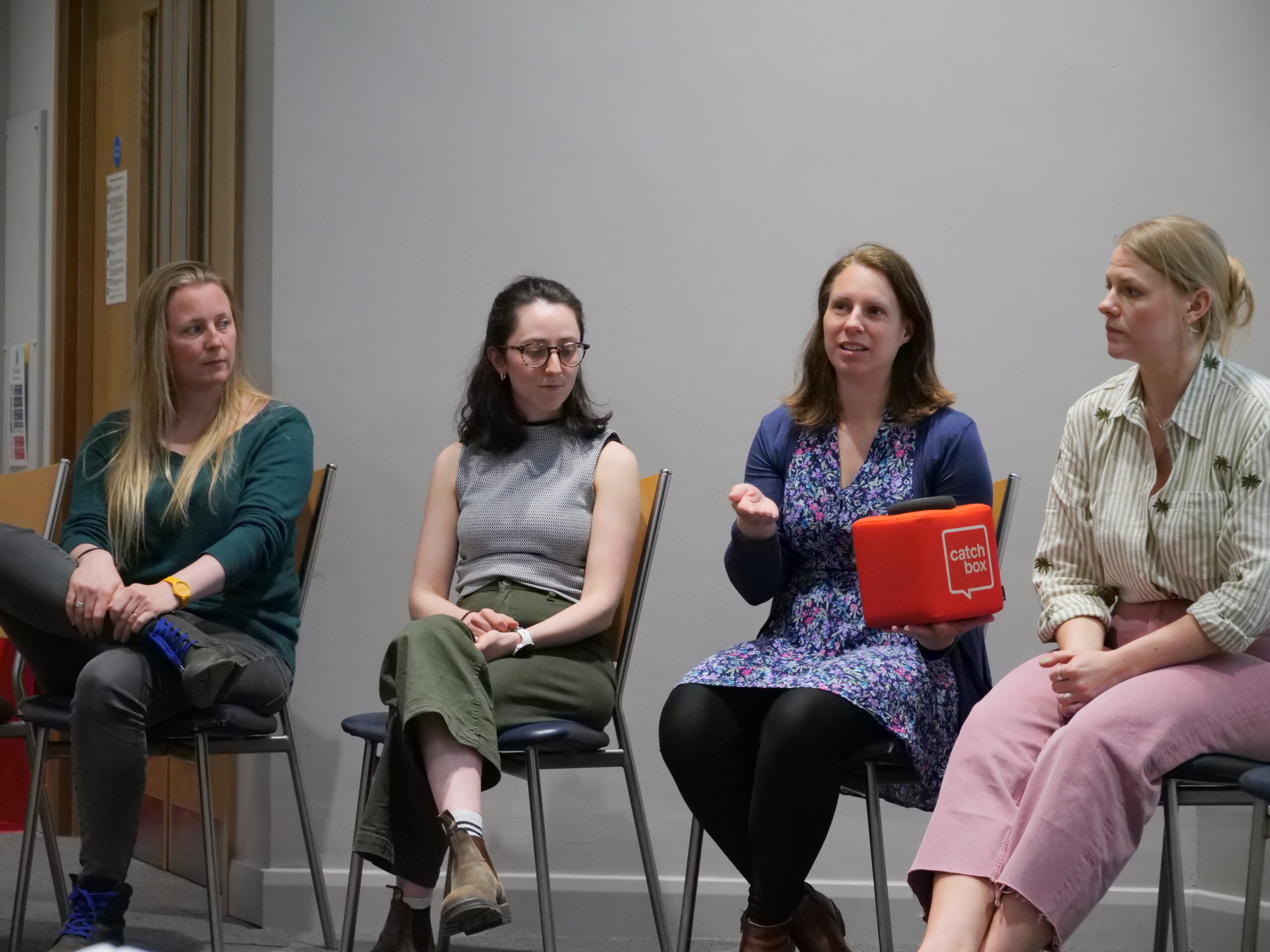
Our fourth session of the day featured presentations from Annika Perry (left) and Kirsten O’Sullivan (second left) from our Infusing resilience into the Scots pine genetic resource project and Anne Murthy (second from right) and Helen Slater (right) from our Forest Sector Modelling – Risks and resilience project. Annika also presented on behalf of our Investigating Scots pine resilience project. This was then followed by a Q&A session (pictured).
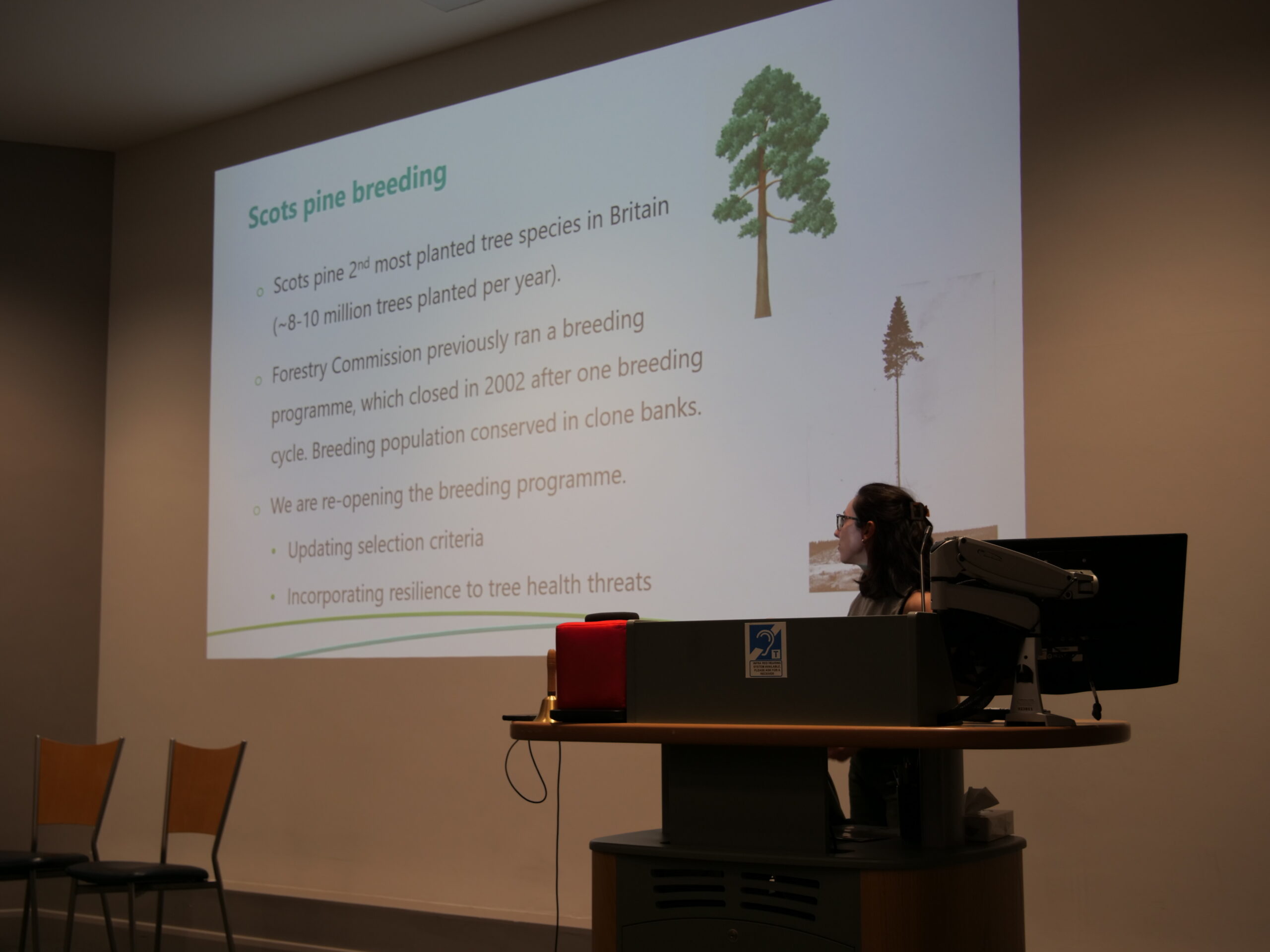
Annika Perry (UK CEH) and Kirsten O’Sullivan (Forest Research – pictured) presented fascinating research on Scots pine resilience, which includes reopening the national Scots pine breeding programme and exploring how the species responds to multiple stresses – vital research on a hugely important tree species in Great Britain.
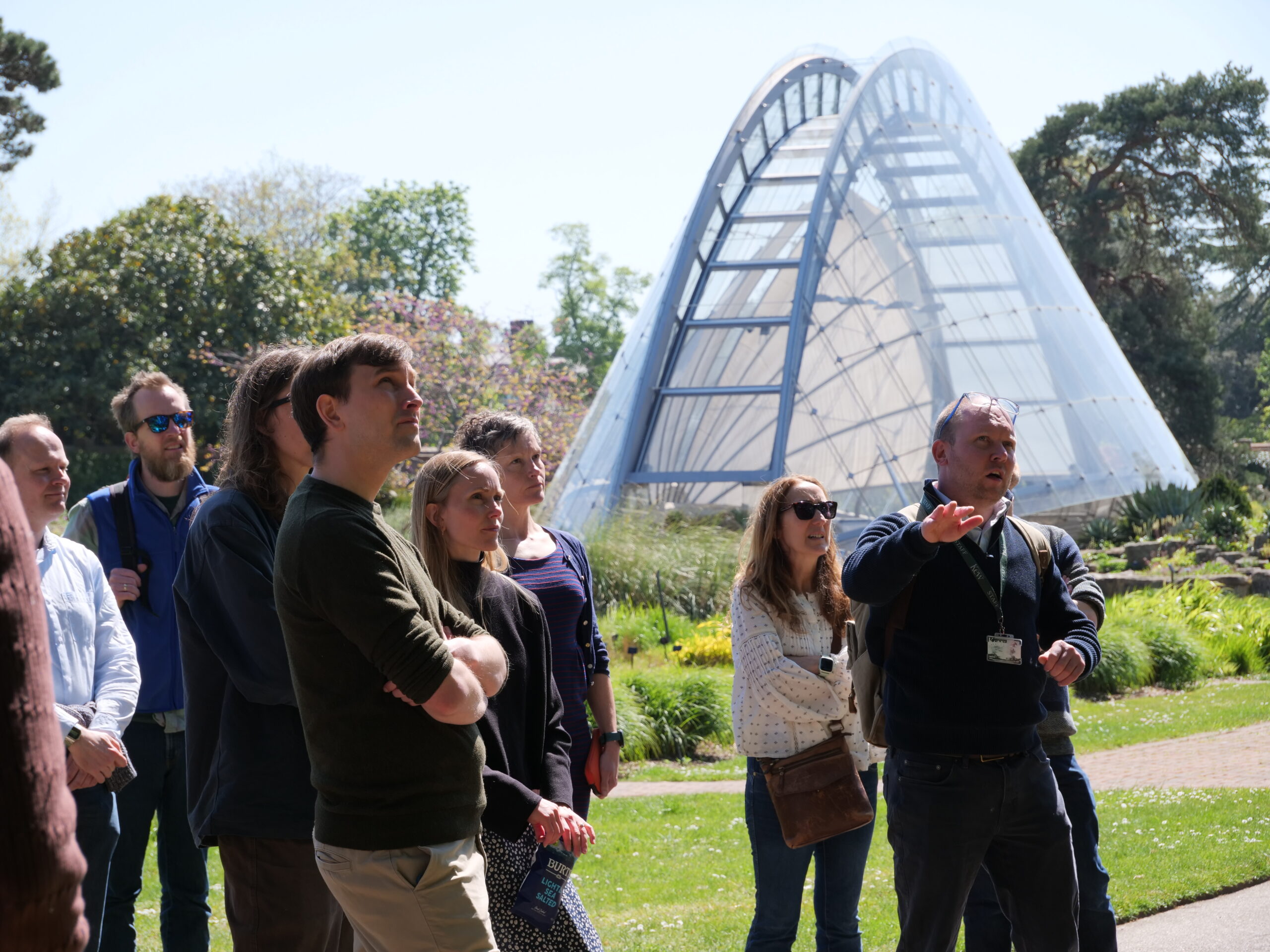
And finally, you can’t spend a sunny day at Kew without enjoying the beautiful gardens, and we were lucky to have a guided tour by Head of Tree Collections, Kevin Martin, who holds a wealth of practical expertise and research experience.
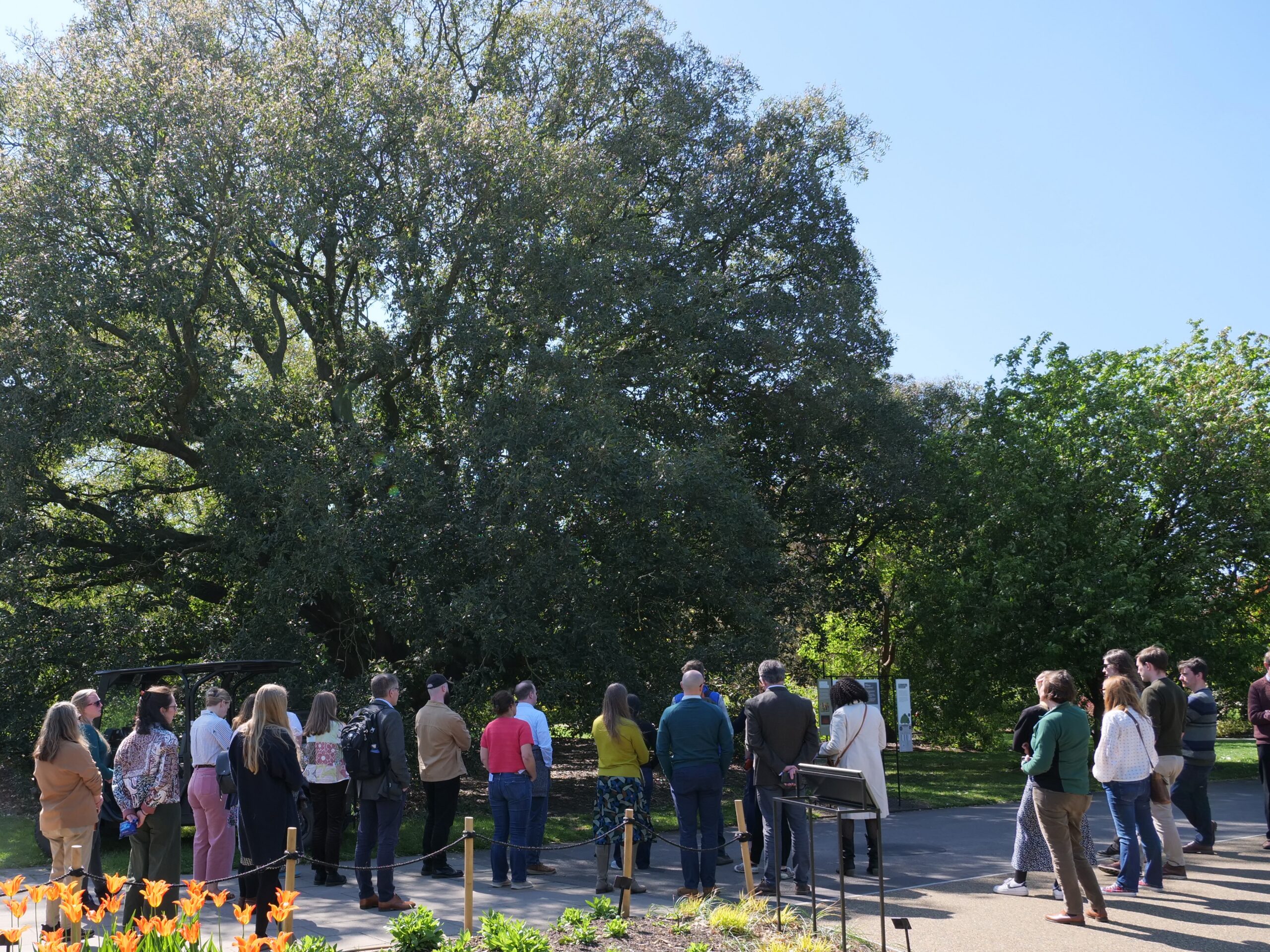
It was particularly interesting to hear about the resilience of one of the Garden’s hybrid oak trees, Turner’s oak (Quercus × turneri ‘Pseudoturneri’). In the Great Storm of 1987, this 200 year old oak was lifted out of the ground by hurricane-force gales, before landing back in the hole created. It was assumed that to be irreversibly damaged, however when it was uprooted, it had loosed the soil around its roots that had become compacted from years of footfall, restoring the flow of air and water. This allowed the tree to regain health and thrive, and the discovery led to a new approach in tree care, with soil aeration techniques adopted at Kew and later worldwide.
Above all, it was a pleasure to bring our research community together!
Stay connected!
Keep an eye on our website, follow us on social media (LinkedIn & Bluesky) and subscribe to our newsletter to be kept up to date on the latest CFP research, news and events!
Find out more about National Plant Health Week 2026.